Tag Archives: New Book

Book launches – survival, celebration and chocolate

Hello fellow creatures. I usually write a ‘the story behind the book’ post around publication day, but I feel like I’ve chatted a lot about The Salt Oracle over the last year either here or on my mothballed Substack, both in free and in paid posts. So what else around book publication time might be interesting to you, my splendid readers?

How about the odd emotional complexity of book release?

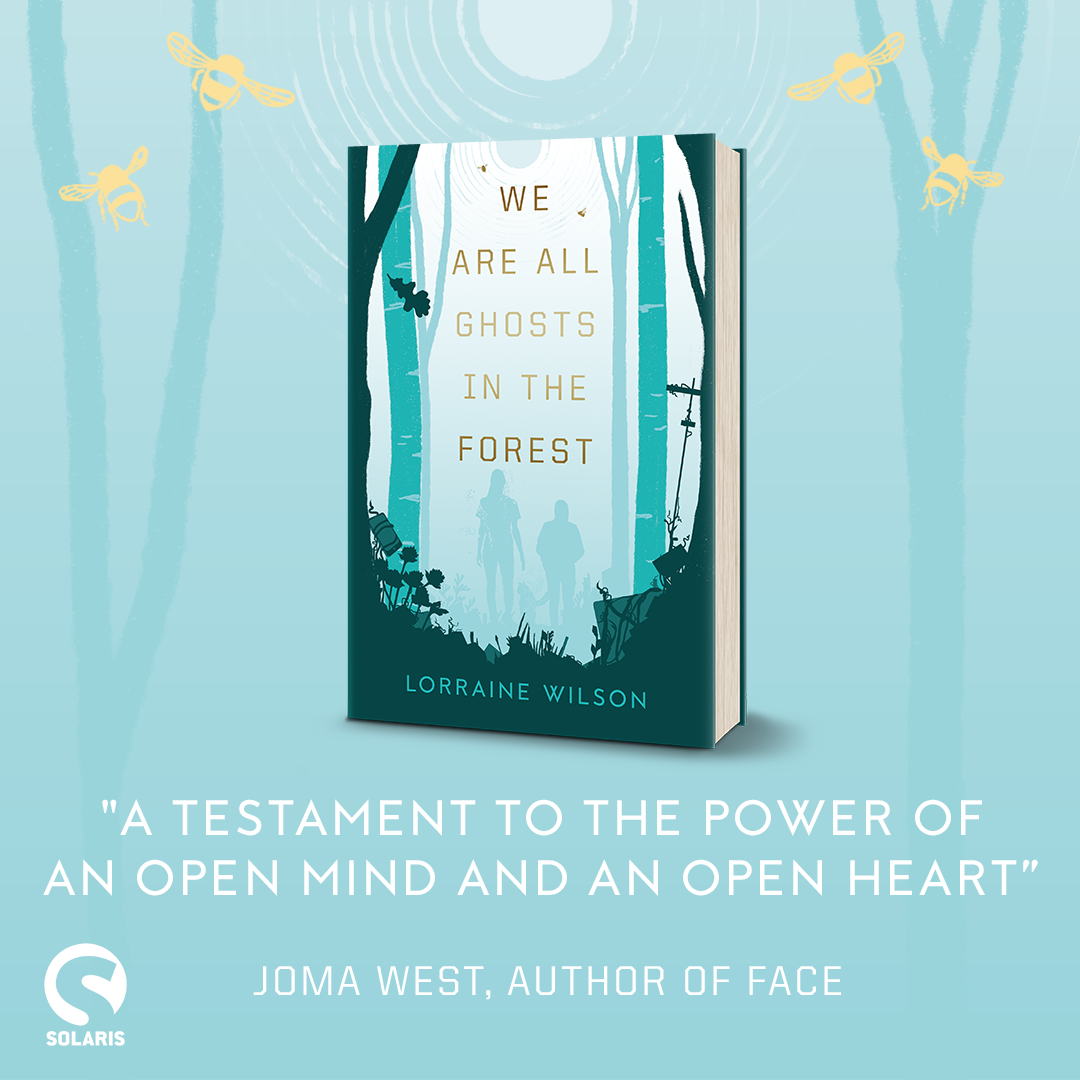
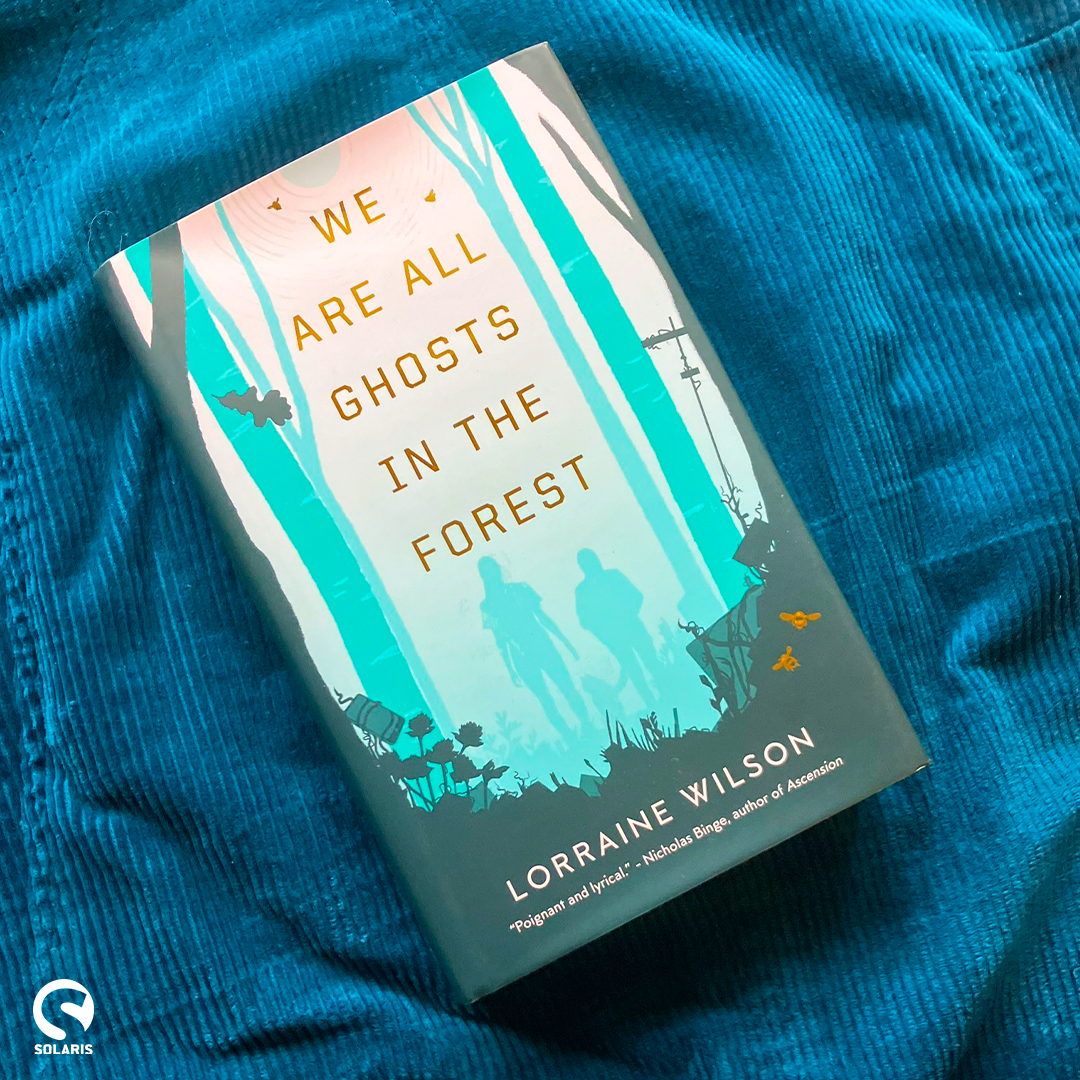
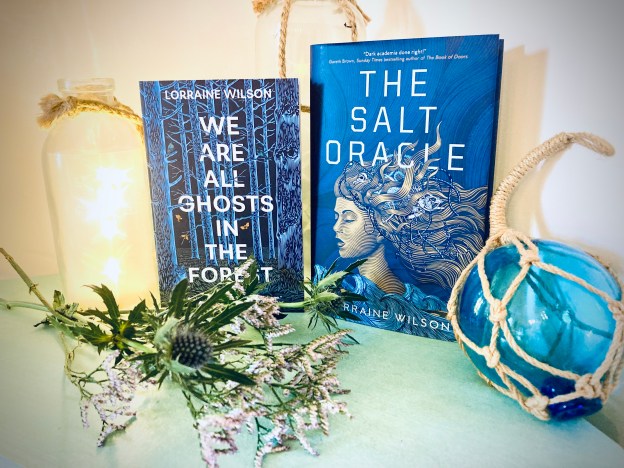
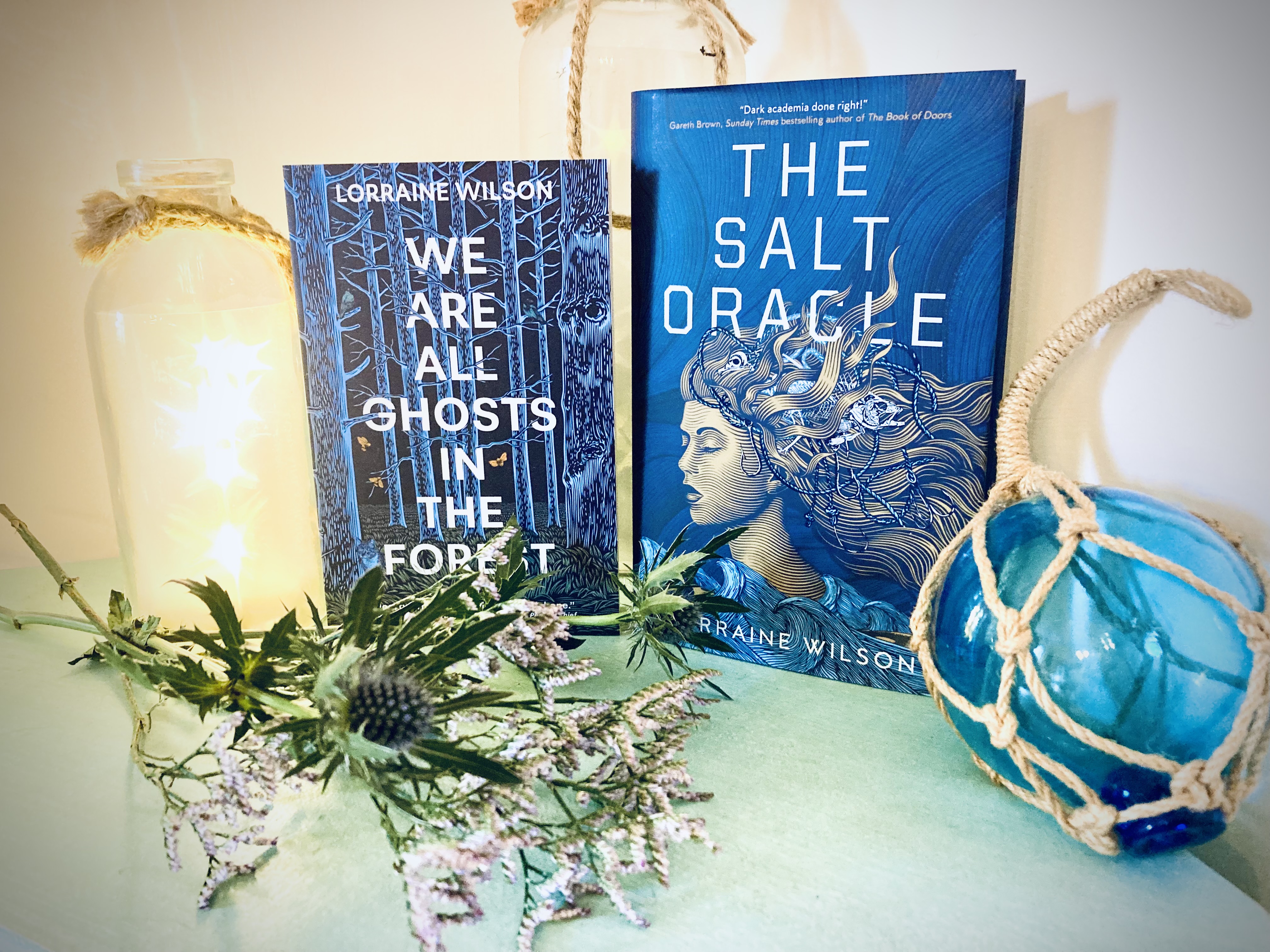
Last Thursday, We Are All Ghosts In The Forest was released in paperback, and The Salt Oracle was released in hardback/ebook/audio. Which is Lovely and An Achievement! Publication day is generally seen as an unconditionally joyous moment. In my experience though, having your books unleashed into the world is not as emotionally straightforward as a lot of people assume. Yes, it’s wonderful, no doubting that but there’s more to it than unbridled enthusiasm.
To be fair I am six books in now, which flavours this, but while there are some things that have stayed the same, others feel very different to when I was debuting. I am, for example, far better now at not looking at reviews! And far more resigned/unworried by the inevitable tagging into ‘meh’ reviews or hearing that some readers don’t like a thing you did deliberately. I am much more relaxed at and about events, and more aware of what to expect from the next few weeks both practically and personally.

However many books you’ve published though, and however big or small your publisher/deal/reach, there is excitement and tension around pub day – the sudden visibility, vulnerability and achievement of it all never goes away (or at least is hasn’t yet). But in my experience there’s also a touch of non-event-ness to publication day – not deflation per se but maybe a kind of suspension.

The excitement is understandable – this book you have loved, hated, fought with, loved again, fought for, built hopes around and yet still fear for, is finally fully out of your hands. It is going to be read by people you will never meet, and people you will meet because of it, it’s going to be adored and ignored, recommended and wildly misinterpreted, it’s going to fulfill some of your hopes and fail others but it will almost certainly fulfill all of the dreams you had when you first stepped into publishing. (Which is worth remembering, no?)

The suspension is a little more opaque. Why wouldn’t you be high on adrenaline and love on this day more than any other? Well, you are. And maybe it’s just me showing my inner zen master/energetically flatlined beastie, but the thing about publication day is that… well, let me see:

The day itself can feel a little focusless…

  • Your books have been arriving in shops/on people’s doorsteps for the last week or so, unless there was a sales embargo (in which case you’re huge and definitely not reading this post!). So the ‘released’ thing is a formality on the actual day. OR there’s the inverse – delivery issues which have left many authors wandering shops on pub day forlornly searching for books that haven’t arrived yet!
  • Your book has been read, reviewed and blurbed for the last several months, so while you will continue to cross your fingers for good reader interest, good reviews and the elusive trade review uptake, those events or statistics are spread over some time, not arriving suddenly on pub day.

So even though you’re excited, you can also feel at a bit of a loose end on the day itself. Fortunately this is where launch day events and social media come in. I always spend much of publication day keeping up with all the lovely comments I get on social media, thanking everyone and generally basking in the glow of belonging to a lovely community of supportive friends. It’s really nice.

And on that note – launch events are a great way to mark the day. Emotional complexity comes in here too though – not just because it can be hard to get a launch event organised. Booksellers might not have space or interest, publishers might not have the budget to help you organise your own, etc. But if you are lucky enough to have something organised… events on the day are generally best framed as an opportunity to celebrate with friends. You may get attendees who were curious about your book, or who just wandered in, but almost no one at the event has read your book. I’m at the truly amazing point now where people come to new book launches having loved my previous books, which never fails to make me a bit fuzzy and emotional. But they haven’t read this book.

Later events, in the months after launch are where you’ll start meeting readers who’ve read the thing and loved it enough to show up and meet you. Which means that Q&As can take on a much richer life, and reader interactions shift into a new form. That is such a joyous moment which comes some time after your launch day event.

Whether you have an event on the day or not (I did for the last book, for this one I just went and signed a tonne of stock in my local Waterstones which was still quietly lovely), it’s often a strange day full of joy and community, but also perhaps a sense of unreality or, as I said earlier, suspension.

The thing is…

(I always have to bring it back to ugh publishing don’t I?) ……There’s a lot of quiet pressure on a book around publication. We get told repeatedly that pre-orders and early sales predict the overall success of a book. I don’t know if that’s true, or just indicative of the marketing around publication. But when those early numbers will dictate recontracting decisions, it’s an odd period of time – you are doing a lot of public facing work, aware of how much is riding on it, but oblivious to whether any of it is working. I love celebrating my new books, I truly do, but the background tension around whether they are Doing Okay definitely feels more intense around launch than the rest of the book’s life (for this book more than any previous one perhaps). Some authors are told that their book is being targeted at a bestseller list – a rare privilege, but definitely a heavy expectation to add to publication week!

Do I sound like I don’t love publication day? I hope not, because I do. It’s the culmination of so much work and love, and with every book, I have reached publication day proud of what I and my publishers have achieved. It’s a waypoint that unreservedly deserves all the celebration.

But I’m six books in, and without diminishing the joy around this publication day, I am more aware now than ever that one book alone does not a publishing career make. Or one week does not… Or one event or one win.

Talking of which, I won an award at WFC! My novella The Last To Drown – a dark Icelandic ghost story about family secrets, chronic pain, the sea and recovering from trauma – won the British Fantasy Award for Best Novella. That’s extremely bloody awesome, and I couldn’t be prouder of this book and of Luna Press who are such a special small press doing amazing work within SFFH.
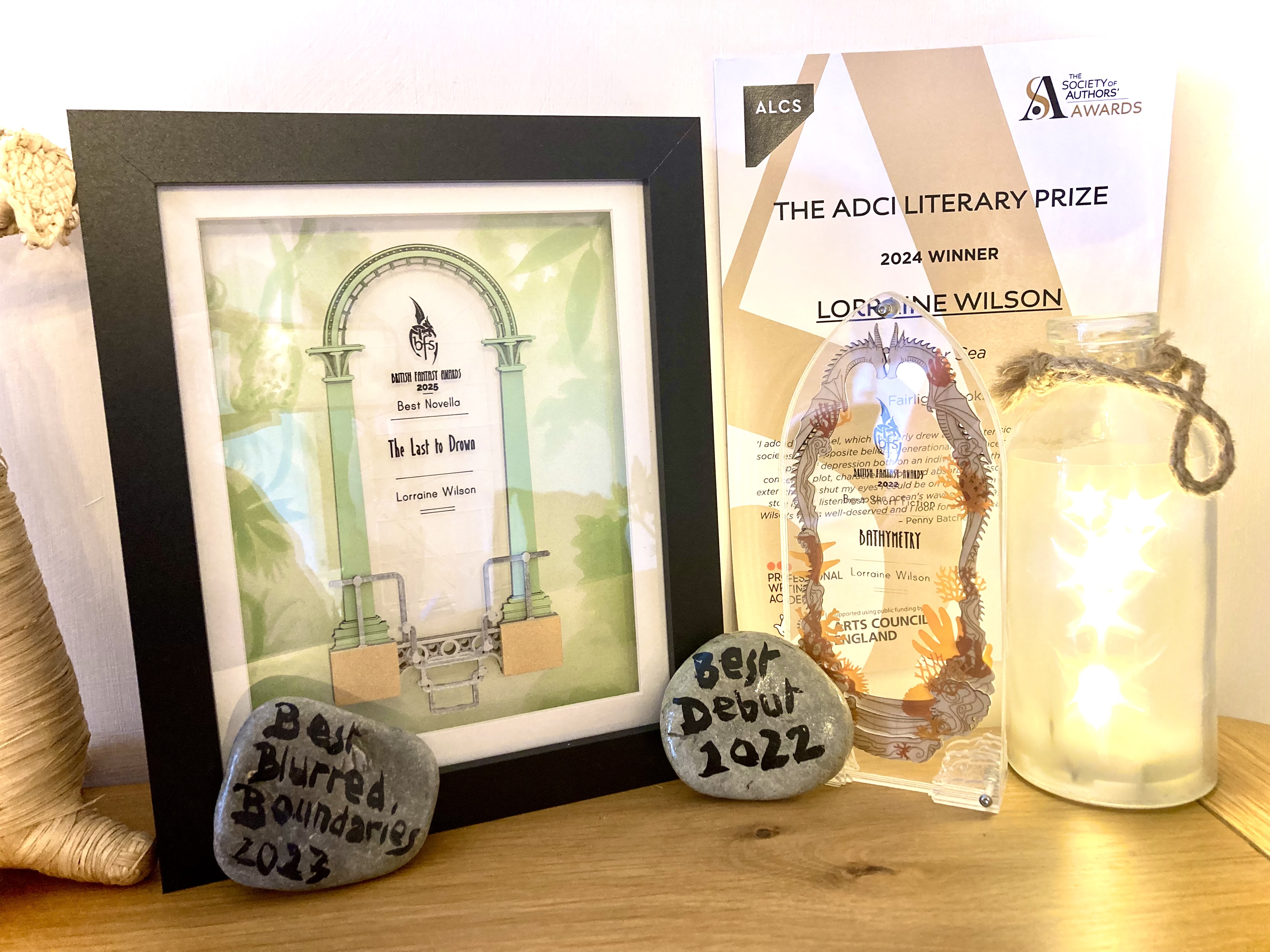
New award joining its friends

[An aside – Over the last 15 years of chronic migraine, I have learned to temper my emotions because any emotional extreme – good or bad – is a trigger for hours or days of extreme pain, nausea, muscle weakness etc etc. This is a bit of a superpower in publishing, in that while I will have a solid moan to friends sometimes, I can generally roll with the punches with some equanimity. The downside is that I am not very good at just celebrating, because that emotional even keel is so ingrained in me now. Hoo boy am I throwing metaphors around today, I apologise]

In the last week (at time of writing), I have won this fabulous award, met a lot of lovely readers, launched both Ghosts paperback and The Salt Oracle with a fun event at World Fantasy Con and a friendly signing at my local bookshop, and had a splendid time at WFC besides.

It’s a wonderful, gratitude-inducing position to be in. But whether it’s post-con fatigue, that emotional even keel, or the point in my career, I am finding my overall mental state to be ‘Okay, this is great, but let’s just wait to see whether it means anything‘. Will the early sales mean my editor can (or wants to) open recontracting talks? Will the award provoke interest from submission-list editors? Will early apparent enthusiasm, and mine & my publisher’s hard work mean these books get the momentum to exceed my prior reach?

I really truly hope these books – one for its first flight, and one in this 2nd format – do well, for their own sakes. Because I believe in them, and feel like I did something interesting with both of them. I also hope they do well to reward my editor and marketing team’s championing of them. We’re allowed to say that, aren’t we? Those are acceptable reasons to publicly want your books to succeed.

A little less acceptable, but no less true, is the hope that they do well because I need them to if I’m going to continue to publish. But there is little point dwelling on that hope when it’s 95% out of my hands. So as always, my question to myself when staring publishing in the face is ‘what can I actually do?’

  • I can keep working to organise events & publicity, and be as open as possible to my publicist’s suggestions and opportunities.
  • I can manage my spoons and my outlook so I am well enough to treasure all the positive things coming my way, and keep the negatives in perspective.
  • I can eat some emergency chocolate.
  • And, of course, I can work on something new. Aside from winning an award or selling lots, I can’t influence the success of books currently out on submission to editors, so the only thing I can do right now to maximise my chances of selling more books is to write another one. Write a better one, or a more pitchable one, or just a luckier one.
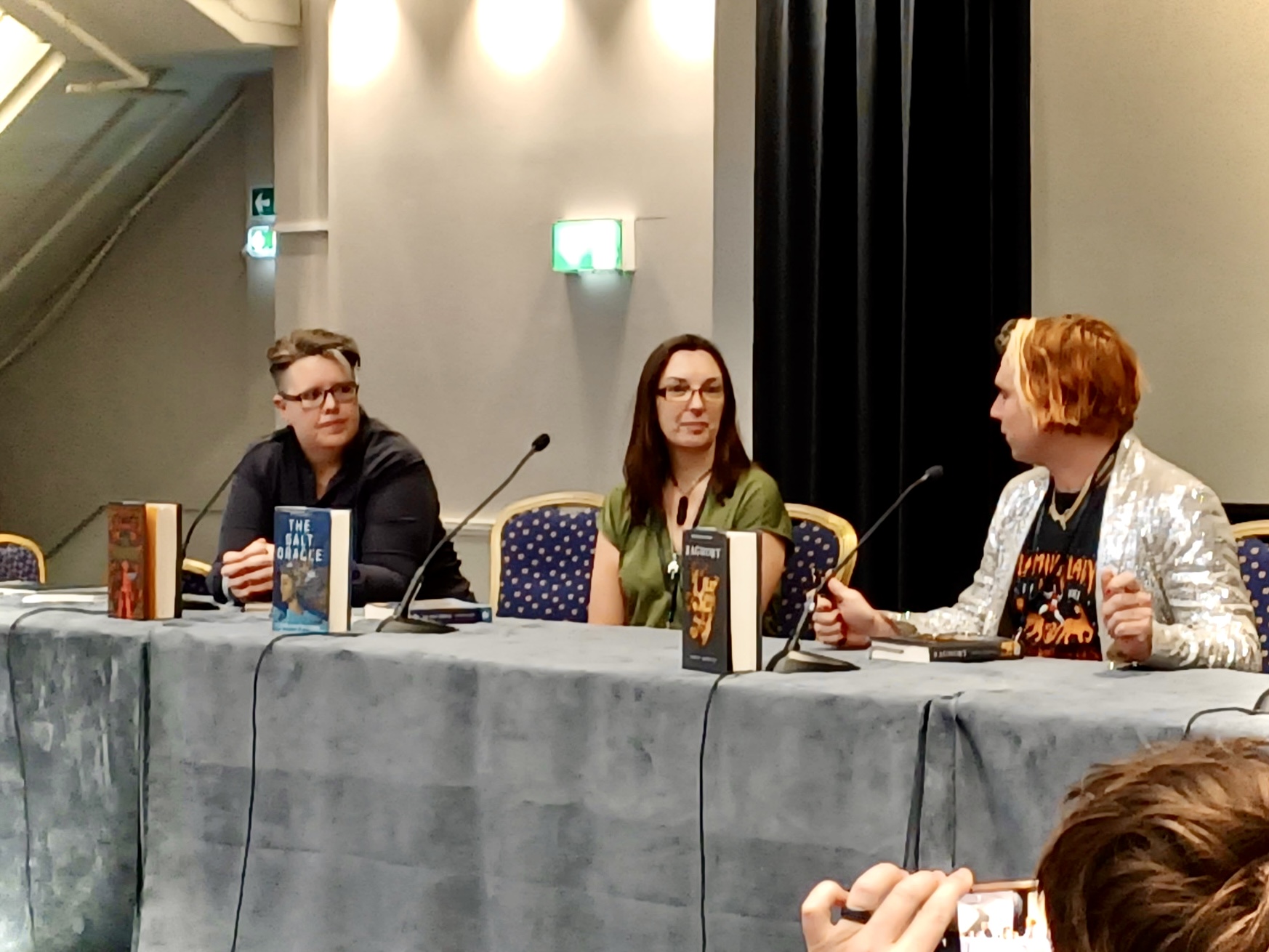
Launching alongside splendid authors Sam K Horton & (half of) MK Hardy

Technically, the point in the publication process where your book is fully out of your hands (editorially) is the page proofs checking stage. After that, you can’t change anything and it’s entirely up to readers to either connect with it or not. You get no further say on how your words land. But between proofs and publication you have a window of relative calm where a small number of reviewers and authors are reading the book but the wider public are yet to join the conversation. So publication day, for all that other things diffuse the singularity of the day itself, is still a huge shift in the life of a book.

That’s scary, but also freeing. I believe a book is unique to every reader who finds it, because a book is a conversation with that reader – their experiences and imagination and heart. That’s why the same book lands so differently with different people, because it is different. So finding out what your book became in different readers’ minds is a marvel, and stands apart from what your book is to you.

In my opinion, and as with so many things in publishing, it’s important to separate out your relationship with your craft, from your relationship with the publishing industry. A book release is worthy of celebrating because you should be proud of your own craft, and excited for that story to find the readers who will love it. It’s worth holding a little bit in perspective because you need to maintain your publicity momentum beyond this week, or even this month; and you need to maintain your writing momentum entirely beyond this book.

I am guilty of pinning all my hopes on this book sometimes, of focusing on how much is riding on this one doing better than the previous ones according to one measure or another. And there’s enough truth in that to overwhelm the joy of publication day, or award wins, if I’m not careful. So perspective, even keels and focusing on what I can do is good, but taking a wee moment to feel proud of myself independent of publishing’s shenanigans is just as important.

So please wish these books luck on their maiden flights, and meanwhile I will be diving into the edits and pretending that my next article will not be a Christmas reading recommendations post (scream).

Thank you as always for your support. Because accessibility in publishing is important to me, I keep all my craft and publishing posts free, so any shares or tips are greatly appreciated. Wishing you a fabulous weekend.
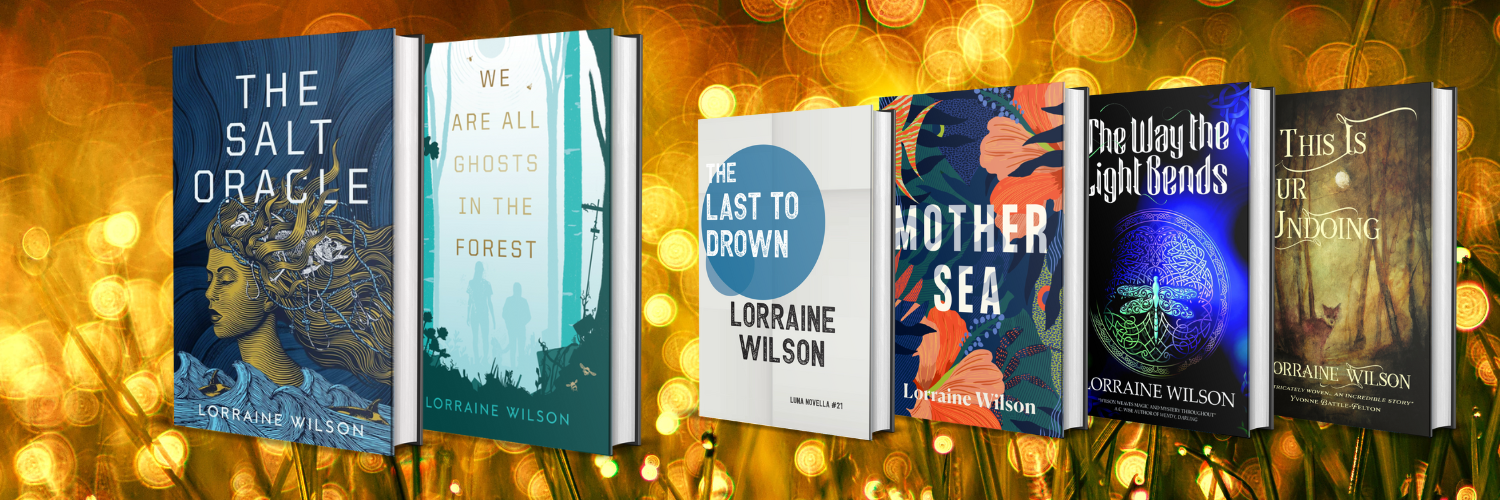
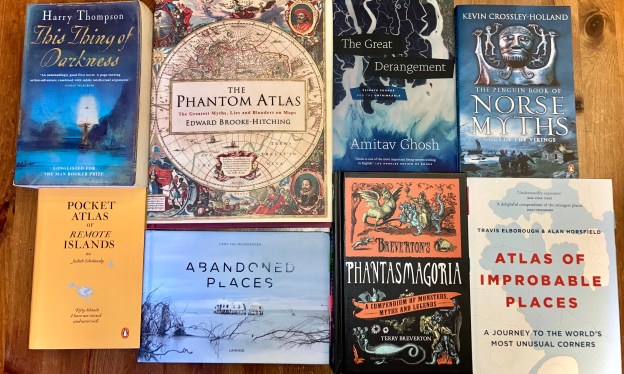
The books behind the book – diving into the stories & history that inspired The Salt Oracle

Updates from the writing cave: Since I last posted here, I have finished the first draft of the strange and challenging parallel world book that I began over the summer. I’ve done a quick first pass tidy up of it and have now shelved it to work on other things while it thinks about what it’s done. I’m really pleased to have completed such an unusually structured draft, but there’s some substantial decisions to make about what it needs next, so I’m hoping a few months of marinading will let me come back to it with fresh eyes.

Now. If you follow me on Bluesky or Instagram, you will know that I am firmly into pre-publication promo season for The Salt Oracle (and the paperback release of We Are All Ghosts In The Forest). It’s the point in time when most authors exist in the greatest dichotomy of externally doing the chirpy promo, whilst internally dying of embarrassment, awkwardness and cringe. It’s simultaneously lovely to share your excitement with your community and uncomfortable to feel like you’re hustling. But pre-orders and early sales really do matter. And I want to give these books what small boost is within my power, so I am trying to make it as fun as possible (for me, heaven knows what’s ‘fun’ to the IG algorithm!).

These two books are out on Thurs 6th Nov – two weeks yesterday – and next Sunday I get to launch them a little early at World Fantasy Con in Brighton, alongside some splendid and talented friends, Sam K Horton and MK Hardy, celebrating their books Ragwort and The Needfire. It’ll be a fun event, with cake and arty freebies and hot-off-the-press books, so if you are in Brighton please do come find us!

For today though, I figured I’d talk about other books!

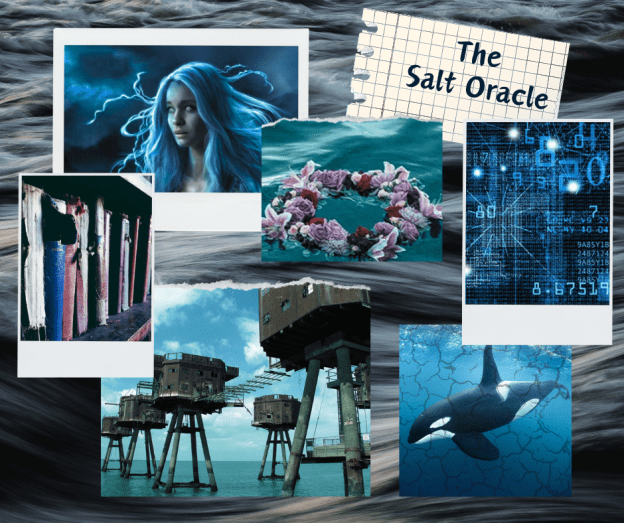
As a bit of a ‘where do your ideas come from’ post, I have gone through my shelves and notebook to give you a small sample of the many stories and scraps of science, folklore and natural history that were part of the landscape from which I developed The Salt Oracle. If you’ve been with me a while, you might remember me talking about the Dark Academia elements of this book, but it’s also fairly apparent that beyond general academia vibes, my specific experiences with marine and conservation science also fed into this story.

Though I’ve never lived on a floating college fortress, I have lived in research stations or field camps in Scotland, Eastern Europe, the Indian Ocean islands, and Central America. It’s a strange microcosm of an environment, living closely with a small, often very isolated team made up of people who might be thrown together with no prior connections, and who are working long hours in often hazardous environments. There is a strange, often fleeting but always quite intense companionship that springs up in those settings, partly out of proximity and shared interests, but partly out of a need to get along for everyone’s safety and comfort. I definitely drew on my memories of such relationships in my writing the close but occasionally downright incompatible crew in this book.

Likewise I was able to draw on the marine conservation research I’ve been a part of, that includes things like whale communication, marine mammal fisheries bycatch, coral reef health, sea turtle breeding, sea bird population modelling and conservation, etc. That research wasn’t a huge part of my academic time, but I’m lucky enough to know people who work in all walks of marine research, so I had a way in to reading up on buoy and satellite tag technology, fisheries policy, renewables deployment and so on. (My work also took me to a hotel in Stromness, Orkney, which has on the wall a radar image of the Pentland Firth showing all the German submarines sunk at the end of WWII – the tangled poignancy and hidden threat of that image stuck with me, and got a tangential reference in The Salt Oracle)

As a seven year old, I decided that I was going to ‘save the whales’. I don’t know what exactly I thought I was going to do, especially once I declared that I would do so by becoming a vet! But while I never got to save a whale, perhaps this book is my inner 7 year old channelling all her undiluted rage at what we are doing to the oceans, and wishing vengeance upon us all!

Other than an undertow of eco-rage, what else fed into the making of this book?

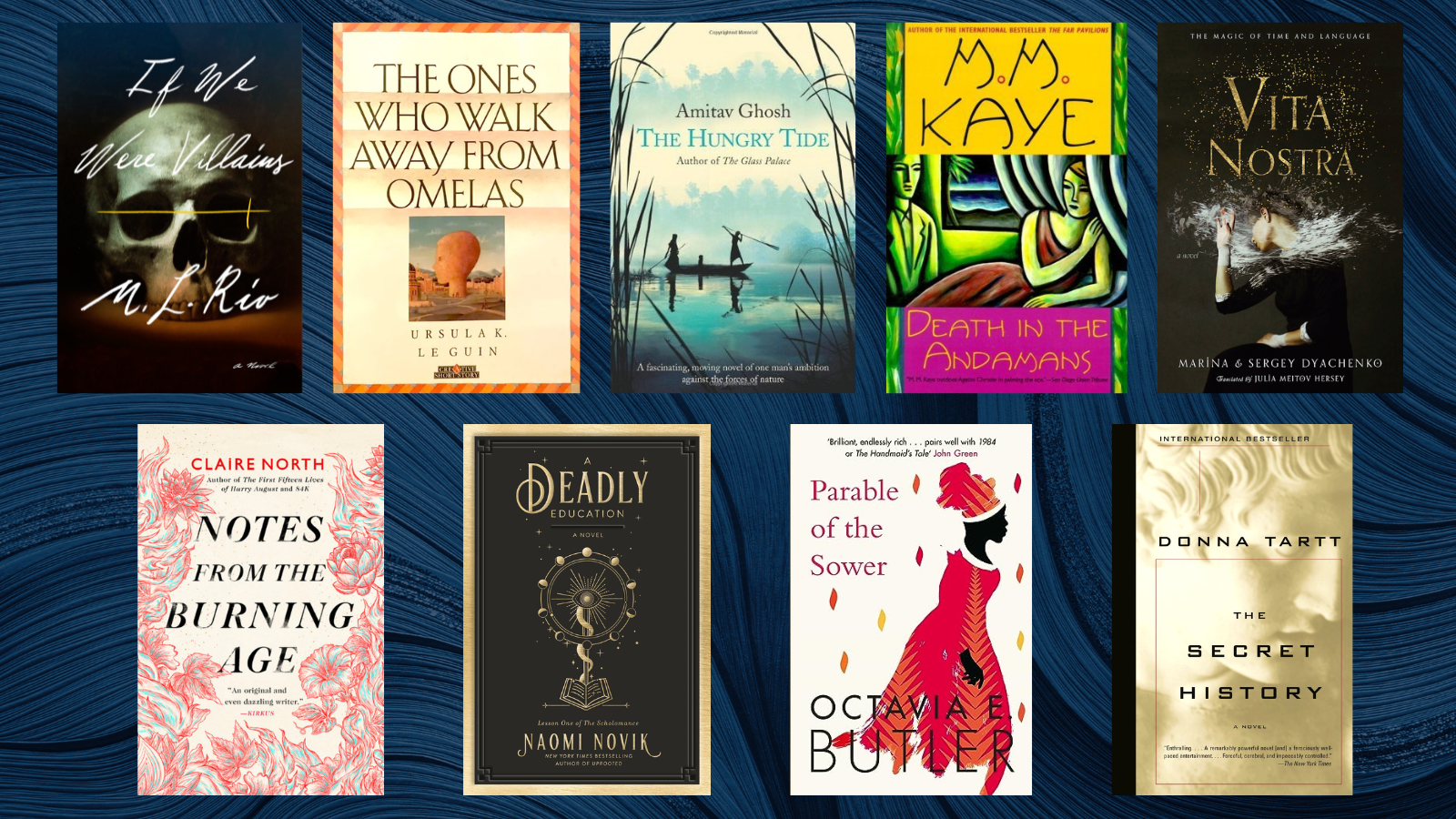
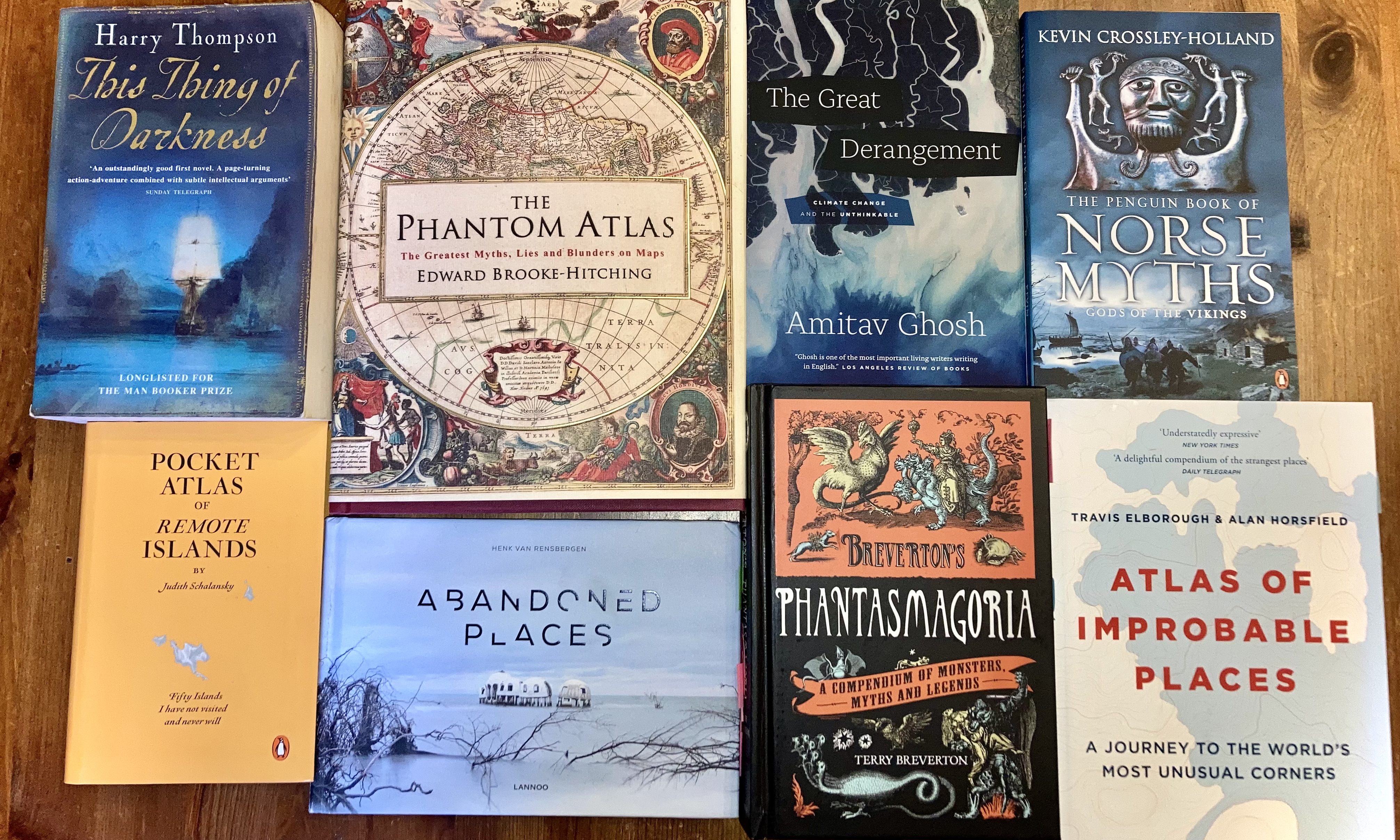
A lot of folklore, obviously. Can I write a book without it? And would I even want to? (No, and no). (If you don’t possess a copy of Breverton’s Phantasmagoria, please correct that terrible tragedy forthwith.) As you might gather from the image below, I do a lot of happy browsing through books of lost and abandoned places like I’m shopping for my retirement home/island. This is only about half the ones I own, and I highly recommend them if you are seeking inspirations for settings or mysteries or strange scraps of history. It is, incidentally, from that wee orange one in the bottom left that I read the fragment of history which gave me my setting in Mother Sea (the godawful history of the island of Tromélin).

As well as plaguing my sailing-obsessed sister for technical details, I also adore historic maritime explorer books and their wealth of perspectives on the ocean in an era when it was still so unknown and dangerous. In the picture below is the exquisite fictionalised story of Darwin’s voyages in This Thing Of Darkness – a beautiful, oddly sad and uplifting story.

Lastly for the non-fic, there are so many vital books out there now that explore climate change and our society’s responses to it. At the time of drafting The Salt Oracle, perhaps most recent read for me was this first beautiful and heartbreaking essay collection by the wonderful Amitav Ghosh.

How about fiction?

As you might expect, I am an unapologetic sucker for anything remotely Dark Academia shaped! There are issues I struggle with in this genre, and sometimes those flaws outweigh the joys of libraries! research! existential crises! but I will never not be tempted by books which centre the corrosive seduction of learnéd institutions. If We Were Villains and The Secret History are both rightly famous and need little explanation from me other than to say that while I prefer the former over the latter, I appreciate what the latter means to the whole genre. Likewise something that I really adoredabout Vita Nostra and the Scholomance series by Naomi Novik was how they both broke so entirely away from the dreaming spires, gothic architecture vibes of most DA. It’s probably fair to say those books gave me a lot more confidence when I came to writing my creaky, rusty hulk of a college!

Just as with non-fic, I am of course a fan of the many beautiful books that tackle climate change themes in interesting and nuanced ways within fiction. There are too many to list but at the time when I was formulating this book, Claire North and the great Octavia E Butler were probably top of my mental reference piles! I loved particularly how these books fold the climate themes into other forms of plot, as this was something I wanted to do (why write 1 genre when you can write 4, anyway) in The Salt Oracle.

There’s been a bit of a madcap trend in the short fiction world recently, of writing retellings or sequels to Ursula K le Guin’s famous The Ones Who Walk Away From Omelas – a short story that explores the brutal cost of utopia and who is willing to pay it. Some of these recent reimaginings have… rather missed the point of the original, in my mind, so I did my usual recalcitrant teenager act of refusing to say that Omelas was one of the core inspirations behind my book. But a wonderful author friend noted it, unprompted, in their blurb, so the (not really) secret is out, and I hope readers are intrigued and satisfied with this rather tangential take on le Guin’s posed question.

Two books in the image above that perhaps aren’t so obviously connected to The Salt Oracle are Amitav Ghosh’s The Hungry Tide, and MM Kaye’s Death In The Andamans. The former is there because of the sheer beauty of his descriptions of the ocean’s liminal edge wreaking wonder and devastation in equal measure. It’s a heartbreaking book, but one climactic passage describing a terrible storm tide haunts me even now years after reading it. That vibe of awe and horror, of both the power and the powerlessness of the sea, is something that hopefully echoes in the pages of my book.

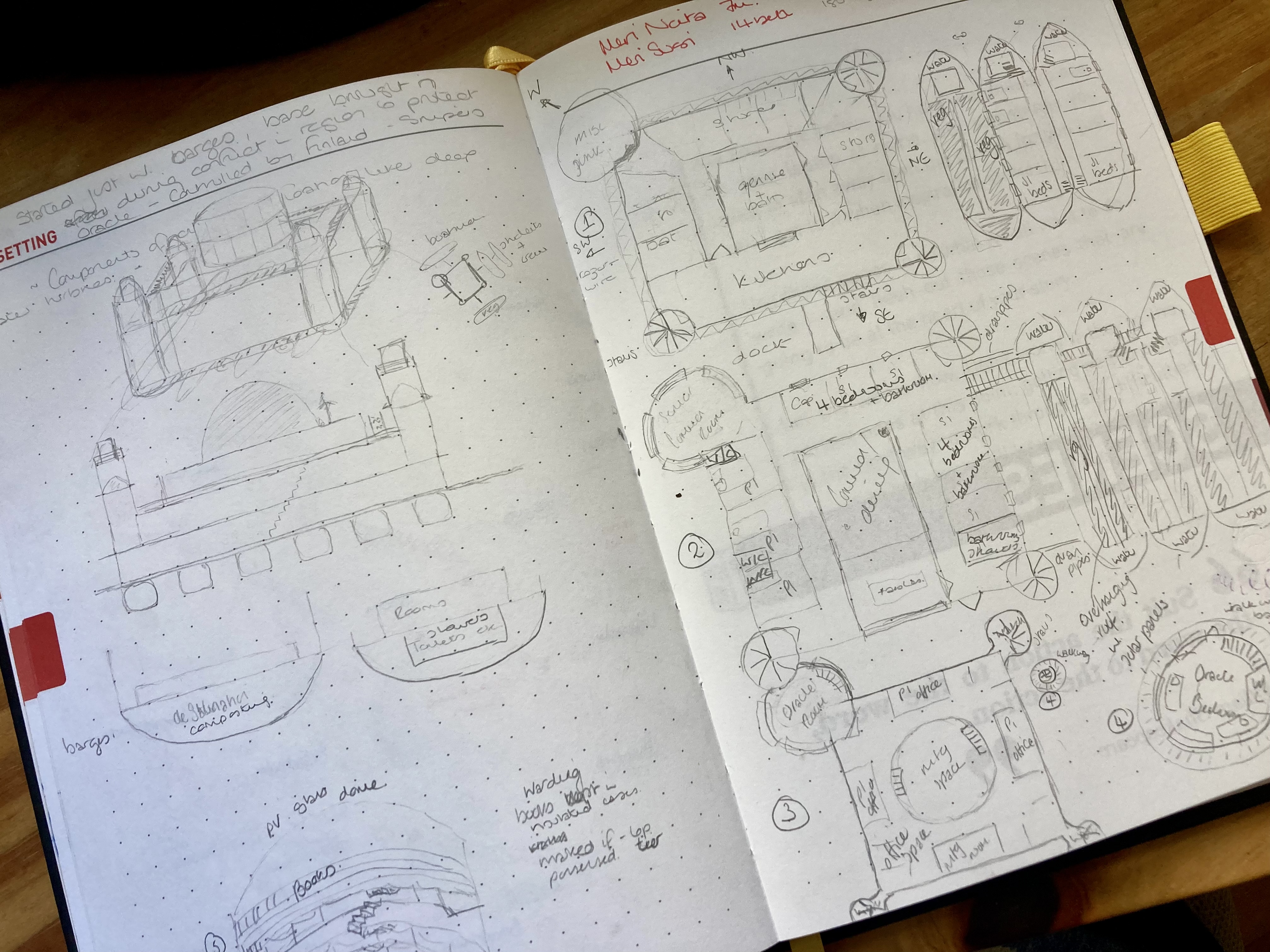
MM Kaye’s 6 murder mystery books are not the ones she’s famous for, and are definitely books ‘of their time’. But I adore them for her masterful ability to create rich, captivating settings that just ooze atmosphere and tension. In this book in particular, the key mystery events take place largely in one house, and the book includes (drumroll)… a floorplan. I am not a big fan of maps in books, but for reasons known only to the mice that occupy my brain, I adore a floorplan. Just. Perfection. Perhaps because that way I know where the library is. Anyway, as well as being a constant inspiration to me in writing atmospheric settings, MM Kaye gifted me the initial idea for the layout of the Bellwether – the college in The Salt Oracle.

And so, in case hustling on social media wasn’t mortifying enough, I’m sharing the floorplan sketches I did in my notebook for your delectation!

I am, as you are now sadly aware, not a natural artist! (also some of this changed, so don’t use it as a reference!) But this was a surprisingly essential part of my drafting process, because ooft the number of times I had to check back to see where characters ended up after running down some stairs…

A slightly random post from me today, fuelled by the dual horns of ‘I don’t want to just promo the book’ and ‘I can’t ignore the fact that it’s nearly release day’. I hope there’s some temptations in here for you, and if you pick up any of these books, or have your own strange and fascinating sources of inspiration please do let me know.

Thank you, as always for your support. Because accessibility in publishing is important to me, I keep all my craft and publishing posts free, so any shares or tips are greatly appreciated. Wishing you a fabulous weekend.
Check out my books here

Leave a tip here

Introducing The Salt Oracle

Well, my loves, I promised a proper introduction to my next book, and ta da! Here finally it is! Along with a deep dive into how I navigated a challenging developmental edit process, which I hope will prove useful/comforting to you if you ever face similar.

[This article was published on my Substack in early April and forms a part of a regular ‘Diary’ series of posts diving into the publishing process for my individual books].

As you may have gathered from the last newsletter, The Salt Oracle is coming out in November this year, and is set in the same post-internet digital ghosts future as We Are All Ghosts In The Forest, but is another stand alone. Because of my appalling series staying power (or lack thereof) I am rather loving the rise of same world standalones at the moment and am delighted to have accidentally fallen in line with a kind-of trend. For the one and perhaps only time in my publishing life!

These Diary posts are usually a wee behind the scenes perk for my paying subscribers but I figure as this is by way of an introduction, I’ll keep this one public. As well as telling you a wee bit about the book and where it’s at, I thought it also might be interesting to talk about the developmental editing round I recently finished on this beasty. Because, let me tell you, it was tricky. And, well, difficult publishing things are generally useful publishing things to share, right? So strap in…

The book

This book is my take on Dark Academia, set on a floating college fortress in the Baltic Sea where her mentor’s murder thrusts a quiet researcher onto a path towards discovering the secrets behind the strange, deadly Oracle child that the college guards so carefully.

If We Are All Ghosts In The Forest was built on the folklore of forests, then The Salt Oracle is built on the folklore of the sea. It’s about our relationship with the sea, as much as it is my character’s relationship with the college she loves, and it’s full of darkness and terrible choices, and perhaps, just perhaps a whole lot of love too.

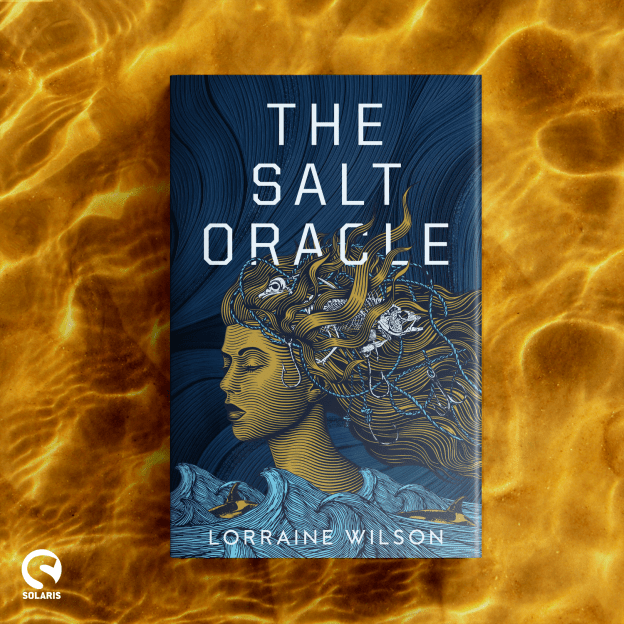
The cover for this book, as revealed in the last article, is to die for, and might in fact be my favourite book cover to date. Although let’s be honest, I have been really, really lucky with all my covers so far.

The Edit Letter

I’ve written before about dealing with the Edit Letter for We Are All Ghosts In The Forest (and Edit Letters in general), but to paraphrase, the Edit Letter is the foundation of editorial input on a manuscript from your editor (or agent, although those notes are often less formal). It tends to be a breakdown of big overarching issues, and then smaller more specific areas to address. Sometimes with a by-chapter breakdown and/or marked up manuscript.

My Ghosts edits were extremely light, but I knew Salt Oracle would be a different kettle of fish because it was significantly less polished when I sent it to my editor. That’s fairly normal for a contract book – you’re likely to be working to tighter deadlines and with less agent input before your editor sees it, so they are generally not scared off by a rougher second book.

But the edits I got for Salt Oracle were by some margin the most comprehensive edits I’ve yet received – 19 whole pages of overarching issues and by-chapter breakdown – and there were a few things in the mix there that meant they initially really knocked me for six:

  • I came away from reading the Edit Letter convinced my editor hated the book.
  • The edits were, for very valid reasons, later than anticipated so I felt very pressed for time.
  • The edits asked for changes that would shift the feel of the book’s setting significantly, and I wasn’t convinced it would work.
  • I was told I needed to cut my book’s length by over 20%. From 126k to 100k words.

Now, that first one can be put down to an over-sensitive author being over-sensitive. But it actually raised an interesting nuance to publishing that I think is worth talking about, hence its inclusion.

I got these edits just before Christmas 2024, and spent much of Christmas in a bit of a blue funk. I’m used to needing a few solid sulking days after getting an edit in, so at first this didn’t much bother me. I expected solutions to form in my mind, and the doubts and worries to morph into enthusiasm, because they had done before. But they didn’t.

I planned out my edits. The doubts and fears didn’t pass.

I started the edits. They still didn’t pass. In fact, if anything they were getting worse.

So around about New Year, I stopped and really looked at why I was reacting so negatively to the edits and what I could do about it. That, more than the details of the edit letter itself, is what I wanted to talk about here, as that’s what might prove useful to others if they too find themselves stuck.

Did my editor hate the book?

My editor had offered a call from the outset, but I usually prefer to just check in by email if I get stuck on anything particular and otherwise sort things out myself. Come early January, I realised I needed to talk some things through, and we jumped on a call. This call addressed a few things, but most importantly this first question.

And of course, no, she didn’t hate the book. She loved much about it, and the characters, the dilemmas and the messages of the book had struck home perfectly. Which was nice.

Something we talked about on the call though was the difference between an edit letter on an acquired book and an edit letter on a contract book. Because I realised that at what will be Book Six in my career, this was my first time with a contract book, and so my first time working with an editor on a book they hadn’t fallen in love with enough to fight for through acquisitions.

When an editor acquires your book, you know beyond doubt that they love it. So when they send an edit letter, you know it’s coming from a place of absolutely being on Team This Book.

Conversely when you have just yeeted a book at your editor that they maybe saw a rough pitch of over a year ago … you do not start with that same assurance.

It sounds a small detail. But when you are facing pages and pages of ‘this needs fixing’, not knowing whether there’s a preceeding ‘I love this but-’ matters. It’s hard processing pages of criticism, so you want to know whether the feeling behind them was ‘this is great, but let’s make it better’, or ‘ye gods why have I been cursed with this’.

This was, I think, a useful lesson for both of us in openness and taking the time to make sure we both know what the other is thinking. It made me incredibly grateful to have a relationship with my editor that makes these conversations easy and positive.

Time pressures

Again, on the call and follow up emails this was a source of anxiety that my editor was able to almost entirely remove.

We shifted the delivery deadline from mid-February to early March, with the knowledge that I could shift it further if need be without it impacting the publication date (which was my biggest worry). Shifting too much further would start to impact our ability to get ARCs out to reviewers though, as well, frankly, as bleeding into time I’d scheduled for other projects. So I didn’t want the deadline to slide too much. But it was very reassuring to know I wasn’t at risk of losing my late 2025 publishing slot.

Edits that don’t feel ‘right’

There were two overarching ‘structure’ changes my editor requested. One was to cut out the wider state-level politics to keep the threats surrounding the College more direct and tangible. The other was to cut the number of characters by some way, as it currently felt too confusing with many of them mentioned too briefly to stick in the mind.

The state-level politics was a fairly easy fix, although the College still needed external connections, otherwise how was it funded? So I’ve not been able to cut all ties to the wider world, and instead have replaced state politics with the politics of appeasing multiple contractors and a university main office. At the outset therfore, I wasn’t sure this background change would really improve the book materially.

The character cull was trickier. I had intended the College to feel like a busy, multifaceted research organisation, full of disparate teams all with their internecine rivalries and my main character isolated within it all. Cutting a lot of characters would fundamentally shift the nature of the College from busy academic institution to small research outpost. More of a remote field station than a center of learning. That’s quite the vibe change, and I wasn’t sure I liked it – I felt it was important that the College look successful For Reasons.

But my approach to edits I’m unsure of is generally to try them and then decide, so that’s what I did. After making sure I had back up copies of the book!

Now it’s done, I think shifting the College’s management structure from political to contractual has simplified and tightened things in a way that works nicely. The move from busy to small I also think now works well – I have leaned into the idea of the College being half-empty due to the umm… attrition rate (!), and the echoing spaces and survivorship atmosphere add some vibes to the book that I wasn’t initially looking for but that I think are pretty cool. And yes, it’s easier to keep track of the characters now too. So although at first I was really hesitant about these edits, guess what? My editor was right? Curses.

Cutting word counts

Perhaps, now I’m out the other end of this edit, this was the trickiest issue of them all. You see, although a good amount of tightening and cleaning up of the prose was definitely needed, the main driver behind the 20% wordcount cut was actually the high price of paper and printing at the moment.

It is, it turns out, one thing to make any number of edits that are intended to make your book better. It’s a whole other thing to make edits to your book that are primarily about making it cheaper. I worried that in cutting words which didn’t strictly need it, I was stripping my book of some of its nuance, its subtlety, its beauty. And as I wrote about recently, I like that stuff! So that editing pass felt rather soulless, if I’m honest, which was a shock – editing is something I generally enjoy and that gets me excited about the book.

I absolutely understand the requirement. Publishing margins for independent presses are under very real pressure from printing costs alongside other factors. So I don’t resent the expectation, although I will endeavour not to be in this position in future (by having those conversations at the contract stage, I imagine, so I’m not caught unawares).

Fortunately having read the shorter version, it does still have nuance and subtlety and beauty. The book’s themes still feel vibrant and strong, perhaps more so for the (relatively) pared back prose matching the vibes. Plus, the cuts have helped me sort out several plot tangles and hone the pacing. It is still, vitally, the book I wanted to write and a story I am very proud of. Honestly, being forced to cut so much whilst not losing the feel of the book has probably been a useful experience for someone like me, who does love a long sentence.

But where I was able to put to rest all my other worries about this book and its edits, this one remained. It wasn’t until I got comments and line edits back from my editor last week that I knew I’d nailed the challenge – my editor was delighted and my line edits took me less than two days. *cue celebratory dancing*

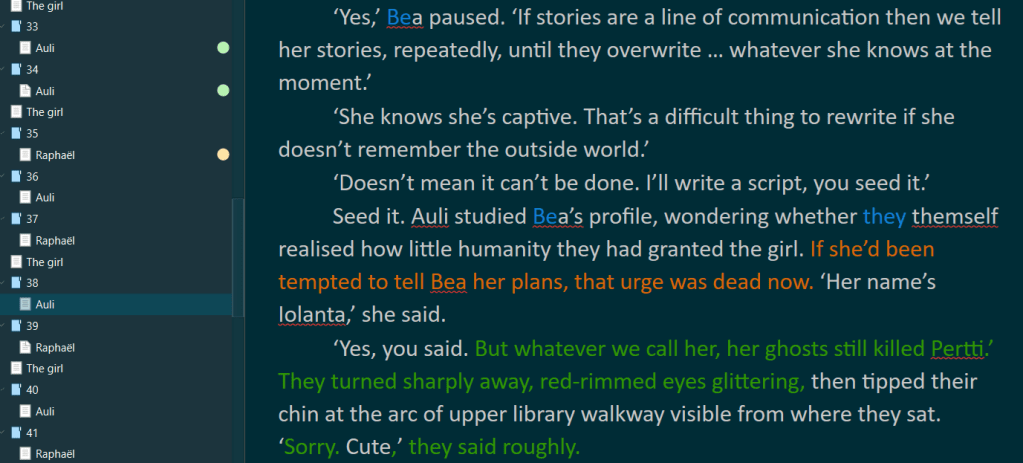
An in-progress editing screenshot from Scrivener showing three different edit passes as different coloured text. This let me keep track of what I had changed & why.

The actual editing process

Just a quick note here, in case anyone is wondering how I went about such a big edit. The answer is I broke it up into five separate edit passes dealing with different things each time. I dealt with all the actual editorial changes on the first three passes, then did a Big Cut pass where I focused purely on cutting words, then finally did a kindle read-through to catch errors, smooth out over-edited bits, and generally reassure myself that it still worked and I still liked it.

It does and I do. Fortunately.


So, there it is, the next book in all its complicated glory. I love it, and I hope you will too when it reaches you. But man, this one has put me through my paces. It’s been a valuable learning curve though – both in terms of my process, and in being able to continue loving a book through all its permutations.

Thank you for reading and I wish you all a relaxing weekend.

Publication day waffle

The book, the backstory, the question, and my hopes.

I have grown a habit without plan or forethought, of posting on/around each new book’s publication with my thoughts on what that particular book means to me and where it came from. For Mother Sea, that post was an explanation of the content warnings for the book, for The Last To Drown it was about the experience of writing chronic pain and the craft of novella writing.

With the publication of We Are All Ghosts In The Forest this week, I have been attacked by a fit of the pensives again and wanted to do the same for this book. Because the weird thing about publishing multiple books is that each one somehow means something unique to you. It’s important to you in an entirely different way to your previous (and likely next) books. Which when I type it, sounds perfectly reasonable, but I don’t know – I think a part of me was under the impression that publishing books would become … not rote because obviously each book is unique, but that the act of publication at least would become familiar and comfortable. Like wearing different outfits every day but then slipping into the same coat to go out.

And yes, there are aspects of the publication hullabaloo that feel very different (mostly less fraught) than they did the first time round simply because we’ve been here before. But Ghosts does have its own new territory to break, both personally and professionally, and I guess that’s where I’m gonna go with this publication day (weekend) waffle. Alongside a lot of shiny promo graphics that my fab publicity person sent me & I can’t resist using!

Craft, learning and lockdown.

One of my writer hopes is that each new book I embark on will teach me something new about writing. It’ll push me in a slightly different direction – whether that’s in genre or subject matter, form or voice – so that with every project I am challenging myself to grow as a writer. I aspire to be braver at this, if I’m honest with you, to be bolder in leaping into things I’m not sure I can pull off, more fearless (or unhinged, your choice) in being willing to tear something down that’s merely ‘good enough’ and rebuild something better from the ruins.

However, that’s for the future. For Ghosts, I look at it and think that the best lesson I learned from it is to trust in the small flashes of wonder more. To not get stalled on ‘yes but how does that work’ until the editing, to leap merrily into a half-arsed shiny idea without the comfort of the usual planning I do. I don’t think I’ll ever be someone who regularly writes without a good map (of character psychology and setting at least), because that stage does feel important and enriching to me. But I think there’s real value in knowing you aren’t tied to that planning. That sometimes, when the wind and the tides are right, you just have to leap aboard, hoist sail, and see what happens.

Which is how Ghosts materialised. At least the initial shape and opening chapters.

See, the thing is, I started writing Ghosts in March 2020.

Mmm hmm. That March 2020. I had a child two terms into their first year of secondary school, just forming new friendship groups, just adjusting to this new world … then suddenly at home, isolated, with their education, friendships and world reduced to pixels.

[See where the idea of the ghosts came from? More on this below…]

Homeschooling in that first lockdown was … not brilliantly structured, so even though I had it undoubtedly easier than parents with younger children, I was still rarely getting more than 20 mins of uninterrupted time. And the vast majority of my attention, emotion, and organising capacity was being used up on my child, which left exactly zero capacity for me to do intelligent, thoughtful things like plan and research and worldbuild.

When I sat down to write Ghosts, I had the opening image in my mind – of a woman returning to a remote village with a stranger boy – in my mind and nothing else.

Two paragraphs in, I mentioned a ghost. The line is ‘There were three people on the street, two of them real’. I wrote that, thought huh, so we’ve got ghosts then, and carried on. By the end of the first chapter – and the appearance of a certain image-shifting cat – I’d realised the ghosts were the remains of the internet, that the village was in Estonia, and that Stefan, the boy, was non-verbal. All my worldbuilding, character development, and plotting began then, and it was a patchwork ad hoc affair that later required a lot (so much) patching up and weaving in of broken threads.

Without the particular circumstances of lockdown and homeschooling, I’d never have written a book with such wild absence of planning. I quite probably won’t again. But thanks to that experience, and to Ghosts as a final product being something I’m quite proud of, my relationship with planning has evolved significantly. I still spend a good amount of time exploring the imagery and layers of the book’s core theme, because that’s the lodestone upon which everything else is built. And I do still plan, but it’s much less ‘I need to know everything before I can start’ and much more ‘I need to know enough not to get too tangled while I’m finding my feet in the opening chapters.’ It’s less character arc graphs, and more floorplans! (I’ve discovered a bit of a love for floorplans with Salt Oracle and the current wip both being largely in one big, complicated building)

Is this growth? Not really. I mean, there’s no wrong or right way to do this, so my approach adjusting doesn’t mean it’s better. But I do feel like this particular change, for me, is about confidence. I trust my instincts more, I trust those flashes of wonder to guide me well; I trust that if I make an unholy mess I can (grumpily) unpick and restitch it. Let’s be honest, I will also always love a graph, but this new more relaxed approach to tackling new projects might just give me the freedom to be bolder in the next project, and the next…

Ghosts and loneliness

There’s always one question that comes up again and again with each book that gets published. One particular theme or issue that stands out enough with enough people to become a feature of most interviews or informal chats about that book. For The Last To Drown it was about the experience of writing chronic pain. For Mother Sea it was questions about the importance of climate fiction.

For Ghosts I think one is already emerging, and it’s going to be ‘Where did you get the idea for these ghosts?’. The easy answer is that scene above – me watching my child struggle through the loneliness of a life reduced to four walls and pixels on a screen. The strange thing is that lockdown wasn’t isolating for me, in fact with both my husband and daughter suddenly in the house all day every day, I lost the peace and solitude I actually relied on quite heavily to manage my chronic pain. Being housebound apart from occasional short trips out? Well, hi, welcome to my world, please tidy up after yourself. BUT it was a horrible experience for my daughter, at an awful point in her life, and watching that was heartbreaking.

The chain of thought from that to a world haunted by fragments of our digital detritus, by our online echoes, is fairly obvious. And then the rest of the world in Ghosts had to be built up around that central concept.

So if anyone reading this was wondering, there’s the answer to that particular question. Where did the ghosts come from? Loneliness and lockdown. Homeschooling, society’s fragility and resilience; most of all the search for connection.

Growth, ladders and doing the daunting things

Ghosts represents something more prosaic to me too. This is the first book in my Solaris contract, and my first book with a publisher that has Big 5 distribution and main player reach within the SFF world. All three of my publishers have been/are amazing, and in my opinion punch above their weight with the quality of their lists, but Solaris are a step into a bigger room for me, if you like.

So Ghosts feels a lot like the next rung in the ladder of my career. It’s exciting. I’m hopefully going to be reaching new audiences with this book, hopefully gaining new readers who’ll stick around for future books. I’m doing more events for Ghosts’ launch than I’ve done for all my previous books’ launches combined! And with some brilliant author friends! My fabulous marketing/publicity goddesses are helping me reach new venues and platforms too. If the reception to Ghosts is positive, that in turn will pave the way for other opportunities (foreign rights sales for Ghosts, further book deals etc).

This is all wonderful new ground to be breaking. I am extremely fond of, and proud of, Ghosts, and am excited to have it out in the world finding people it resonates with. It’s also, not gonna lie, just a teensy bit daunting. I say this because I’m leery of doing the Instagram ‘Everything is intensely wonderful actually’ thing. Several events plus travel in a month is going to be a physical test, but I’m interested to see how I cope and how quickly I recover. It’s good data for the future! There’s also the fear, of course, that no-one will show up to my events, or that everyone will hate the book and hunt me down to tell me so, or, or, or… But those are normal, unavoidable fears to have and I have an ace in my back pocket…

…I have readers. I may not have many compared to other authors, but there are amazing, strange, beautiful people who have come with me from book to book, frequently cheered me on, voted for me, recommended me to others. These readers have trusted me each time I’ve veered off in a new direction. So I trust them in turn. I trust that they’ll read Ghosts and find something worthwhile in it. And that’s kind of all that matters. Yes, I hope I reach new readers as Ghosts takes the stage. Yes, I hope it opens new doors for me and my career. But I hope even more that the readers who’ve supported me thus far will enjoy this next step on my bookish travels.

Thank you for reading & supporting this blog. I’ll be back soon on my Substack with less ‘please buy my book’ and more about what makes a good book event, parting ways with your agent, and more…

Cover Reveal and Some Musings On Cover Development

Today is Cover Reveal Day for We Are All Ghosts In The Forest! I love cover reveal days – they’re the day you can entirely unself-consciously gush about your book because you’re gushing about someone else’s work which removes (almost) all the imposter syndrome, awkward self-promo feels of your standard bookish promo events.

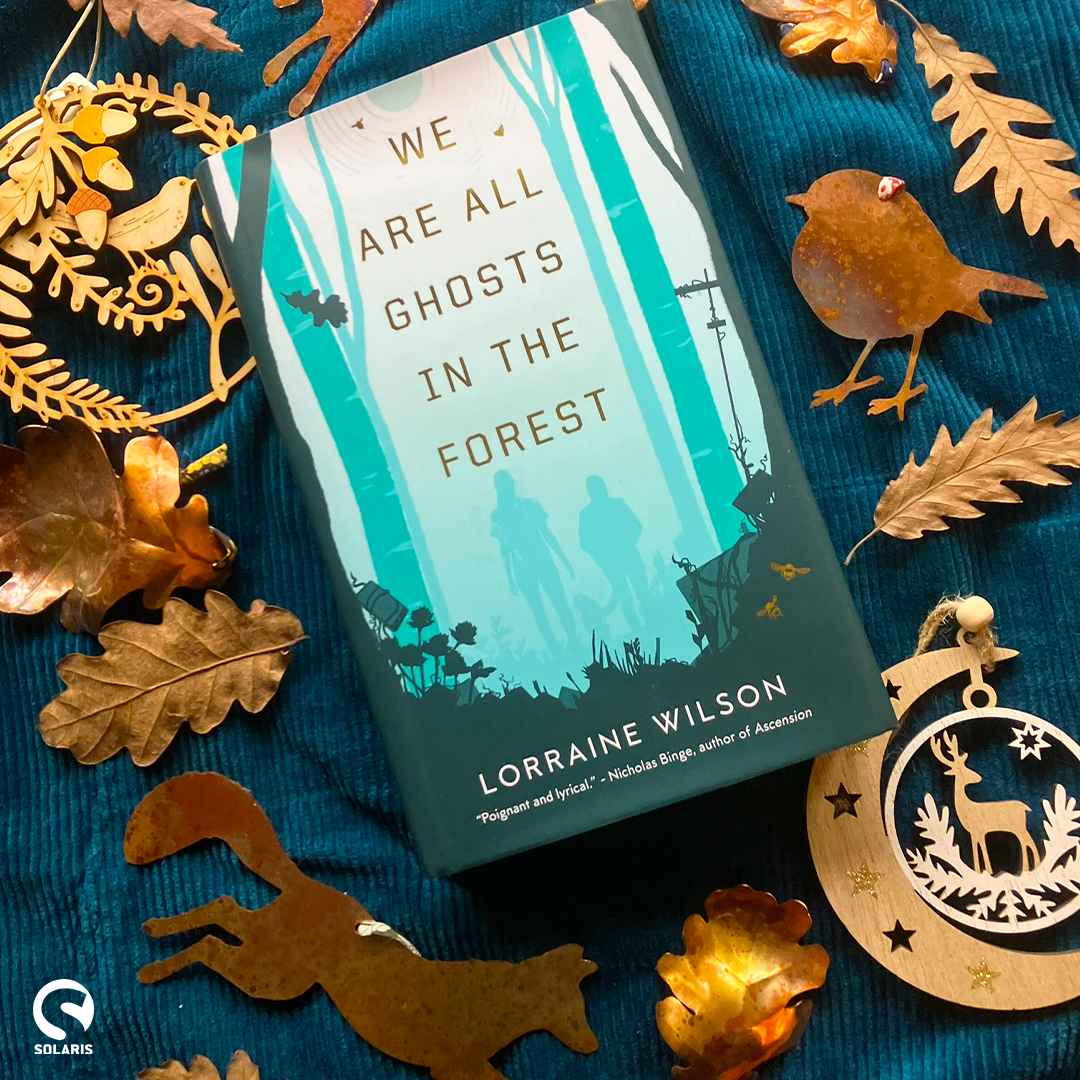
If you’ve managed to miss me hollering on social media – here is the gorgeous creation of Jo Walker, which I think captures so much of the essence of Ghosts from the colour palette to the tiny details.

Rather than just finish the blog here with an I HOPE YOU LOVE IT, I figured it might be interesting to talk through the process of cover designing in trad pub and perhaps share some ideas for how you the author can best intersect with that to increase your chances of getting the cover of your dreams.

Sound good? Okay.

[A version of this blog was shared on my Substack in January. Where-ever you read it, thank you for your interest and support]

I’m not as visual as some, so when I have a finished book my sense of what I want the cover to look like is generally quite vague. For my first book, I could only say ‘I don’t want people’ and ‘Moody, maybe with foxes.’ Which is … well it’s better than nothing. But there are several hundred directions that premise could take and many of them wouldn’t have really fitted my inner vague sense of the book.

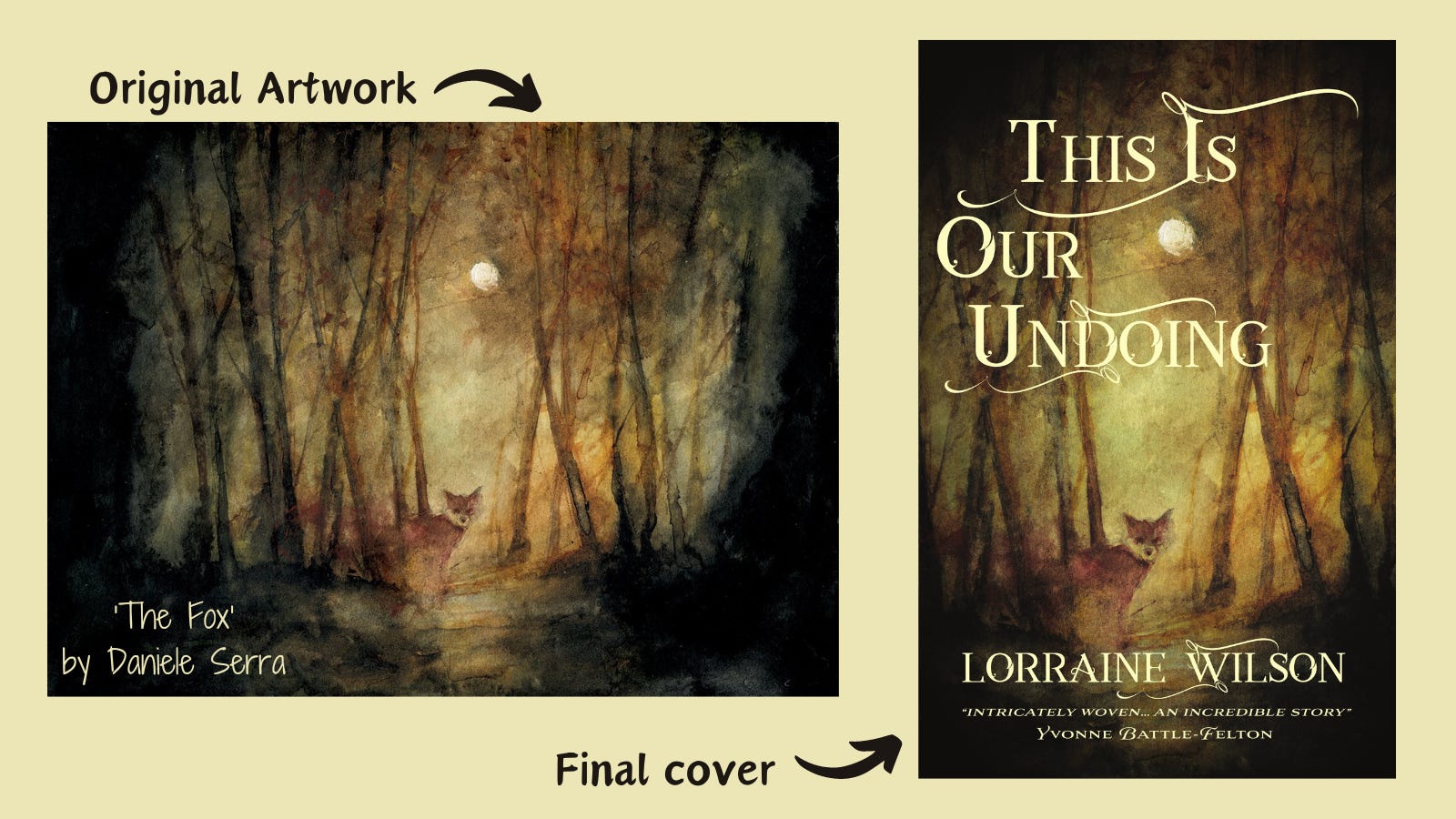
Incidentally, I got extremely lucky with my first book in that my publisher spotted a new piece of art by award winning cover artist Daniele Serra and knew instantly that it fitted the book perfect. So my vagueness didn’t shoot me in the foot and I adore my moody fox with no people cover!

Buying the rights to a pre-existing piece of art is a slightly unusual process though. In most cases a book cover is created specifically for the book according to a cover brief given to the artist.

By my second book, I’d figured out that I needed to think more clearly about what I wanted. Now, I look for covers of books that both fit in the same marketing space and have stylistic approaches I like. I look up the designers of covers I admire and check out their portfolios. I try to come up with a list of aims that are more than ‘make it dreamy?’. Such as – ‘I think a minimalist & slightly eerie foresty vibe would work really well’ (Ghosts) or ‘I’d love lush tropical colours, including animals that are motifs in the book, and reference to the sea’ (Mother Sea).

And so for all my subsequent books, I’ve gone to my editor with some comp covers, a set of specific vibes that I want to convey, and some stylistic or design elements I am keen to see.

This step can take the form of a conversation in a bookshop (my second book), some email back and forth about comparative covers and photographs (my third book), or me sharing Pinterest boards and comparative covers, and us both pulling together a list of potential artists (We Are All Ghosts In The Forest).

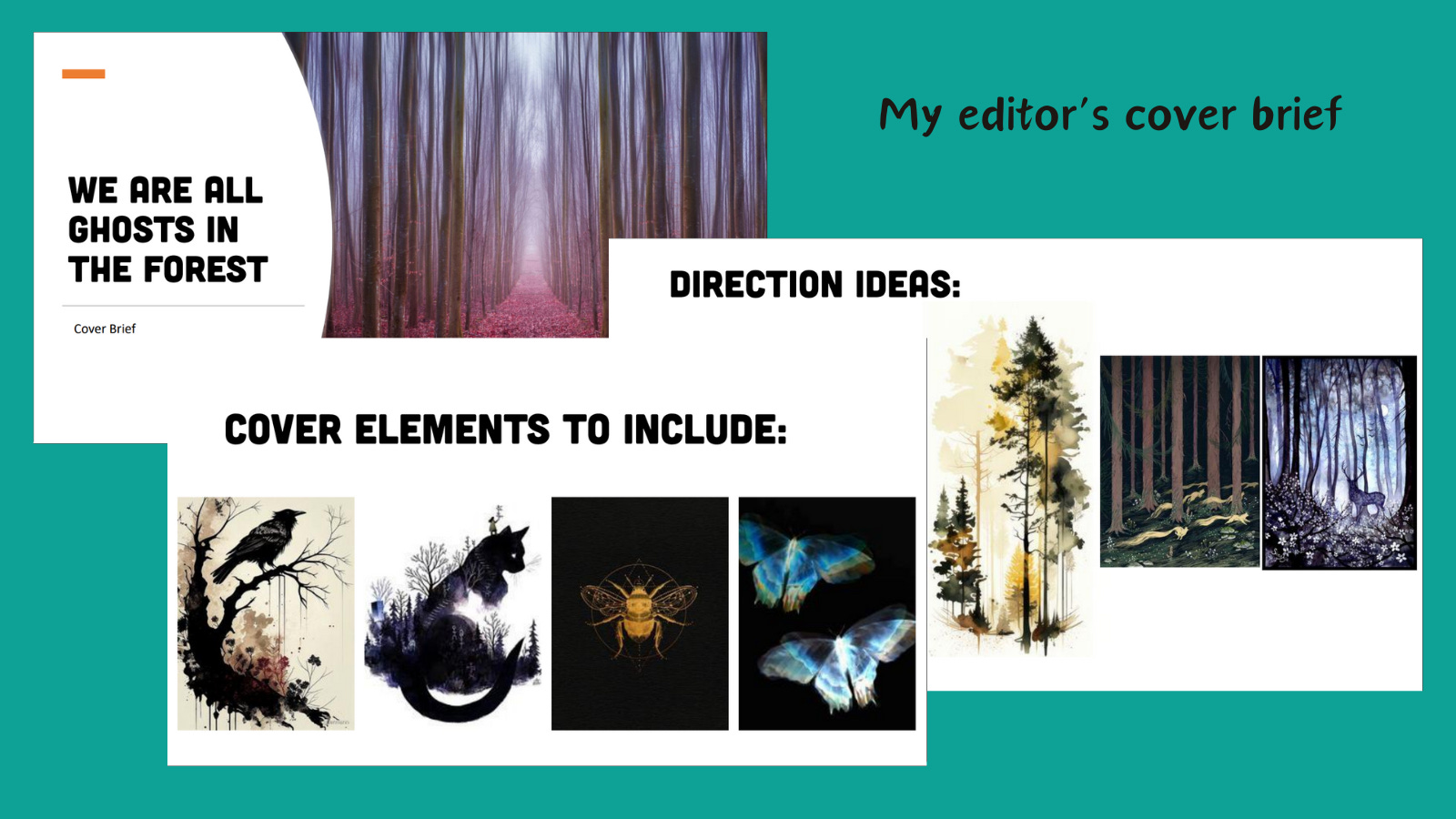
Once you and your editor have agreed a direction, your editor puts together a cover brief which contains all the above information, along with relevant themes and motifs, plot points and market placement aims. The cover brief my editor put together for Ghosts was amazing (I wish I could share all of it), and incorporated elements from my Pinterest board, many of my suggested cover comparisons, and some incredibly exciting author comps as well.

The next steps happen without author input, usually (but see below).

With the sign off of Marketing and Publicity (and Mysterious Others), this cover brief is then sent to whichever cover artist is hired for the job. We had a list of top favs, and which one we went with was a juggling act of their vision and availability versus our deadlines. The limits of my involvement in this stage was saying ‘fabulous’ once the artist was confirmed.

Normally, the artist provides a selection of initial cover visuals to the publisher and they go through a process of development to come up with a single draft cover before this is then shown to the author.

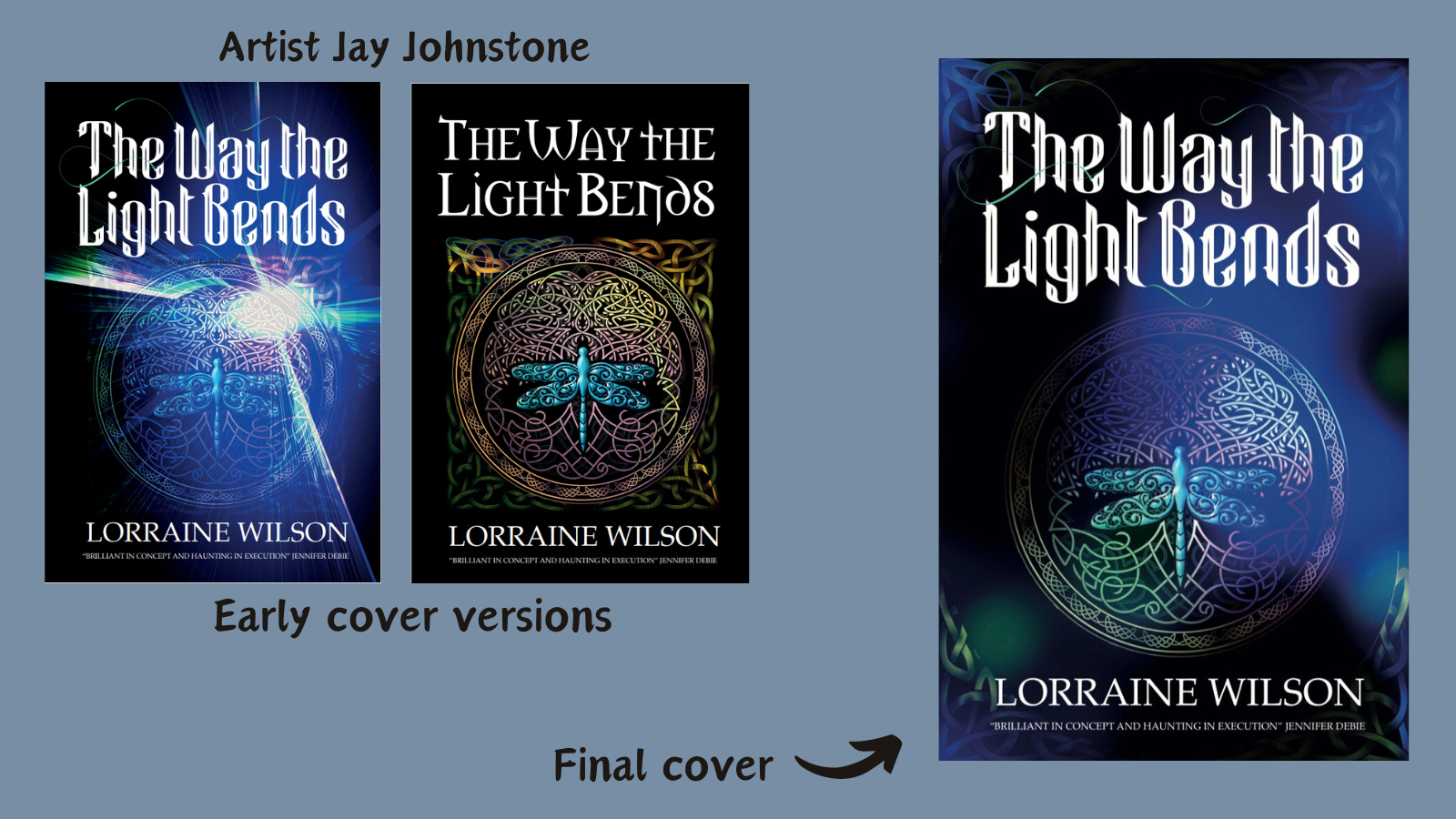
With my second book, publishing with a small press meant that I was more closely consulted at this stage. I got to see all the prelim draft versions, pick the elements that I liked and ask for fairly substantial changes in an iterative process that went from entire colour/layout changes to tiny tweaks of font size and contrast levels. While this isn’t something I can expect from most books, it was an incredible learning process. (Check out Jay Johnstone here)

With Ghosts, I was sent a draft cover that had already been through revision in-house. It was beautiful, and very much in line with how I’d envisaged it. There were a few tweaks I wanted though, and after consulting my agent to confirm, I sent this list of requests back to my editor. Now, the bottom line in all of this is that the publisher has final say on covers. Contractually, authors are to be consulted, but not obeyed, so to speak.

With Mother Sea, to be honest this draft was so sublime, I made one request about the title font, which was adjusted, and that was it.

I was a little nervous sending a few more tweaks for Ghosts, so was super grateful when my editor came back with ‘Yes, I agree with all of this, will send it on’. Happy days.

I then got sent a ‘final’ version to agree, which was amazing and incorporated all my requests. But there was one small detail I felt still needed tweaking. I asked; this time my editor said ‘maybe. it depends.’ Which is entirely fair. The artist was working on commission and that buys only so many hours of work. So I get it, and even if they couldn’t make that last change, I still fortunately had a cover I love.

Do I have to love it? Maybe not, but I do have to believe it will help sell the book. We are going to be looking at this cover SO MUCH over the next year or so. I’m going to be taking it to bookshops, sharing it online, using it to pitch myself for events. I have to trust that when I show it to someone, it will give them both a fairly accurate sense of the book, and also make them want to pick it up.

It is easy, as with editing the book itself, to get tied up in tiny details. To worry about comma placement, exact shades of green, the length of chapter 27, the perfect placement of the title to the millimetre. And yes, those things matter. But also they don’t? At some point we are fiddling with things that no shop browser or reader is going to spend more than 3 nanoseconds on, so it’s okay to step back and go – it’s fine. I’m happy. I trust it.

Which is what a lot of it is about, I think. Trust. Trusting the publishing team to know what will work for your book, trusting your gut, trusting your book to stand without you in the world and do its job on its own.

Conversely, if your gut is telling you this cover is wholly wrong for your book, then step 1 has to be to talk it through with your agent if you have one. How much is simply that you aren’t familiar with current trends in cover design in your sub-genre? How much is a genuine disconnect between where you see your readership and where your publisher sees them? I’m very lucky I’ve never had to deal with this particular minefield, but if you find yourself in it, speak to your agent. Ask trustworthy friends who both know your book and know enough of publishing to give an honest, informed take. It’s hard to find the line between standing up for your book and not trusting the expertise of others, but resolving a sticking point can only happen through gentle, clear communications. Ask me, if you like! I’m happy to offer my semi-informed opinion!

I love the cover design stage. I love the joy of pointing at beautiful covers of books I admire, and saying ‘I’d like something like that please’. I love the absolute wild magic of sending a set of bullet points and random pictures to an artist and them somehow, miraculously producing something that captures the essence of your book. How? They are amazing creatures, cover designers, and deserve far more recognition than they generally get.

Did I get my final adjustment? No. Does it matter? I’m glad I asked, I would have regretted not asking and I think my suggestion was a valid one, but I still have a cover I both love and trust, and have been bursting with the urge to show it to everyone.

With the cover of Mother Sea I usually shove it at people, shouting LOOK AT THE CRAB. With Ghosts, I think it’s gonna be GOLDDD BEEEEEEEES.

Mother Sea Island Tour

In the lead up to Mother Sea’s publication I did a wee countdown series of social media posts visiting various islands that inspired the island in Mother Sea. It was mostly an excuse to post lots of photos and rave about lovely places, and I figure I ought to pull it all together here just in case. (In case of what, I don’t know … the fiery death of Twitter? the need to prove ownership of the photos? validation that all my effort pulling it together was worth it? … Probably that last one tbh)

Anyway, below is a slightly expanded-upon tour of the islands behind the island…

One – Iceland

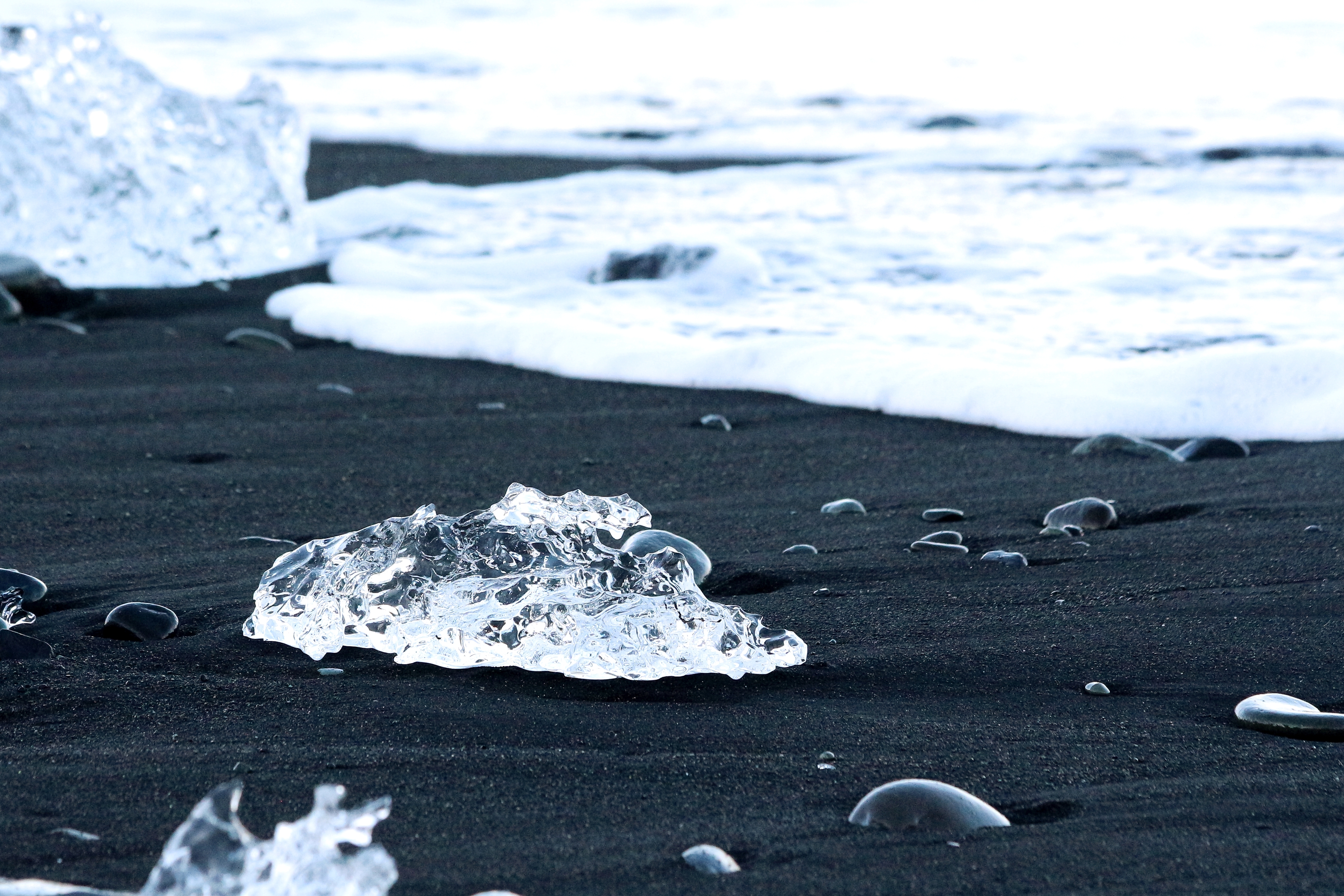
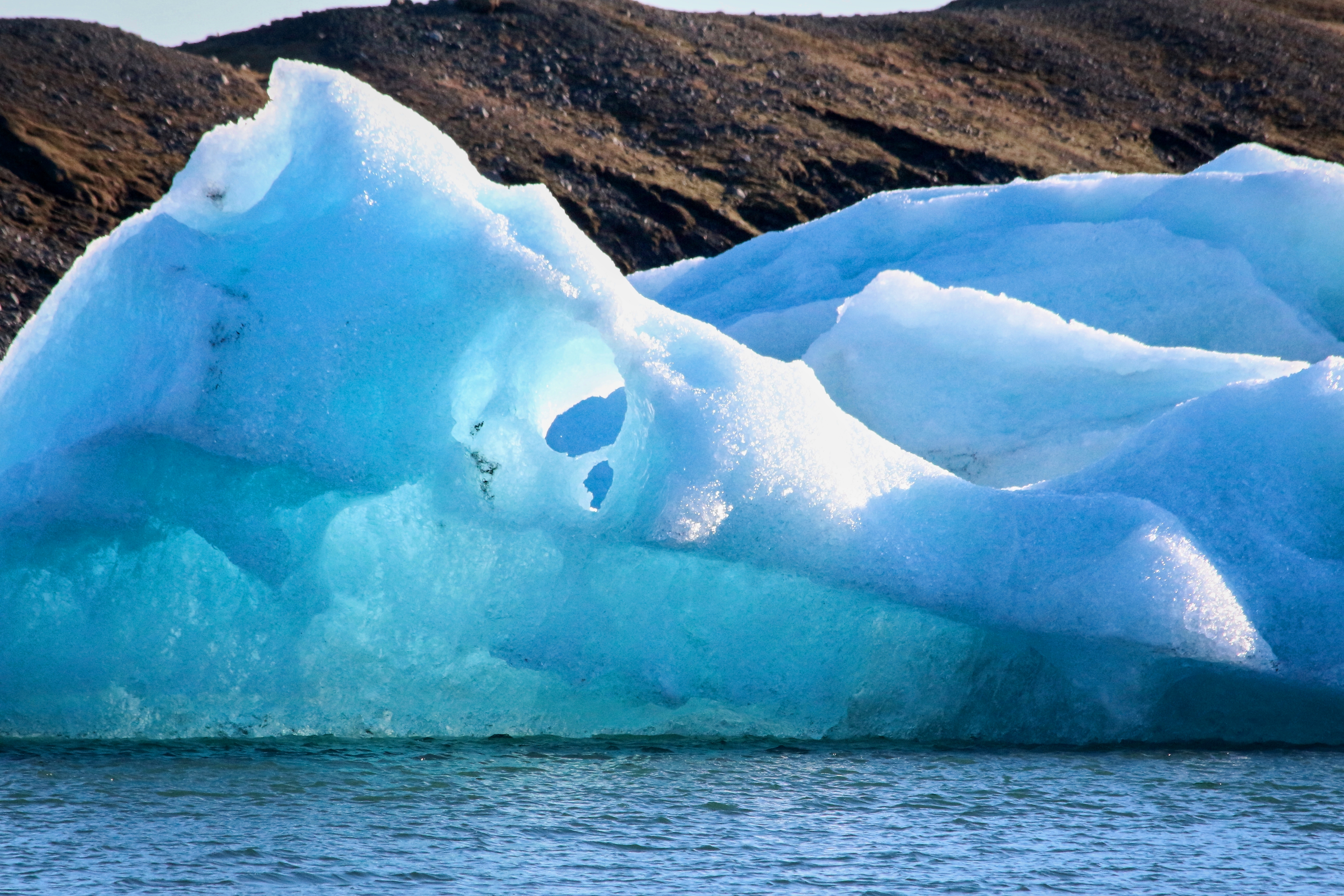
Not much in common with the tropical island in Mother Sea you say? Well, no. But this place has A Lot to teach the writer about colour palettes, I think. The deceptively monochrome black sand and white glaciers and searingly blue sea are an incredible reminder that less can be more! Also in this country there is no escaping the power of an unquiet land & the persistence of folklore.

Fav folklore – The Jólakötturinn – a giant cat that eats folk who weren’t gifted new clothes at Yule

Fav experience – The northern lights. I have no photos but omg, it was all the things and more.

Two – Tierra del Fuego

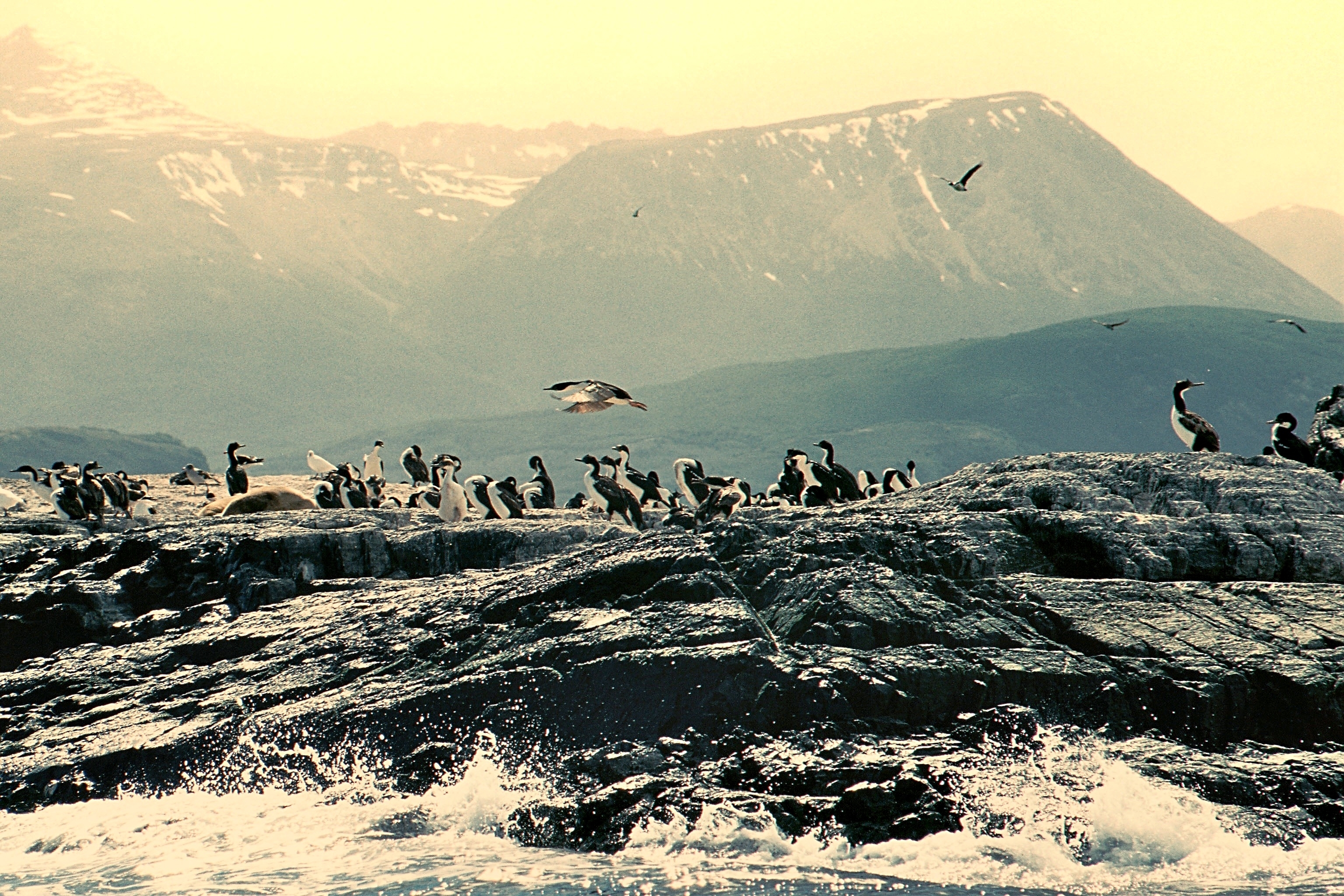
Staying in higher latitudes but at the other end of the planet, the beauty of these southern islands blew me away. It’s undeniably antarctic in weather and wildlife but all my preconceived notions of that were undone by flower-strewn islands, by hummingbirds & parrots right alongside penguins & sealions. Also, partcularly relevant to Mother Sea, heartbreaking histories of colonial genocide & the loss of language & culture.

Fav folklore – Teiyin from the Yahgan ppl. A shapeshifter god, protector of children & elderly, enforcer of altruism.

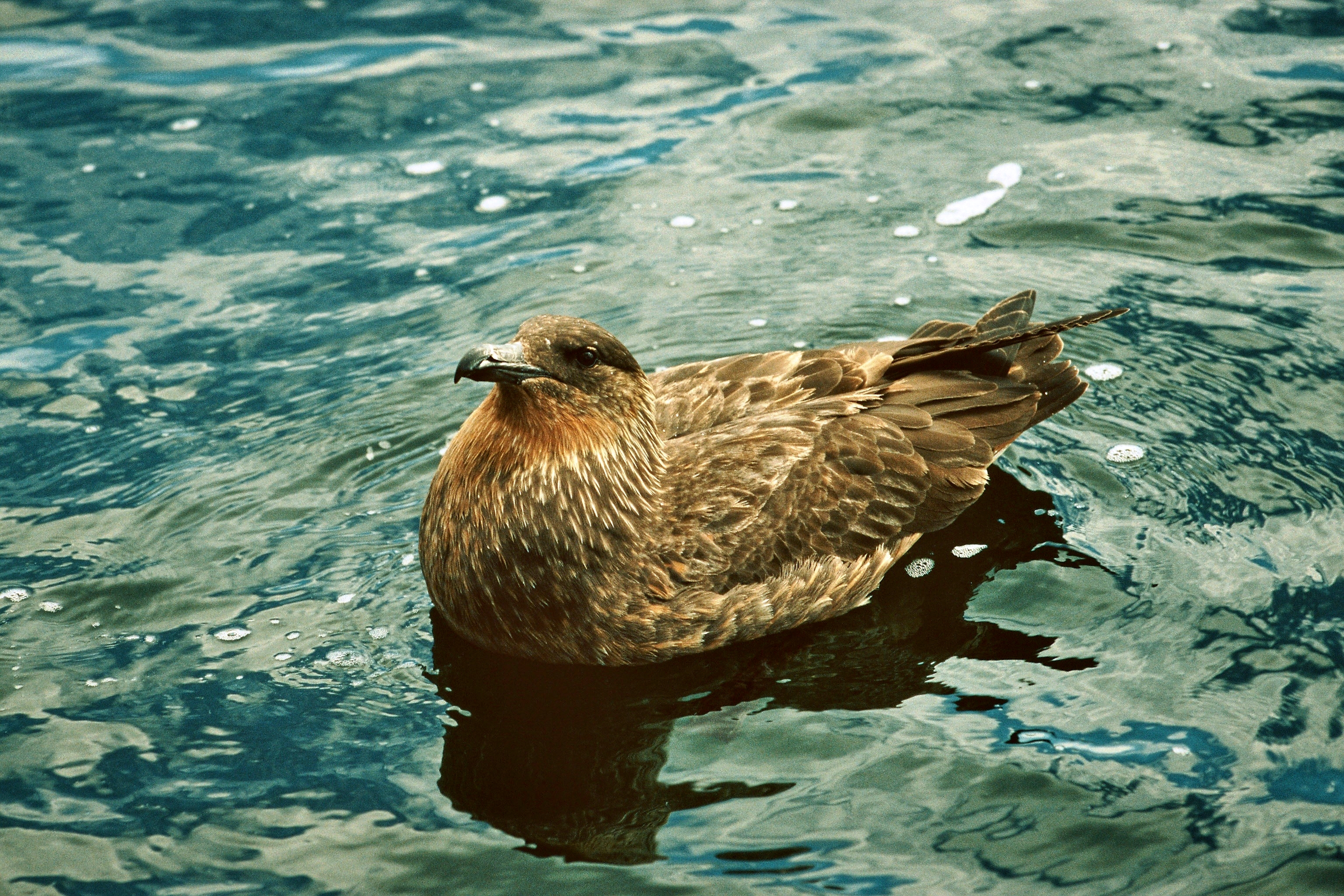
Fav experience – Following in Darwin’s footsteps – I read This Ship of Darkness while I was there for extra cross-temporal-bonding! Also, steamer ducks. So round.

Least fav – my 1st ever sunburn. I did not know it *hurt*! What?

Three – Shetland (and Orkney)

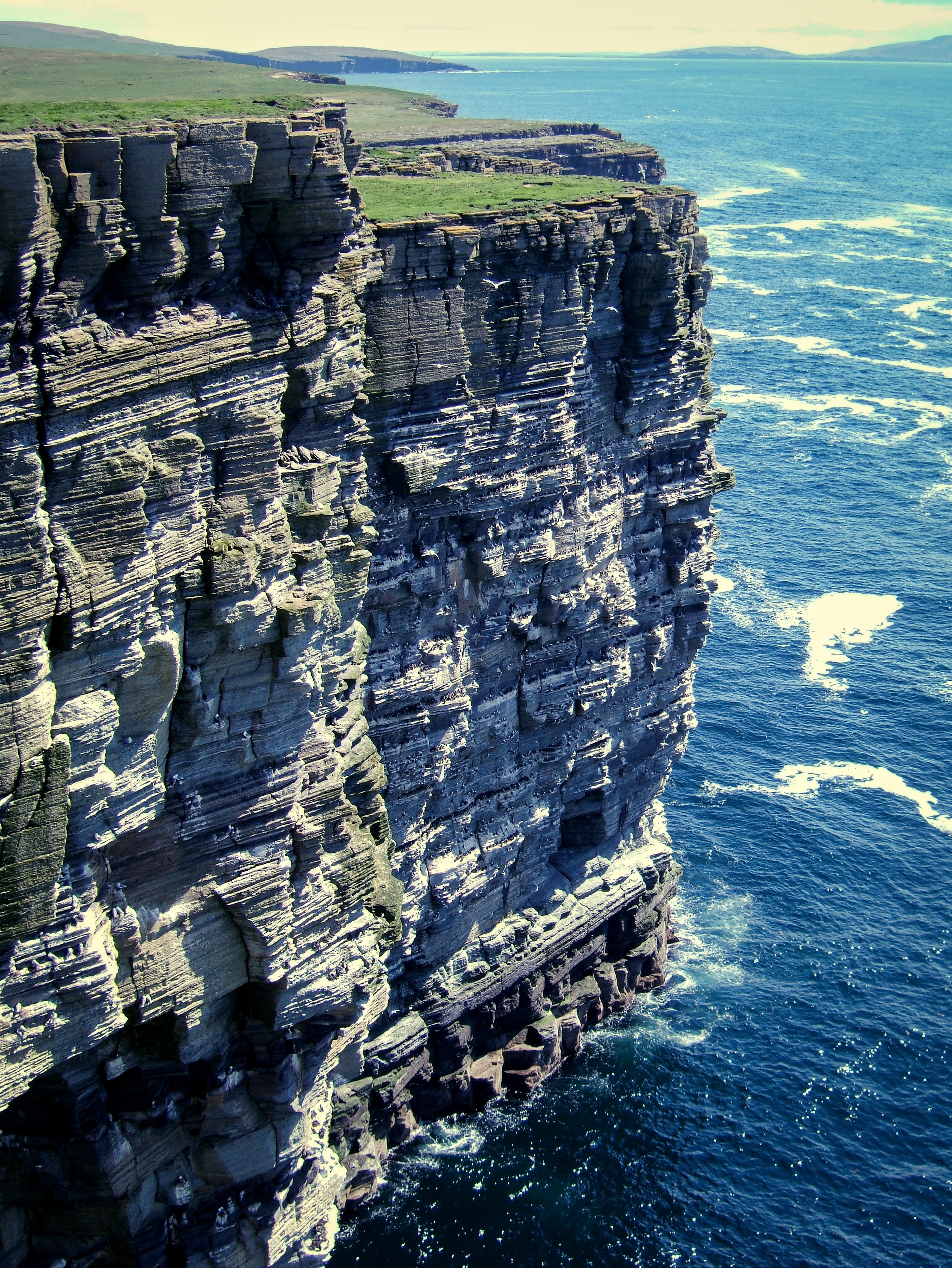
Closer to home, Shetland in particular, but also Orkney, taught me that political borders don’t always mean an awful lot. That dialects and folklore follow their own paths across the sea and old trade routes still shape island identity now, regardless of what the maps say. They also taught me that teeny tiny planes are the best, and I’d probably not survive a Shetland winter.

Fav folklore – The Sea Mither (spot the #MotherSea connection!) who wrestles the dangerous Teran to calm the seas.

Fav experience – Standing in the old broch on Mousa, listening to storm petrels purr in the stones around me. And getting dive-bombed by Bonxies on Orkney mainland!

Four – The Mediterranean

Kinda cheating lumping this whole region (and the Canary Islands) into one, but doing each island individually would turn this into a book, and also there are some common strands despite the distinctive feel of each place. I love the Mediterranean garrigue ecozone. It’s so stark & distinctive & surprising. I have a huge soft-spot for cyprus stands and stone pines, and ancient olive groves. But these islands are also fascinating for studying farming’s adaptations to a hard climate, the way humans have shaped the very land & how fragile that balance is. Especially as tourism threatens rural economics, communities, water resources & conservation.

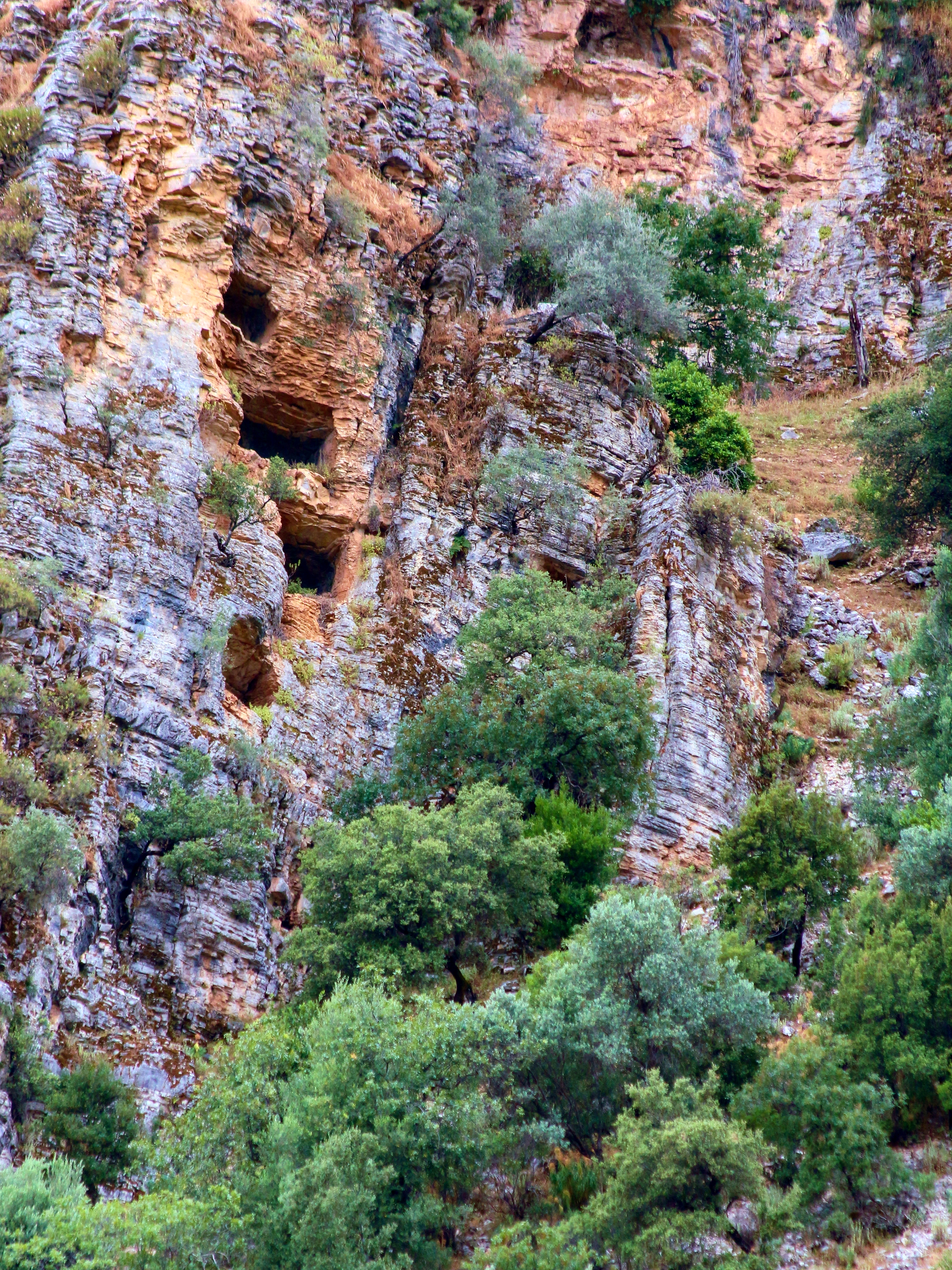
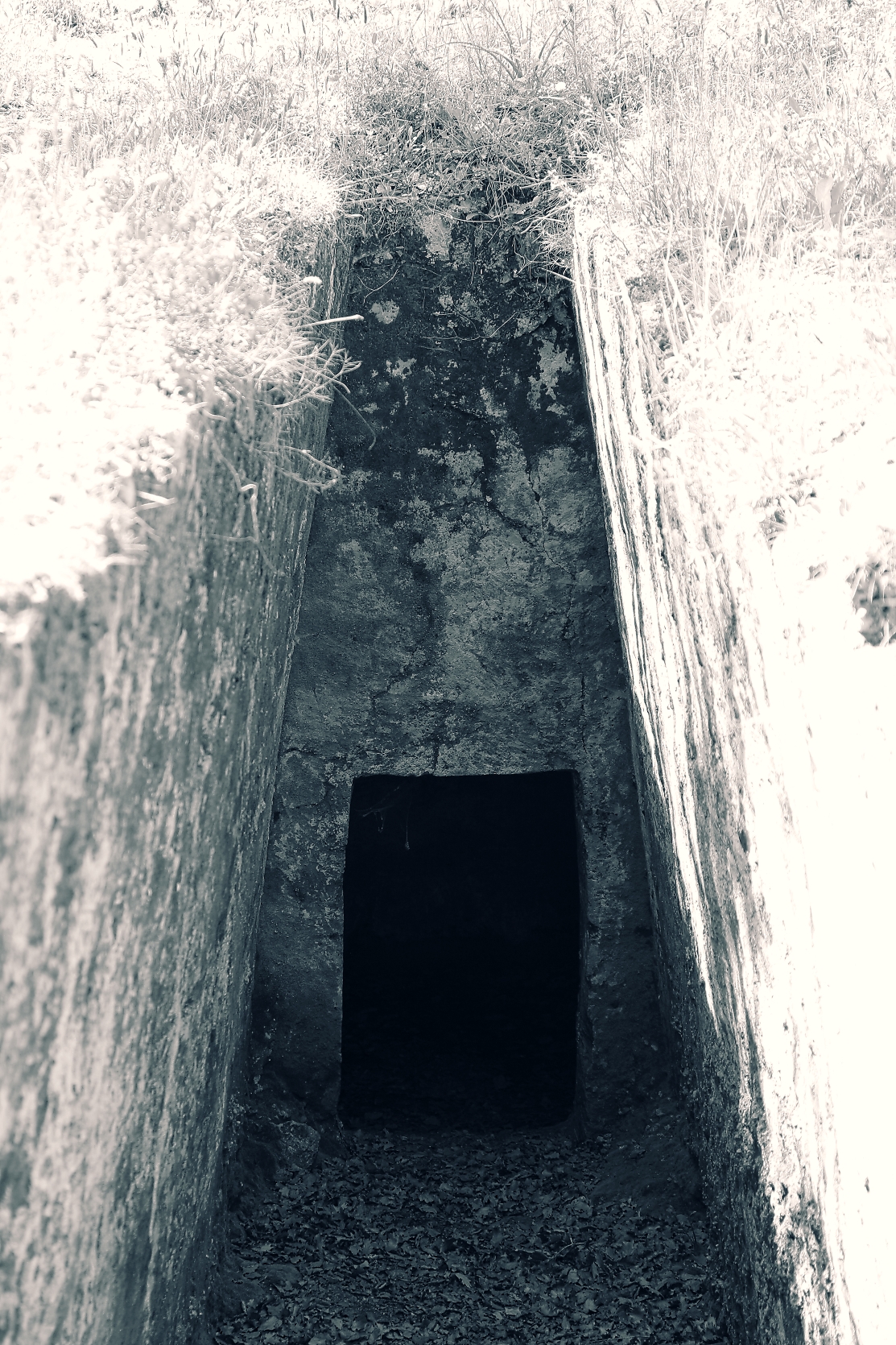
Fav mythology – The Minoan rock tombs on Crete & Lycian cliff tombs in Turkiye appear in Mother Sea. Caves & bats – what’s not to love?

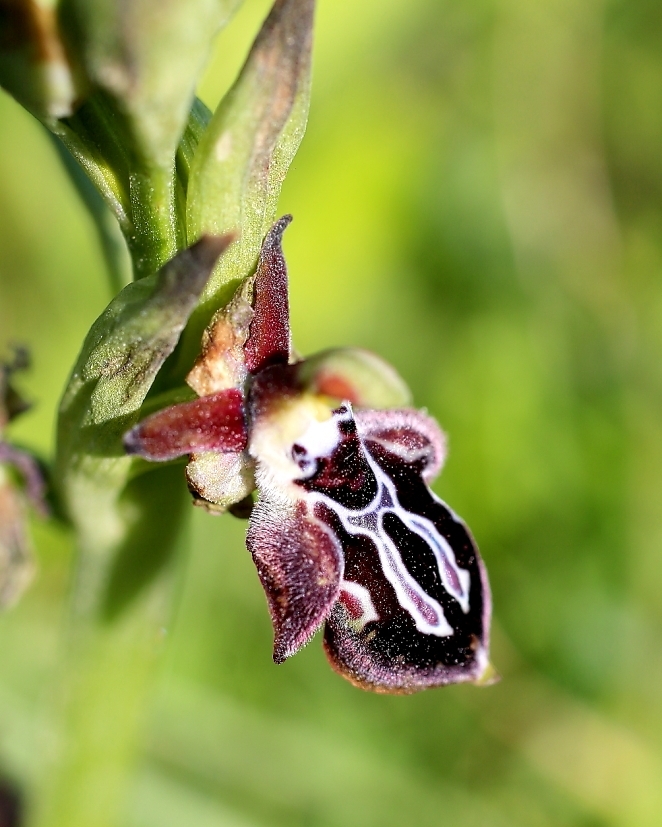
Fav experience – Cretan orchids. Omg, if you’re remotely into flowers, the orchid species crowding the hillsides will give you heart failure.

Five – Seychelles

The right ocean at last! These are the closest islands to my fictitious one in Mother Sea, so a lot of the flora & fauna are similar. Seychelles taught me a hard lesson on coral reef damage & restoration, but a beautiful one on Creole language & culture. It also taught me to look beyond the glossy curated tropical paradise images for the murkier truth about the impossible value:cost trade-off of tourism on places and communities like these.

Fav folklore – An eejit Brit in 1800’s decided the coco de mer was the original forbidden fruit because it looks like a bum! And therefore that the Seychelles was the lost garden of Eden. I mean, it’s a definite paradise in some ways, but also, lol.

Fav experience – Meeting giant tortoises? Or giant fruit bats squabbling in the tree above us as we ate our dinner in the dark (hint: Mother Sea may contain bats)

Six – Madagascar

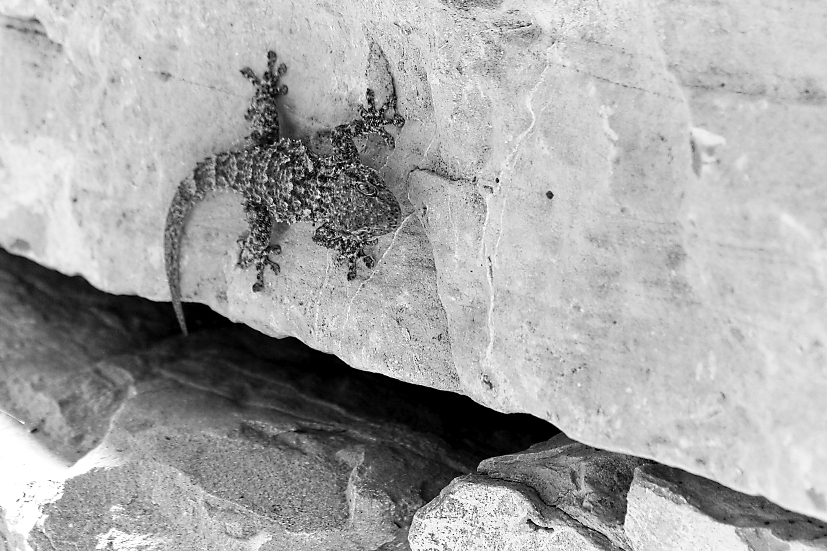
Along with France & South Asia, this is the other origin of my community in Mother Sea, so hints of Malagasy culture fed into the book. This country is a biologist’s dream and heartbreak all in one – the most mindblowing evolutionary wonders alongside some of the most heart-rending poverty and worst habitat destruction I’ve ever seen. For Mother Sea though it gave me ‘tsingy’ landscape (limestone karst) & baobab forests, pirogues & feminism & day geckoes.

Fav folklore – I was told once that bats hang upside down to show their arse to god as revenge for an offence. I cannot remember what the offence was but I love this so much.

Fav experience – An aye-aye there-&-gone in the dark, indri singing in the dawn, being unutterably lucky.

Seven – The Outer Hebrides

Finally to the place where Mother Sea began – with the history of St. Kilda & it’s abandonment. That tale of population decline, of grief and a terrible communal turning-inward because of that grief was the seed that everything else in Mother Sea grew around. And the islands of North & South Uist, Benbecula, Eriskay and Barra were also there to teach me so much about island communities, the persistence of faith, carving a living from the liminal shore.
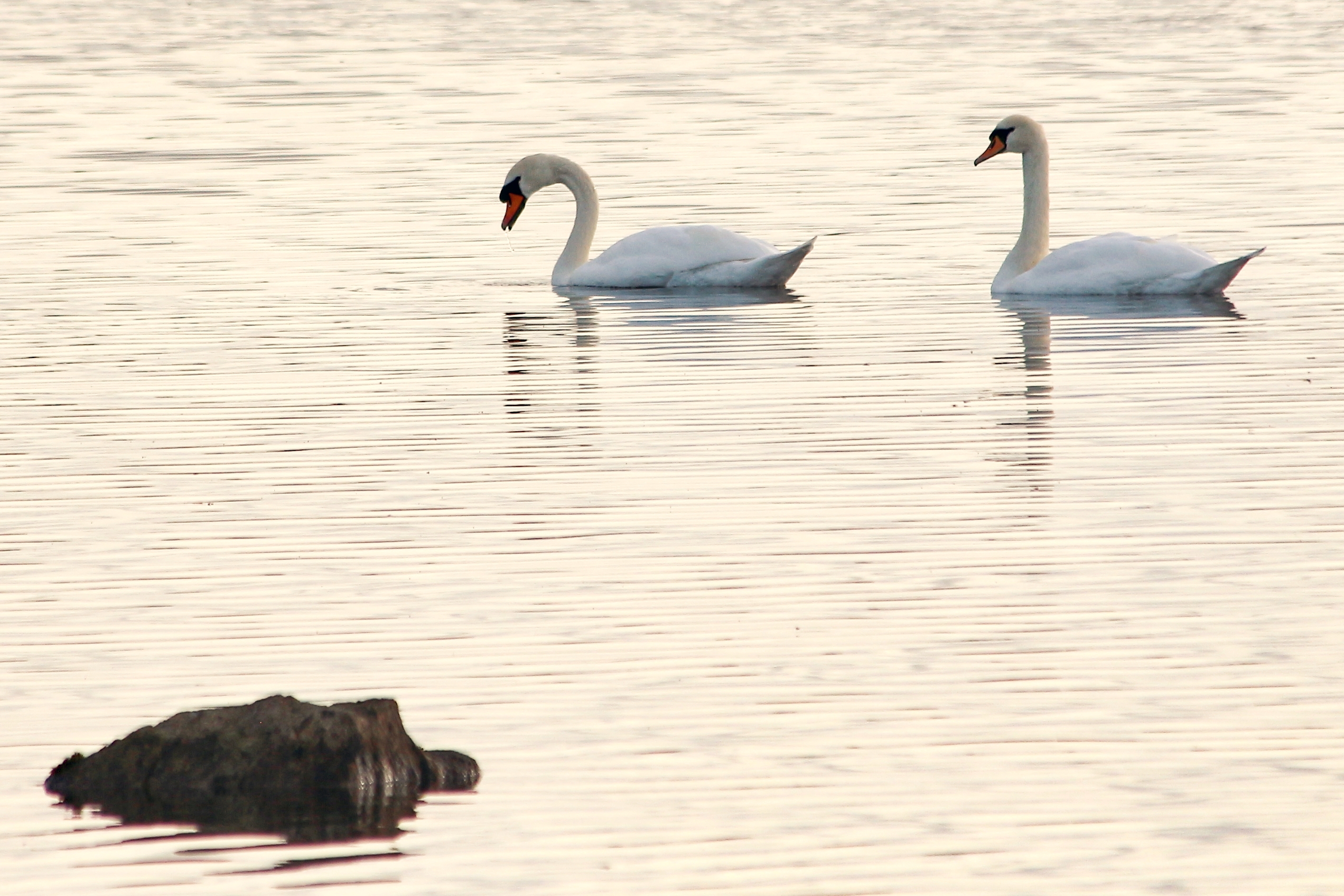
Fav folklore – The Blue Men of the Minch. They’re blue, they shout poetry slam challenges at ship captains, they raise storms. I love them.

Fav experience – Just the startling, stunning bays – white sand and turquoise water and the steep, watchful dunes. The ruined silhouettes of churches and manor houses on lonely islets, the ghosts of brochs haunting the lochans.

Thank you for coming with me around the world! There are a couple of dozen more islands I read about, stalked online, talked to people about and dreamed of, that all fed into Mother Sea in other ways. But these are (some of) the ones I’ve lived in and loved, and left pieces of myself behind in.

Writing The Difficult Stuff

Mother Sea comes out tomorrow. I am so excited to share this book with you all, and so honoured at the care Fairlight Books have taken with it. I really, really, really hope it resonates with you.

Before it comes out though, I wanted to talk about some of the issues I explore in its pages because if you’ve read my previous blog, you’ll know that when I was writing Mother Sea, I never intended to seek publication. So I went into some places that perhaps I wouldn’t have been brave enough to venture into if I’d been writing with an external audience in the back of my mind.
With hindsight, I am glad that I wrote this book and that others will get to read it. I think it’s important to write the things that scare us as authors, or make us cry as we’re typing, the things that we put off writing for days because we fear them. Writing is, if nothing else, a way to reach out to strangers. It is a way to whisper to someone else, ‘I know how you feel. I feel it too.’ Which is why darker, sadder themes are so powerful, and so pervasive in stories, right? Because that quiet connection, that resonance is both a hand held out in companionship, and also at the same time, a hand held out to guide you through the unfamiliar terrain of someone else’s heart.

So although I think Mother Sea is as much a book about love and resilience as darkness, it does go into some deeply sad places. But my hope is that in doing so it might help someone feel less alone, it might help someone else understand a perspective or an experience in a way they hadn’t before. If it can do that then I will be content.

Aside from the wider themes of climate change and the global injustice of climate impacts, there are two specific events in Mother Sea that were incredibly hard to write. And talking about how I wrote them involves some personal details that are a little scary to put out into the world, so please bear with me. If you want to avoid spoilers please stop reading now, because although I won’t go into plot details, I am going to reference the nature of these two moments.

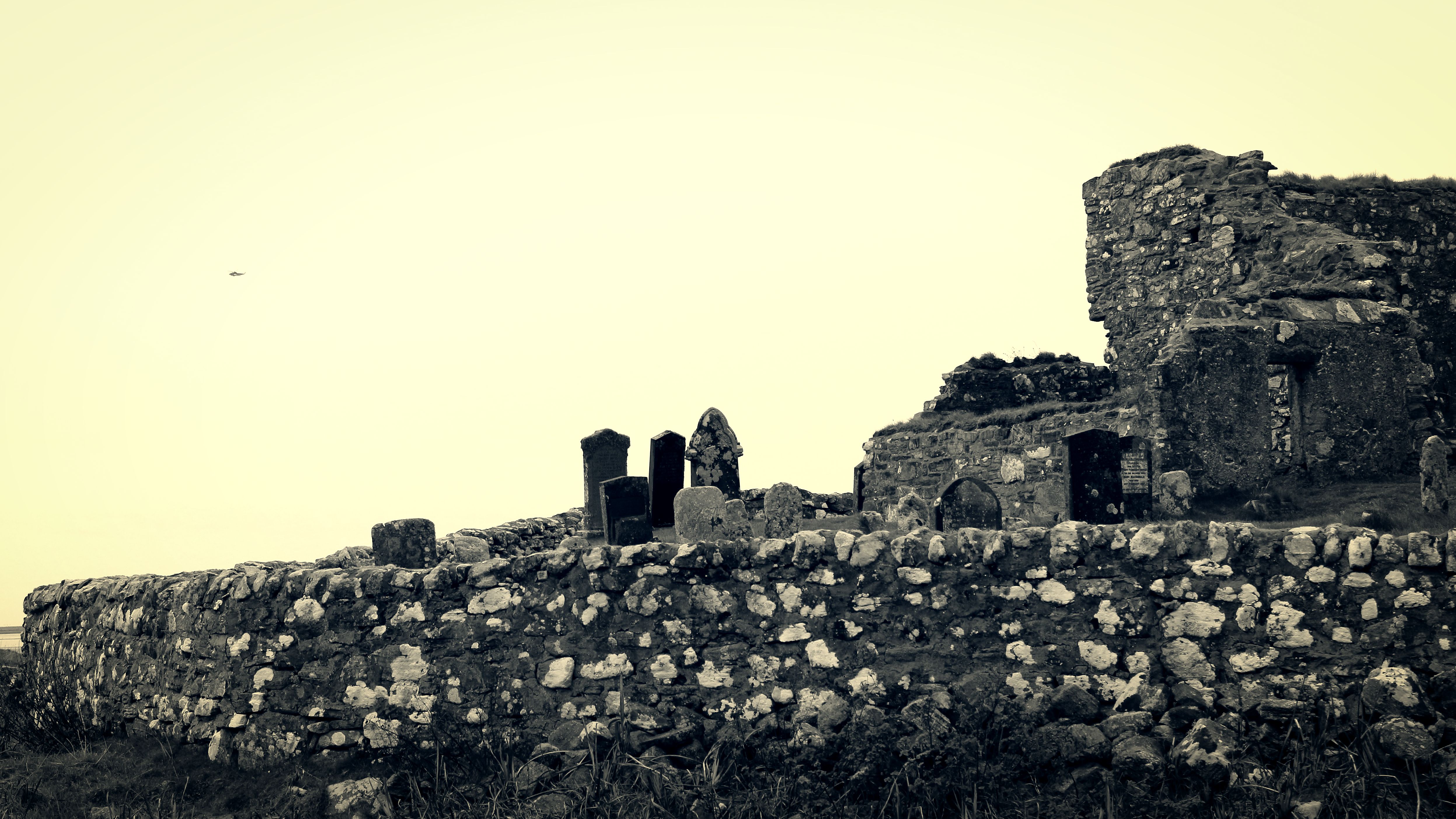
sepia tinted photo of a ruined chapel and old gravestones behind a low stone wall, taken on North Uist.

.

.

.

.

Okay, still with me?

The first, encountered in the opening few chapters, is some profound suicide ideation by Kit, one of the Point of View characters. His depression and the desire for release drive him to the edge of a cliff. Obviously, he walks away, otherwise that would be the shortest PoV plot thread ever. But writing his thoughts leading up to that moment, and writing some of his journey towards healing afterwards, drew on my own experiences more than I’ve ever really admitted to anyone. That was hard. It was so hard that at one point I realised Kit’s thoughts were bleeding into my own, and I had to put the book aside for several months until I felt able to return to it.
I don’t pretend to understand everyone’s experience of depression, but I understand my own. And I wanted to speak to anyone else who’s lived this terrible, lonely thing, but I also wanted to write accessibly enough for people to empathise with even if they’ve never known depression. Have I achieved that? I don’t know. But I’m glad I wrote the walk to the cliff top, and I’m even gladder I wrote the walking away. 

The second event isn’t something I’ve experienced myself. I wrote the death of a baby. Even typing that sentence makes me feel sick. It’s the worst thing I think I will ever write, and I put off doing the actual scene for weeks. I tried to rejig the plot to avoid it happening, I tried to narrate it from further away, I tried to make it something unspoken. But none of those changes were right. None of them did justice to the truth of the islanders’ situation, and the gravity of the death itself. It’s not gratuitous, it’s not even actually described at all. All you hear is the mother’s breathing change. That’s it. But it still left me wrung out and oddly guilty.

I haven’t experienced the loss of a child. But I have experienced multiple miscarriages, and although I’m not equating those two experiences, my own griefs definitely shaped my desire to tell this story. Because this – the neonatal tetanus epidemic – was the seed that started Mother Sea. It comes from real events on the islands of St. Kilda in Scotland, and reading about that was where this all began. I could not get the thought of those women out of my mind. What it would have felt like to be carrying a child knowing its chances of survival were so slim – how did you guard your heart from that? What would you be willing to do to try to change fate?

I couldn’t write the story of a community’s grief and fear, the story of their fight for hope, and not bear witness to the heart of that – a mother carrying her child, and losing it. I hope I’ve done it justice, I know I feel a kinship with anyone who is carrying the ghosts of their lost children in their arms.

The term ‘book of my heart‘ gets thrown around a lot by writers, doesn’t it? But Mother Sea could never be anything else because I wrote it for my own heart. I wrote it out of both my private griefs, and my wide-open, globe-spanning grief in the face of the climate crisis. And yet ‘What is grief, if not love persevering?’ as Vision said. So it’s just as much about love too, in all its forms from the private to the globe-spanning. Although it started as a very private thing, by the time I was editing I had begun to picture readers other than myself. I began to hope that a story about an island that doesn’t exist might perhaps feel true and precious to strangers. I know how you feel, my islanders whisper from the shade beneath the tamarind trees. I feel it too.

Thank you for reading this abnormally personal blog. I wanted to write about these two things by way of content warning and explanation. I also wanted to say to my readers thank you for venturing with me through such difficult terrain, I hope I carried you through safely to a place of hope.

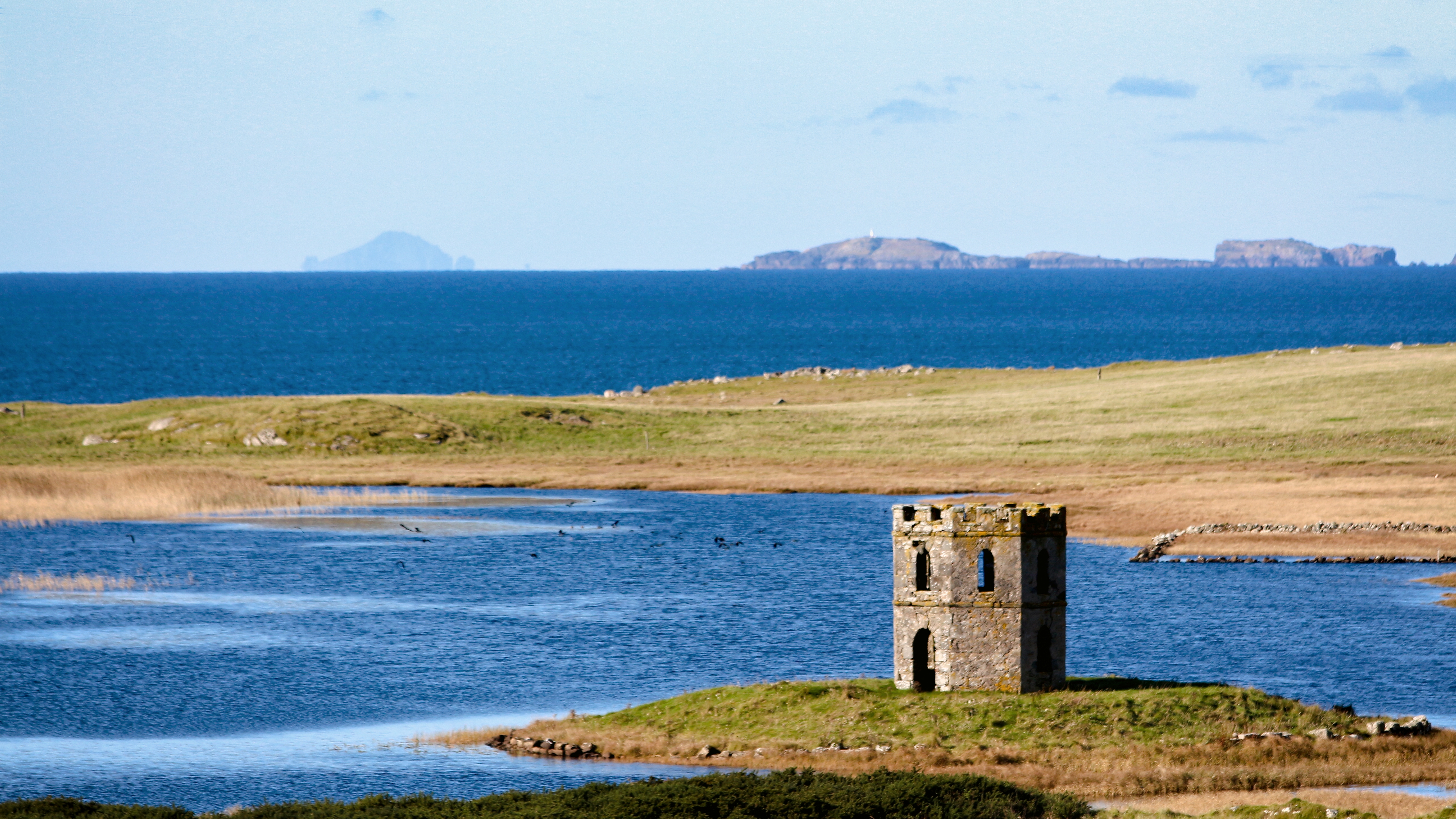
A photo from North Uist looking out across a lochan with an island fort towards St. Kilda.

Return to main blog page

The Road To Publication

Recent online conversations about debut expectations versus the long haul of being an author made me realise that I never wrote my version of this blog. People normally write them on signing with their agent, or when their debut releases, don’t they? Well, how about on publishing their third book & announcing their fourth? Perfect time, right?

Two disadvantages of waiting till now is a) that it’s a looooooong post, and b) I can’t be sure of exact numbers. I’m as accurate as possible, because I know how good it is to see the data rather than just the ‘keep going, you haven’t failed until you stop trying’ sentiment (which I have OPINIONS on btw).

Okay, so a For The Record disclaimer: As you may know I turned to writing when I became too ill to carry on in my job as a research scientist, therefore I have no formal learning or qualifications in creative writing. I ­have done a couple of short, online courses with Jericho Writers and Writing The Other & as many workshops as I could logistically & financially access. ALL my submissions were via the slushpile (and all in the UK fwiw). I started out with no contacts in publishing or writing, and even less understanding of how it all worked, but in my first few years I attended the York Festival of Writing three times. I also managed to access agent 1:1s on two other occasions. Thassit. That’s the extent of my shortcuts and privilege, because yes those things do affect your route to publication and it’s naïve to pretend they don’t.

TL:DR cumulative stats: 13 queries (agents only) over 2 books to 1st agent offer. 81 queries (agents & small presses) over 4 books to 1st book published. 136 queries (agents & small presses) over 5 books to 2nd agent offer.

Full deets, cos it’s a lot more complicated than that sounds … are you sitting comfortably?

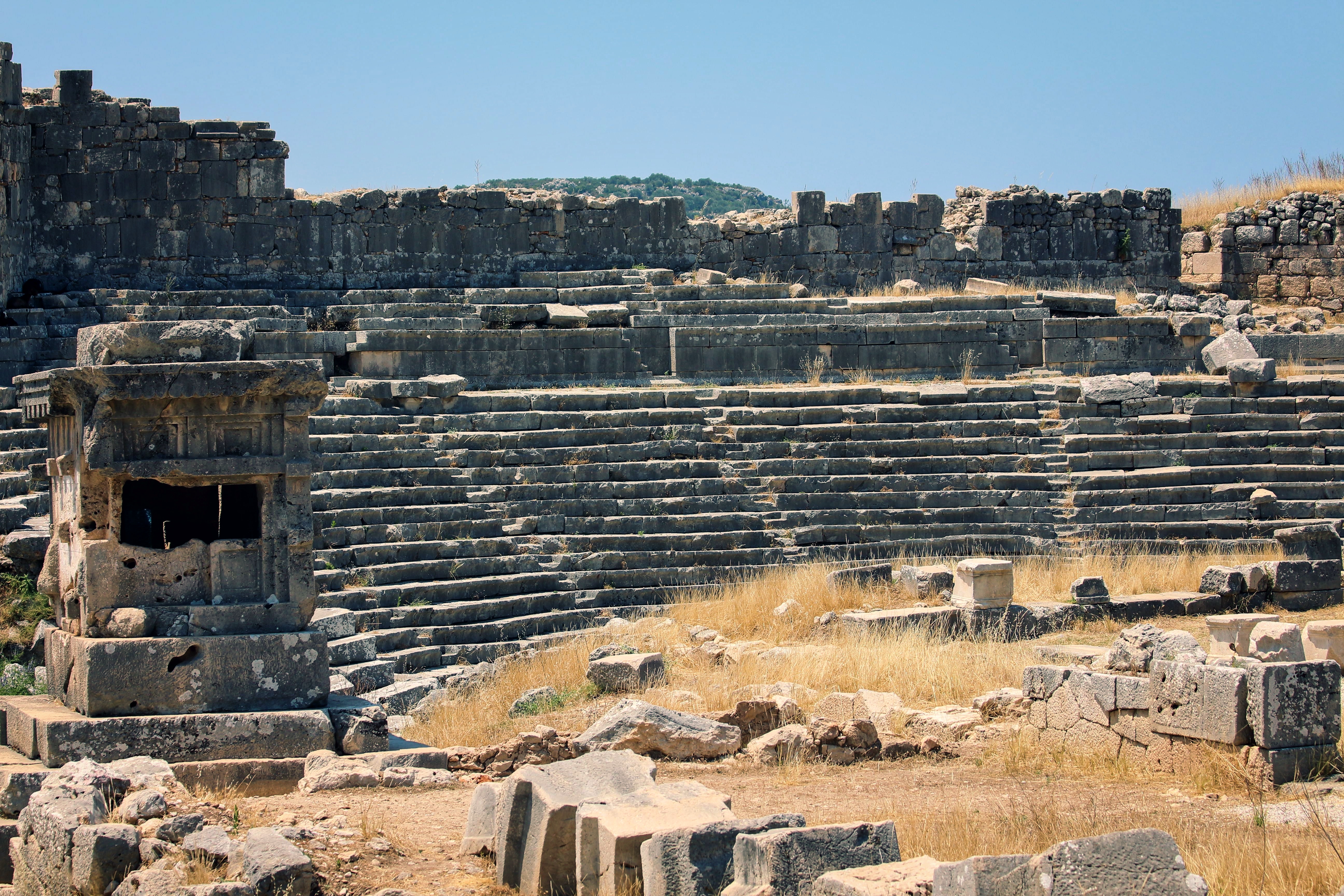
photo of a ruined roman amphitheatre in Turkiye

2014            Wrote a fantasy epic, first in a trilogy.

2015                     Because I was a fool and knew nothing, I queried the godawful thing to a handful (~12 agents, to whom – sorry!). I got two personalised rejections, a bunch of forms and perhaps one ghosting. Meanwhile, I wrote the 2nd in the trilogy and simultaneously realised that Book1 was not remotely publishable. I decided to treat Book2 as a test run for applying the skills I’d learned whilst mangling Book1.

2016                     Started writing a whole new book (Book3). A contemporary Scottish witchy fabulist thing that felt like my first ‘real’ book. In that I kinda knew what I was doing this time and the end result was fully my own thing rather than a derivative mess!

2017                     Subbed Book3 to one agent – a very new agent at an established agency who’d been recommended to me at York. She offered, I accepted, it went through minor revisions and went out on sub to around 10 editors. It got some lovely feedback, but no takers. Four months into this, my agent left publishing. Reading between the lines, I think she was not supported at her agency, and so I really felt for her. It was a huge blow though, lmty. I had no idea at that point how common it is for writers to lose agents for any of several reasons so this felt like a moment of utter failure even though it was nothing directly to do with me, or my book.

Whilst on sub, I’d been writing Book4, and my agent had raved about its premise. Book3 was dead – no agent would be interested in a book that had already gone out on sub. So I pulled my big girl pants up, and got Book4 ready for querying…

2018                     I sent Book4 to about 45 agents and 15 small presses over the course of around 18 months. Of those, I had a roughly 50% full request rate from agents, and 30% from small presses. Good huh? Of those full requests, only 1 agent ghosted me (times have changed I believe ☹), most got back within 2 months. The small presses were generally much slower (and much ruder, in a couple of instances!). From all these fulls, I ended up with two offers of publication from small presses. I went with the one whose brand seemed a better fit for the book. They were small, but reputable, award-winning, and strongly recommended by one of those full-requesting agents. That agent believed in them so much he even stepped in to help me negotiate a couple of contract terms. Fab. Yay. I was gonna be a published author! I didn’t mind going small press rather than agent by that point as I just wanted to make that first step on the journey, and I liked the feel of the small press scene.

Yeah, no. After agreeing contract terms, the publishers pulled out.

2019                     By this time I had Book5 finished and waiting,and had started on another one. But I lost heart with the nascent one and very nearly didn’t bother submitting Book5. Book4 had come so close both with agents and then with the publishing deal. After losing my agent, this had felt so hopeful and for it to come to nothing … I just didn’t really see the point in trying again. My skin was not thick enough and my belief in my writing was crushed. The mental cost of the cumulative rejections and knock backs was having an impact on my physical health, and I needed to step away. I decided I would write for private fulfilment not for publication, and started writing a new, deeply personal book, never intending to share it.

BUT Book5 was just sitting there. I figured I’d lose nothing by trying one last time, but this time I was going to be canny. I queried a handful of agents and small presses (excluding the one above!) to test the water.

Of those 6 agents, I got 1 full and 1 R&R; of 4 small presses, I also got 1 full which lead to an R&R.

The R&R from the publisher was a biggie. And to be honest I wasn’t sure I could pull it off, as it meant a complete re-write. But I figured it would be a good test of my skill, if nothing else, and I was kinda curious about whether the editor’s instincts were right.

They were. The edited book was much better. I went back to that publisher with it, but they’d stopped acquiring books. Ugh. Well, I had a stronger manuscript and had promised myself I’d give this book its best shot before calling it a day. So I pulled together a list of indie presses. You’d think I’d have been put off them by now, but all of my communications with agents had taught me that my form of literary-ish genre-blending work can be a difficult sell to agents looking for neatly packageable stories. Plus I still believed (believe) that a lot of the most innovative, diverse storytelling is happening with small presses, so I wanted to trust that there were good, reliable people out there. Somewhere.

2020                     GLOBAL PANINI! In between homeschooling v.1 & general panini chaos, I sent Book5 back out to a small batch of small presses (~8). And got, relatively quickly, 2 fulls and an offer.

That offer was with Luna Press, a very small Scottish indie press with an incredibly global list of authors. After speaking to Francesca I knew immediately that this was a press I wanted to work with. The book was This Is Our Undoing.

I also wrote the first chaotic halves of two books (umm… 7&8). Thank you, pandemic stress cognition decline.

2021                     GLOBAL PANINI! This Is Our Undoing came out with Luna Press. I showed Francesca that near-miss Book4, braced for rejection yet again, but she loved it. I signed a contract for The Way The Light Bends and the bruises left by my prior experience began to fade. With my confidence in myself, my writing, and the publishing industry at least a little rejuvenated, I started thinking about querying that deeply personal Book6. It was a terrifying thought, if I’m honest, and took a while to build up to. In between homeschooling v.2, the debut rollercoaster, dredging up querying courage, and other general mayhem, I finished Book7.

Then I started querying Book6.

This time I sent out larger batches than before. Rough counts were, in two batches, 40 agents and 15 small presses. Of those, I had received ~ 8 fulls when I received an offer of publication from a lovely medium-sized indie press with a very literary, friendly, thoughtful vibe. On chasing outstanding queries I had a couple of lovely chats with agents and another publisher, and an offer of representation from an agent who seemed to genuinely get my writing, my health limitations, and who was demonstrably supporting marginalised authors in his work.

I signed with Robbie Guillory at Underline Literary Agency in late 2021, and signed with Fairlight Books for Mother Sea shortly after. My sad, angry, deeply heartfelt story that I wrote thinking its only readers would be my mum and sister, was going to be published.

2022                     GLOBAL PANINI + BOOK AWARDS. Amazingly, given the small reach associated with a small publisher, Undoing was finalist and winner of several awards. I also won an award for my short fiction. The Way The Light Bends published, Mother Sea was in the works & I had survived an entire year as a published author without coming apart at the seams. Oh yes! Onward! Riding this wave of not being entirely broken, I finished Book8 (Book7 is shelved). And applied for a Creative Scotland grant to fund a return to that nascent book that I abandoned in 2019 mid-despair.

I also wrote a novella.

Book8 went on sub in the Autumn. On the same day that I underwent long-awaited surgery for my endometriosis that ended up being way more complicated than anticipated and from which I am still recovering 7 months on. Note of advice, major health upheavals and being on sub are not a combination conducive to creativity or mental fortitude. Avoid at all costs.

2023                     My 6th written book – 3rd published book – is coming out in less than 3 weeks.

I signed with my beloved Luna Press for my novella, coming out next year.

I was awarded the Creative Scotland grant and have just finished the 1st draft of nascent/abandoned book. So in 10 years that’s: 1 novella & 9 novels – 2 binned, 2 shelved, 3 published, 1 drafted and 1 on sub…

Despite the real-life hellishness going on, there is more good news coming. I’m steadily building my reach and publisher-appeal and this feels whilst not remotely guaranteed, at least a sustainable and hopeful trajectory. I’m not sure what the next few years will hold, but from being on the very brink of giving up 4 years ago, it’s surreal to sit here with a stack of my own books beside me, knowing I will be publishing more. That’s a startling, wonderful thing. The road does not get smoother, but it does perhaps get less steep.

…Lol, I did warn you it was long!! I do want to note that the rates of query full requests, and of ghosting both initials and fulls have changed drastically over the years, so please bear that in mind. Publishing is understaffed and creaking, and that hits writers in the trenches hard. Whoever you are, and however many manuscripts you have yeeted into the querying void, I am cheering you on. It takes a horrible combination of vulnerability and steeliness to weather this game – you’re all epic.

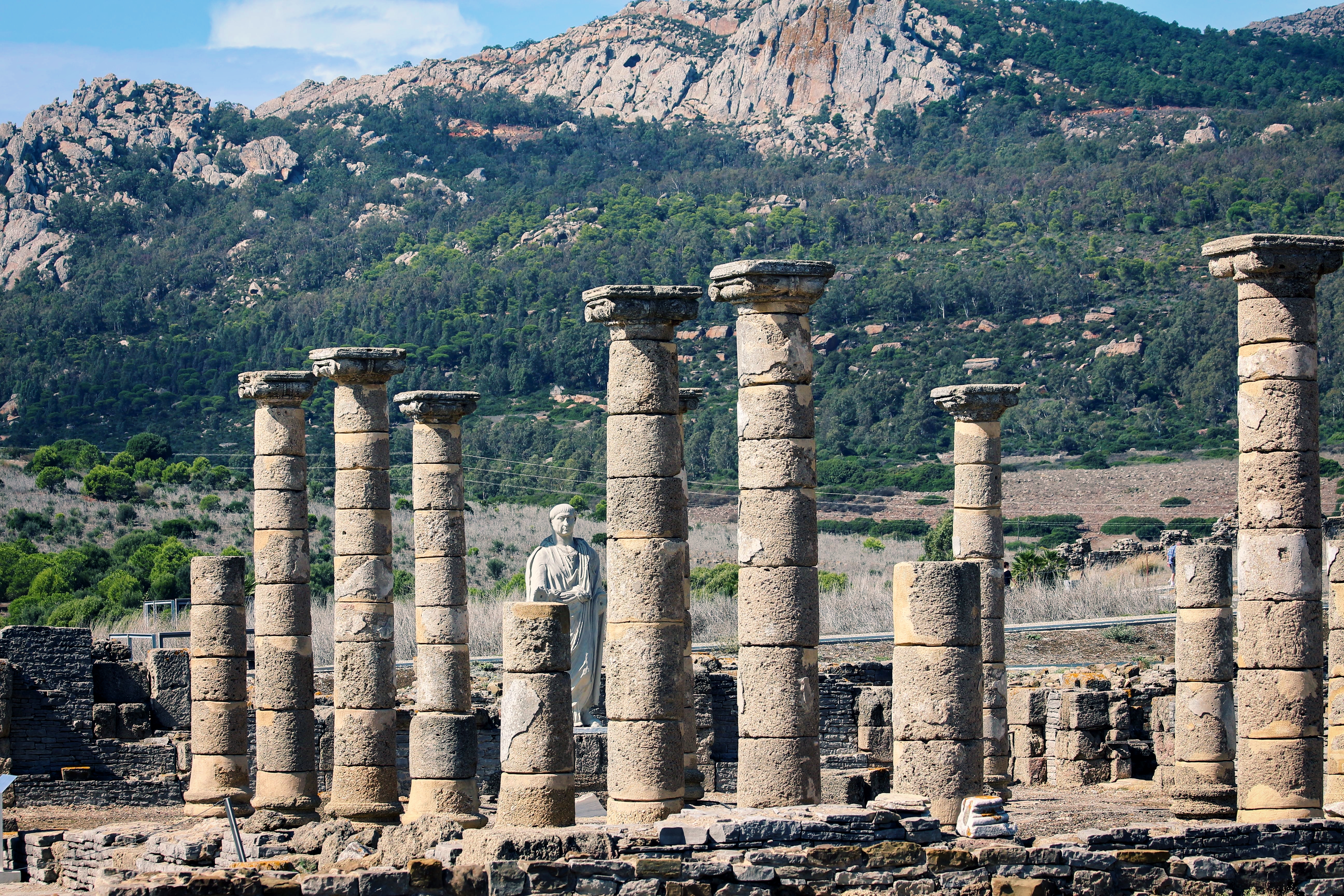
photo of standing columns of a grecian ruin on Cyprus, mountains in the background, the statue of some dude looking resigned and weary.

return to main blog page

Retreats, Arts Funding & Goats

Last year I was awarded a Creative Scotland grant through their open fund to support my writing of a novel that I generally refer to as Welsh Gothic. This was my first time applying for funding for my writing (years of applying for scientific research funding scarred me for life!), and being awarded a small grant was perhaps one of more validating experiences of my writerly career so far – A group of publishing professionals thought I & this unfinished book had enough potential to be worth supporting? Really? How great is that?

Aside from the wee confidence boost though, this funding represents something more widely important. As you likely know, I am too unwell to hold down a ‘real’ job. Last year I was fighting my own body in an attempt to earn something from freelance creative work – articles, workshops etc. – but that was taking a heavy toll on my ability to actually write. My spoonie body only has so much capacity, and this grant allowed me to protect more of my limited creative spoons during what has turned into quite a tough period. If I was hustling this year the way I did last year, I honestly may not have written a word.

Arts funding has suffered in the UK under Tory rule, and came under brief, cataclysmic threat in Scotland before a Scotgov u-turn. After the lockdowns proved emphatically that we all turn to arts when we’re under stress, anything other than wholehearted support for the arts seems a bizarre act of self-harm. And the voices first silenced by lack of funding are the voices of the marginalised – the disabled, the working class, the people already carrying the existential stresses of systemic bias. (Perhaps that explains the Tory desire to starve us out…)

Anyway rant over! A huge thank you to Creative Scotland for their support. It was a tiny sum of money in the wider scheme of things, but it means so much to me. And, to get back on track, part of the funding allowed me to go and stay at the location of Welsh Gothic for a research week.

CUE GOATS!

welsh feral goat amidst heather. He's long haired and pale gold with mad white eyes and curved spreading horns.

I stayed in a cottage in Nant Gwrtheryn – a granite quarrying community in a steep, tiny valley on the coast of the Llyn Peninsula that was abandoned when the quarries closed, then restored as a language centre. It’s a stunning location. Vast quarry cuttings and abandoned machine housings on the cliffs around the centre, the two neat rows of quarryman cottages and the abandoned farm at the top of three slim fields. Fog slipping in from the Irish sea and chough calling from the peaks. AND WILD (feral) GOATS.

These dudes weren’t here the first time I visited (to study Welsh about 14yrs ago), but they were pretty much resident this time. I wonder whether this was because they’d got used to the quiet during lockdowns & then just opted not to leave. Good for them. The world is theirs, we are just guests, and insignificant ones at that. They’re gorgeous aren’t they? Not saying they were the highlight of the trip but…

black and white photo of an abandoned stone farm house, seen through fir trees. It much gothic. Peak ooooh.

Welsh Gothic (real name All The Birds Will Be Hostile – a quote from the Mabinogion’s Blodeuedd of the Flowers tale) is set in the abandoned farm in this photo, unabandoned and occupied with a riding stables. This is the opening sentence of my pitch:

In a valley hemmed in between ruins and the sea, on the edge of the wild Llyn Peninsula in Wales, superstition and family secrets threaten to destroy the childhood home Blodwyn Jones has been running from for years.

Inspired by the story of Blodeuedd, Alan Garner’s The Owl Service and Laura Purcell’s Bone China, it’s full of watchers on the cliffs, curses painted in blood & some badly timed mists. It’s my first foray into gothic lit with all its symbolism and feminist underpinnings, and the time away really made me fall in love with the story again.

It was an amazing week. I went with a few writerly friends, and the mix of staring at the scenery (research!), drinking tea and chatting books made for a deeply lovely, enriching time. I spent the time rewriting the existing partial draft which was originally set further down the peninsula, making copious notes and taking lots of photos. Welsh Gothic has been given a new lease of foggy, spooky life and I am now in the final climax scene, wondering whether to slip a goat in there as a pivotal Deus ex Capra.

Return to main blog page

The Way The Light Bends

Black and white photograph of a girl kneeling in the surf, her back to the camera.

I am not entirely sure what has happened to the last few weeks. I’ve had this blog post on my list of things to do for … quite a while, and now suddenly it’s three weeks since a Very Exciting Announcement was made on the Luna Press website: the news that I have A SECOND BOOK coming out! *Cue pom-poms* It is called The Way The Light Bends, and you can read the Luna blogpost here, then read on for some more behind the scenes details…

As I say on the Luna blog, The Way The Light Bends is a very different creature to This Is Our Undoing. If Undoing started from despairing at the brokenness of the world, then Light started from marvelling at how many broken edges people can carry and yet still appear whole. It’s a quieter novel in some ways – it’s not a dystopian, there’s no spy-thriller-murder-politics edge to it. What there is instead is the dark side of Scottish folklore, a disappearance, two very different journeys through grief and the way that family can both hold us together and tear us apart.

Drops of blood and silver, the haar, the sea, moonlight and hope. The bones of a bird, and a very beautiful, dangerous man.

Photo looking back at St. Andrews along West Sands beach with white surf and wet sand, and a lone figure in the distance.
West sands, St. Andrews

Sound interesting? I hope so. It was a hard book to write because grief is not comfortable or neat, but I love the shifting, evanescent mood of the story, and I really loved writing about two sisters, Tamsin and Freya, trying to find their own ways home. Fortunately (!) my relationship with my sister is not remotely like theirs, but there are elements of the family dynamics that come from my own experiences, which was profoundly weird to put onto paper. Not sure how anyone writes a memoir – that stuff’s tricksy!

Weirdly, I wrote this book before I wrote Undoing. It very nearly got published TWICE would you believe, and when it fell through the second time (I won’t go into that, so don’t ask), I completely lost faith in it and set it aside to focus on Undoing. And I’m so glad I did.

If I had stuck with The Way The Light Bends at that (frankly quite low) point, I’d have just continued to bash my head against my own failing self-confidence. Where-as by turning to Undoing, I rediscovered some belief in my writing, and found Luna Press, who are the absolute bestest.

Photo of a burn in flood, flowing around the bases of silver birches. The trees are dark against the silvery water.

The journey that this book (and my confidence) has been on makes this step all the more precious. I am honestly so delighted to be able to continue working with Luna Press, and am convinced those other near-misses were meant to be, because I couldn’t ask for a better home for this book full of dark water, lost sisters and the power of hope.

Have a look at the photos below – I feel like they catch something of the book’s mood.

Next stop, cover design. *silent cheering* I love this stage…

Go back to Blog homepage