Tag Archives: We Are All Ghosts In The Forest

Book launches – survival, celebration and chocolate

Hello fellow creatures. I usually write a ‘the story behind the book’ post around publication day, but I feel like I’ve chatted a lot about The Salt Oracle over the last year either here or on my mothballed Substack, both in free and in paid posts. So what else around book publication time might be interesting to you, my splendid readers?

How about the odd emotional complexity of book release?

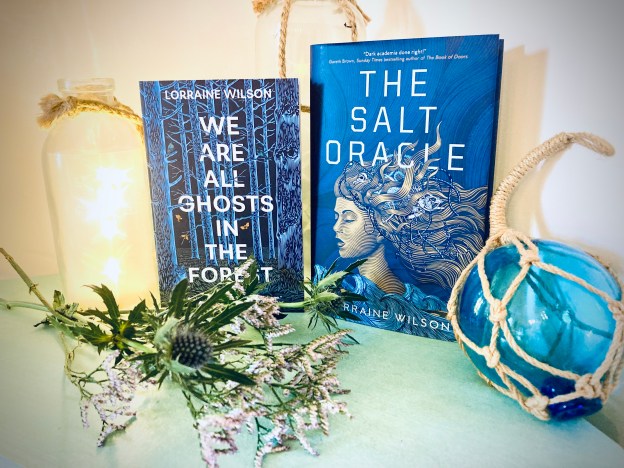
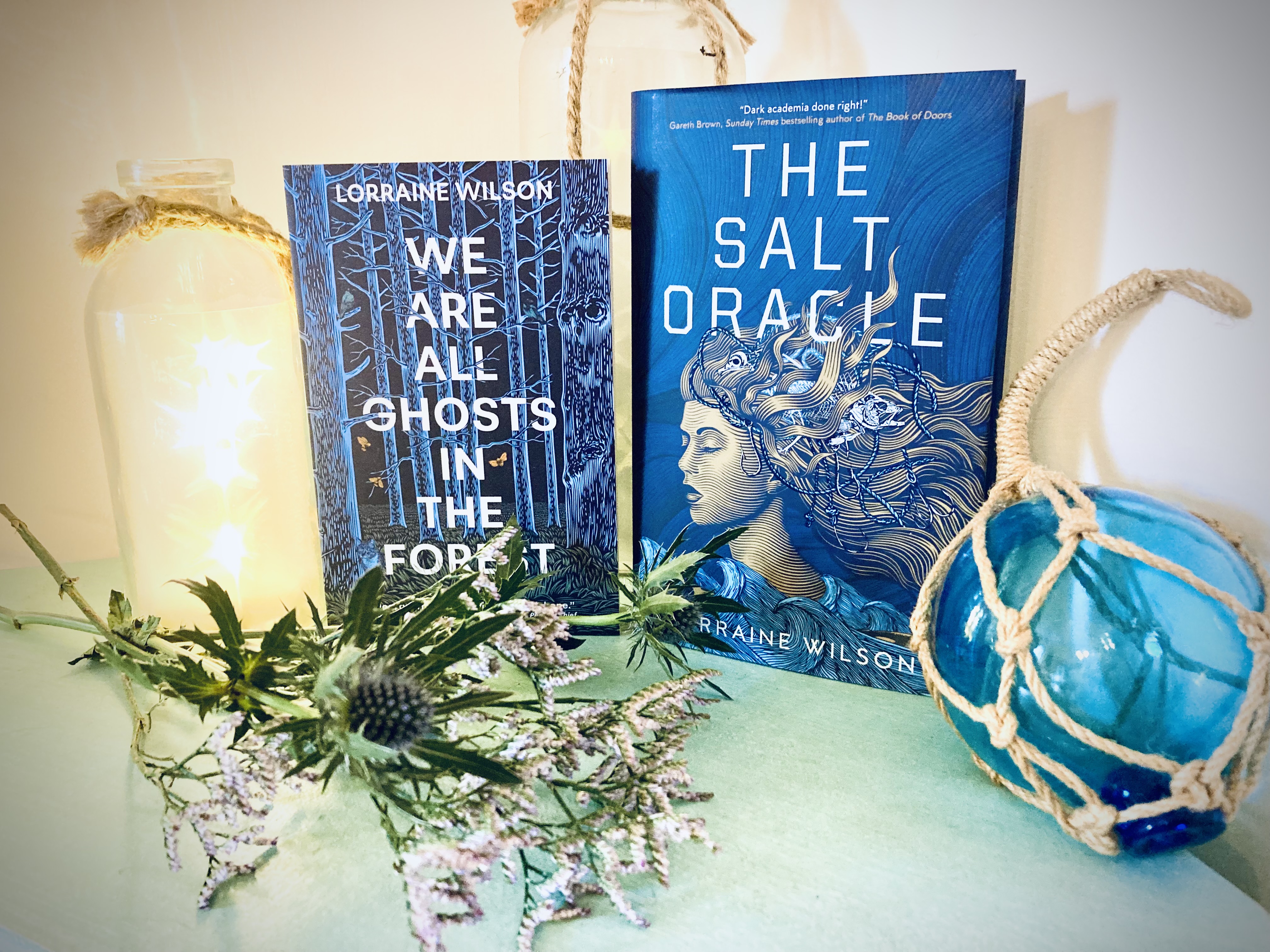
Last Thursday, We Are All Ghosts In The Forest was released in paperback, and The Salt Oracle was released in hardback/ebook/audio. Which is Lovely and An Achievement! Publication day is generally seen as an unconditionally joyous moment. In my experience though, having your books unleashed into the world is not as emotionally straightforward as a lot of people assume. Yes, it’s wonderful, no doubting that but there’s more to it than unbridled enthusiasm.
To be fair I am six books in now, which flavours this, but while there are some things that have stayed the same, others feel very different to when I was debuting. I am, for example, far better now at not looking at reviews! And far more resigned/unworried by the inevitable tagging into ‘meh’ reviews or hearing that some readers don’t like a thing you did deliberately. I am much more relaxed at and about events, and more aware of what to expect from the next few weeks both practically and personally.

However many books you’ve published though, and however big or small your publisher/deal/reach, there is excitement and tension around pub day – the sudden visibility, vulnerability and achievement of it all never goes away (or at least is hasn’t yet). But in my experience there’s also a touch of non-event-ness to publication day – not deflation per se but maybe a kind of suspension.

The excitement is understandable – this book you have loved, hated, fought with, loved again, fought for, built hopes around and yet still fear for, is finally fully out of your hands. It is going to be read by people you will never meet, and people you will meet because of it, it’s going to be adored and ignored, recommended and wildly misinterpreted, it’s going to fulfill some of your hopes and fail others but it will almost certainly fulfill all of the dreams you had when you first stepped into publishing. (Which is worth remembering, no?)

The suspension is a little more opaque. Why wouldn’t you be high on adrenaline and love on this day more than any other? Well, you are. And maybe it’s just me showing my inner zen master/energetically flatlined beastie, but the thing about publication day is that… well, let me see:

The day itself can feel a little focusless…

  • Your books have been arriving in shops/on people’s doorsteps for the last week or so, unless there was a sales embargo (in which case you’re huge and definitely not reading this post!). So the ‘released’ thing is a formality on the actual day. OR there’s the inverse – delivery issues which have left many authors wandering shops on pub day forlornly searching for books that haven’t arrived yet!
  • Your book has been read, reviewed and blurbed for the last several months, so while you will continue to cross your fingers for good reader interest, good reviews and the elusive trade review uptake, those events or statistics are spread over some time, not arriving suddenly on pub day.

So even though you’re excited, you can also feel at a bit of a loose end on the day itself. Fortunately this is where launch day events and social media come in. I always spend much of publication day keeping up with all the lovely comments I get on social media, thanking everyone and generally basking in the glow of belonging to a lovely community of supportive friends. It’s really nice.

And on that note – launch events are a great way to mark the day. Emotional complexity comes in here too though – not just because it can be hard to get a launch event organised. Booksellers might not have space or interest, publishers might not have the budget to help you organise your own, etc. But if you are lucky enough to have something organised… events on the day are generally best framed as an opportunity to celebrate with friends. You may get attendees who were curious about your book, or who just wandered in, but almost no one at the event has read your book. I’m at the truly amazing point now where people come to new book launches having loved my previous books, which never fails to make me a bit fuzzy and emotional. But they haven’t read this book.

Later events, in the months after launch are where you’ll start meeting readers who’ve read the thing and loved it enough to show up and meet you. Which means that Q&As can take on a much richer life, and reader interactions shift into a new form. That is such a joyous moment which comes some time after your launch day event.

Whether you have an event on the day or not (I did for the last book, for this one I just went and signed a tonne of stock in my local Waterstones which was still quietly lovely), it’s often a strange day full of joy and community, but also perhaps a sense of unreality or, as I said earlier, suspension.

The thing is…

(I always have to bring it back to ugh publishing don’t I?) ……There’s a lot of quiet pressure on a book around publication. We get told repeatedly that pre-orders and early sales predict the overall success of a book. I don’t know if that’s true, or just indicative of the marketing around publication. But when those early numbers will dictate recontracting decisions, it’s an odd period of time – you are doing a lot of public facing work, aware of how much is riding on it, but oblivious to whether any of it is working. I love celebrating my new books, I truly do, but the background tension around whether they are Doing Okay definitely feels more intense around launch than the rest of the book’s life (for this book more than any previous one perhaps). Some authors are told that their book is being targeted at a bestseller list – a rare privilege, but definitely a heavy expectation to add to publication week!

Do I sound like I don’t love publication day? I hope not, because I do. It’s the culmination of so much work and love, and with every book, I have reached publication day proud of what I and my publishers have achieved. It’s a waypoint that unreservedly deserves all the celebration.

But I’m six books in, and without diminishing the joy around this publication day, I am more aware now than ever that one book alone does not a publishing career make. Or one week does not… Or one event or one win.

Talking of which, I won an award at WFC! My novella The Last To Drown – a dark Icelandic ghost story about family secrets, chronic pain, the sea and recovering from trauma – won the British Fantasy Award for Best Novella. That’s extremely bloody awesome, and I couldn’t be prouder of this book and of Luna Press who are such a special small press doing amazing work within SFFH.
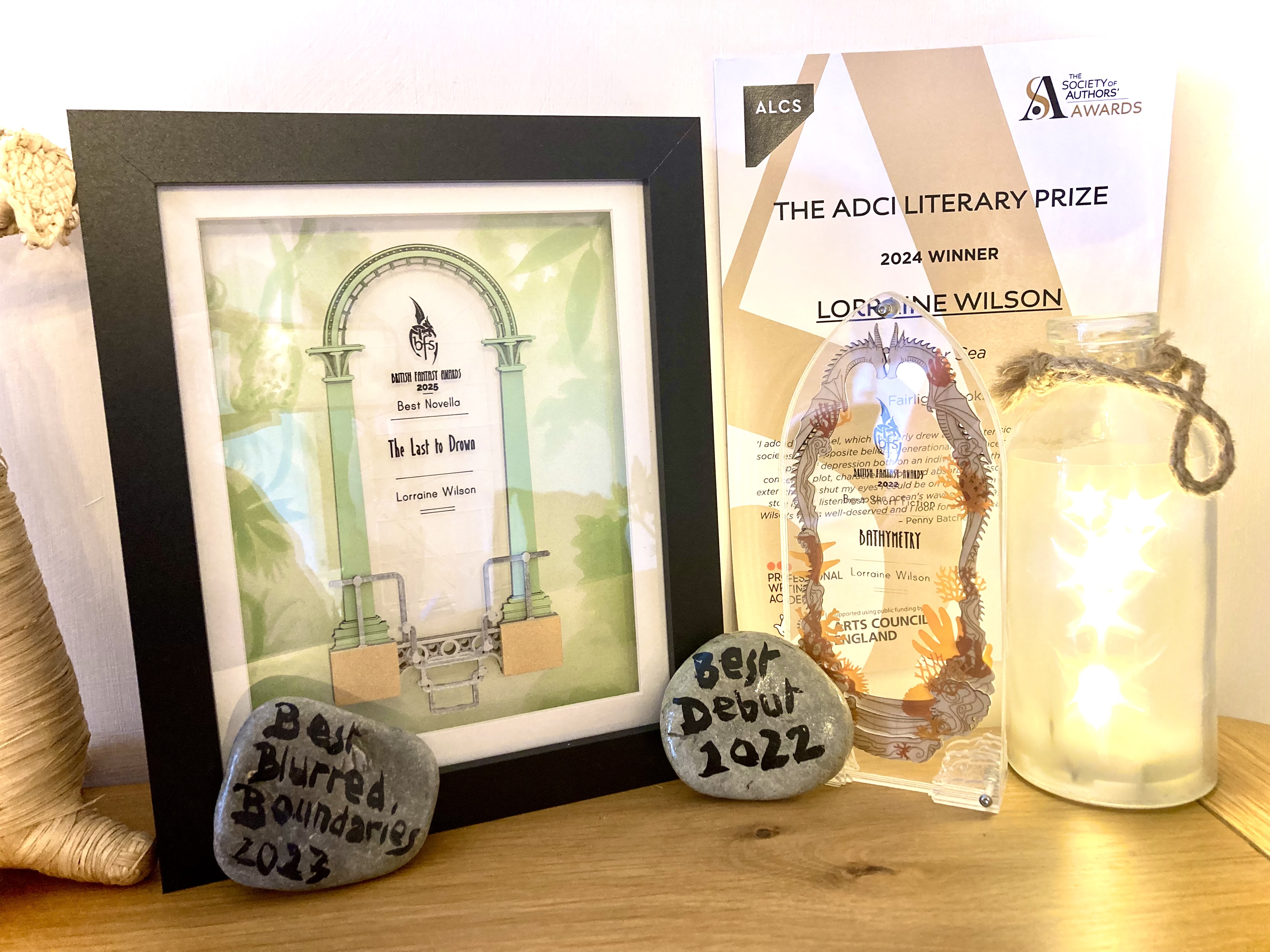
New award joining its friends

[An aside – Over the last 15 years of chronic migraine, I have learned to temper my emotions because any emotional extreme – good or bad – is a trigger for hours or days of extreme pain, nausea, muscle weakness etc etc. This is a bit of a superpower in publishing, in that while I will have a solid moan to friends sometimes, I can generally roll with the punches with some equanimity. The downside is that I am not very good at just celebrating, because that emotional even keel is so ingrained in me now. Hoo boy am I throwing metaphors around today, I apologise]

In the last week (at time of writing), I have won this fabulous award, met a lot of lovely readers, launched both Ghosts paperback and The Salt Oracle with a fun event at World Fantasy Con and a friendly signing at my local bookshop, and had a splendid time at WFC besides.

It’s a wonderful, gratitude-inducing position to be in. But whether it’s post-con fatigue, that emotional even keel, or the point in my career, I am finding my overall mental state to be ‘Okay, this is great, but let’s just wait to see whether it means anything‘. Will the early sales mean my editor can (or wants to) open recontracting talks? Will the award provoke interest from submission-list editors? Will early apparent enthusiasm, and mine & my publisher’s hard work mean these books get the momentum to exceed my prior reach?

I really truly hope these books – one for its first flight, and one in this 2nd format – do well, for their own sakes. Because I believe in them, and feel like I did something interesting with both of them. I also hope they do well to reward my editor and marketing team’s championing of them. We’re allowed to say that, aren’t we? Those are acceptable reasons to publicly want your books to succeed.

A little less acceptable, but no less true, is the hope that they do well because I need them to if I’m going to continue to publish. But there is little point dwelling on that hope when it’s 95% out of my hands. So as always, my question to myself when staring publishing in the face is ‘what can I actually do?’

  • I can keep working to organise events & publicity, and be as open as possible to my publicist’s suggestions and opportunities.
  • I can manage my spoons and my outlook so I am well enough to treasure all the positive things coming my way, and keep the negatives in perspective.
  • I can eat some emergency chocolate.
  • And, of course, I can work on something new. Aside from winning an award or selling lots, I can’t influence the success of books currently out on submission to editors, so the only thing I can do right now to maximise my chances of selling more books is to write another one. Write a better one, or a more pitchable one, or just a luckier one.
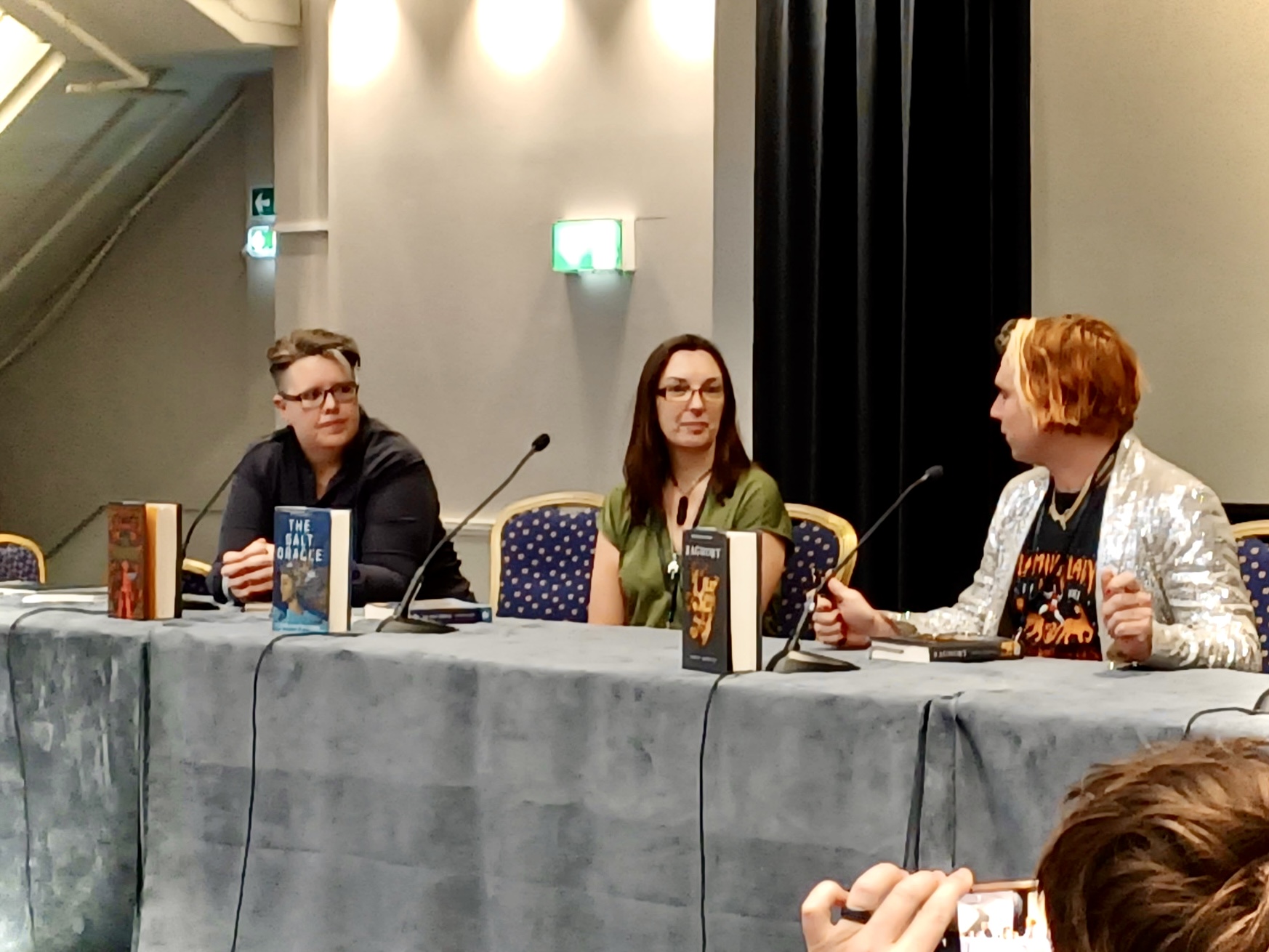
Launching alongside splendid authors Sam K Horton & (half of) MK Hardy

Technically, the point in the publication process where your book is fully out of your hands (editorially) is the page proofs checking stage. After that, you can’t change anything and it’s entirely up to readers to either connect with it or not. You get no further say on how your words land. But between proofs and publication you have a window of relative calm where a small number of reviewers and authors are reading the book but the wider public are yet to join the conversation. So publication day, for all that other things diffuse the singularity of the day itself, is still a huge shift in the life of a book.

That’s scary, but also freeing. I believe a book is unique to every reader who finds it, because a book is a conversation with that reader – their experiences and imagination and heart. That’s why the same book lands so differently with different people, because it is different. So finding out what your book became in different readers’ minds is a marvel, and stands apart from what your book is to you.

In my opinion, and as with so many things in publishing, it’s important to separate out your relationship with your craft, from your relationship with the publishing industry. A book release is worthy of celebrating because you should be proud of your own craft, and excited for that story to find the readers who will love it. It’s worth holding a little bit in perspective because you need to maintain your publicity momentum beyond this week, or even this month; and you need to maintain your writing momentum entirely beyond this book.

I am guilty of pinning all my hopes on this book sometimes, of focusing on how much is riding on this one doing better than the previous ones according to one measure or another. And there’s enough truth in that to overwhelm the joy of publication day, or award wins, if I’m not careful. So perspective, even keels and focusing on what I can do is good, but taking a wee moment to feel proud of myself independent of publishing’s shenanigans is just as important.

So please wish these books luck on their maiden flights, and meanwhile I will be diving into the edits and pretending that my next article will not be a Christmas reading recommendations post (scream).

Thank you as always for your support. Because accessibility in publishing is important to me, I keep all my craft and publishing posts free, so any shares or tips are greatly appreciated. Wishing you a fabulous weekend.
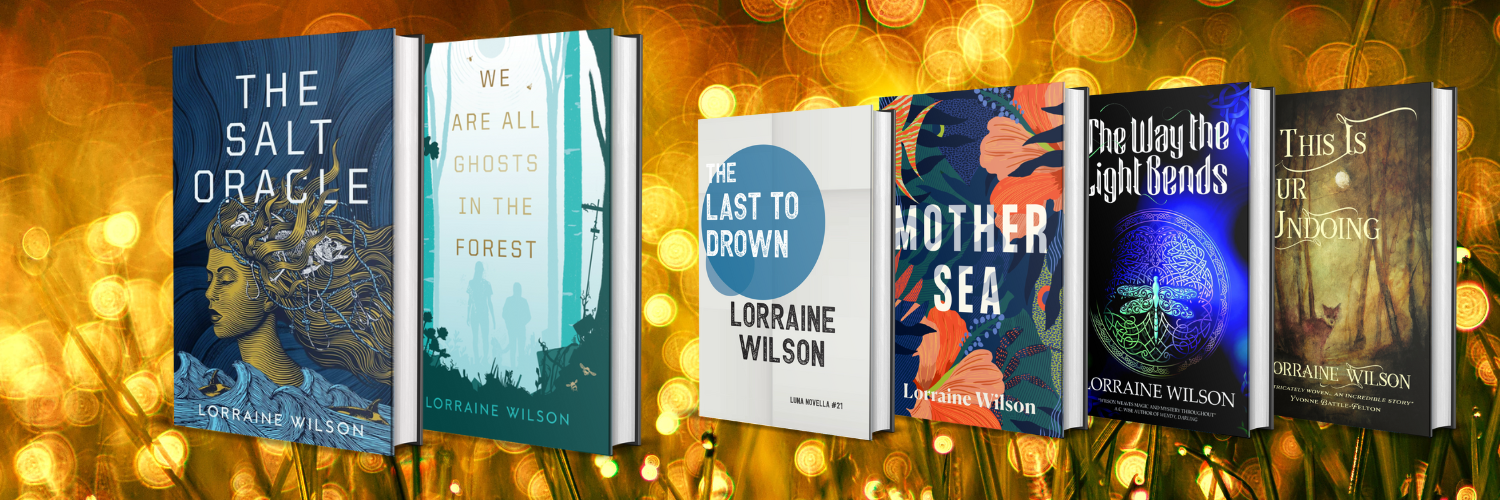
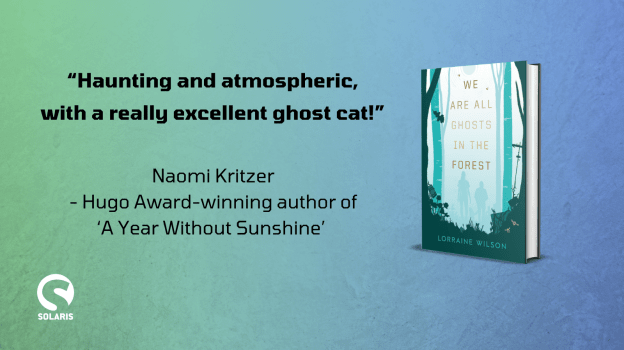
Publication day waffle

The book, the backstory, the question, and my hopes.

I have grown a habit without plan or forethought, of posting on/around each new book’s publication with my thoughts on what that particular book means to me and where it came from. For Mother Sea, that post was an explanation of the content warnings for the book, for The Last To Drown it was about the experience of writing chronic pain and the craft of novella writing.

With the publication of We Are All Ghosts In The Forest this week, I have been attacked by a fit of the pensives again and wanted to do the same for this book. Because the weird thing about publishing multiple books is that each one somehow means something unique to you. It’s important to you in an entirely different way to your previous (and likely next) books. Which when I type it, sounds perfectly reasonable, but I don’t know – I think a part of me was under the impression that publishing books would become … not rote because obviously each book is unique, but that the act of publication at least would become familiar and comfortable. Like wearing different outfits every day but then slipping into the same coat to go out.

And yes, there are aspects of the publication hullabaloo that feel very different (mostly less fraught) than they did the first time round simply because we’ve been here before. But Ghosts does have its own new territory to break, both personally and professionally, and I guess that’s where I’m gonna go with this publication day (weekend) waffle. Alongside a lot of shiny promo graphics that my fab publicity person sent me & I can’t resist using!

Craft, learning and lockdown.

One of my writer hopes is that each new book I embark on will teach me something new about writing. It’ll push me in a slightly different direction – whether that’s in genre or subject matter, form or voice – so that with every project I am challenging myself to grow as a writer. I aspire to be braver at this, if I’m honest with you, to be bolder in leaping into things I’m not sure I can pull off, more fearless (or unhinged, your choice) in being willing to tear something down that’s merely ‘good enough’ and rebuild something better from the ruins.

However, that’s for the future. For Ghosts, I look at it and think that the best lesson I learned from it is to trust in the small flashes of wonder more. To not get stalled on ‘yes but how does that work’ until the editing, to leap merrily into a half-arsed shiny idea without the comfort of the usual planning I do. I don’t think I’ll ever be someone who regularly writes without a good map (of character psychology and setting at least), because that stage does feel important and enriching to me. But I think there’s real value in knowing you aren’t tied to that planning. That sometimes, when the wind and the tides are right, you just have to leap aboard, hoist sail, and see what happens.

Which is how Ghosts materialised. At least the initial shape and opening chapters.

See, the thing is, I started writing Ghosts in March 2020.

Mmm hmm. That March 2020. I had a child two terms into their first year of secondary school, just forming new friendship groups, just adjusting to this new world … then suddenly at home, isolated, with their education, friendships and world reduced to pixels.

[See where the idea of the ghosts came from? More on this below…]

Homeschooling in that first lockdown was … not brilliantly structured, so even though I had it undoubtedly easier than parents with younger children, I was still rarely getting more than 20 mins of uninterrupted time. And the vast majority of my attention, emotion, and organising capacity was being used up on my child, which left exactly zero capacity for me to do intelligent, thoughtful things like plan and research and worldbuild.

When I sat down to write Ghosts, I had the opening image in my mind – of a woman returning to a remote village with a stranger boy – in my mind and nothing else.

Two paragraphs in, I mentioned a ghost. The line is ‘There were three people on the street, two of them real’. I wrote that, thought huh, so we’ve got ghosts then, and carried on. By the end of the first chapter – and the appearance of a certain image-shifting cat – I’d realised the ghosts were the remains of the internet, that the village was in Estonia, and that Stefan, the boy, was non-verbal. All my worldbuilding, character development, and plotting began then, and it was a patchwork ad hoc affair that later required a lot (so much) patching up and weaving in of broken threads.

Without the particular circumstances of lockdown and homeschooling, I’d never have written a book with such wild absence of planning. I quite probably won’t again. But thanks to that experience, and to Ghosts as a final product being something I’m quite proud of, my relationship with planning has evolved significantly. I still spend a good amount of time exploring the imagery and layers of the book’s core theme, because that’s the lodestone upon which everything else is built. And I do still plan, but it’s much less ‘I need to know everything before I can start’ and much more ‘I need to know enough not to get too tangled while I’m finding my feet in the opening chapters.’ It’s less character arc graphs, and more floorplans! (I’ve discovered a bit of a love for floorplans with Salt Oracle and the current wip both being largely in one big, complicated building)

Is this growth? Not really. I mean, there’s no wrong or right way to do this, so my approach adjusting doesn’t mean it’s better. But I do feel like this particular change, for me, is about confidence. I trust my instincts more, I trust those flashes of wonder to guide me well; I trust that if I make an unholy mess I can (grumpily) unpick and restitch it. Let’s be honest, I will also always love a graph, but this new more relaxed approach to tackling new projects might just give me the freedom to be bolder in the next project, and the next…

Ghosts and loneliness

There’s always one question that comes up again and again with each book that gets published. One particular theme or issue that stands out enough with enough people to become a feature of most interviews or informal chats about that book. For The Last To Drown it was about the experience of writing chronic pain. For Mother Sea it was questions about the importance of climate fiction.

For Ghosts I think one is already emerging, and it’s going to be ‘Where did you get the idea for these ghosts?’. The easy answer is that scene above – me watching my child struggle through the loneliness of a life reduced to four walls and pixels on a screen. The strange thing is that lockdown wasn’t isolating for me, in fact with both my husband and daughter suddenly in the house all day every day, I lost the peace and solitude I actually relied on quite heavily to manage my chronic pain. Being housebound apart from occasional short trips out? Well, hi, welcome to my world, please tidy up after yourself. BUT it was a horrible experience for my daughter, at an awful point in her life, and watching that was heartbreaking.

The chain of thought from that to a world haunted by fragments of our digital detritus, by our online echoes, is fairly obvious. And then the rest of the world in Ghosts had to be built up around that central concept.

So if anyone reading this was wondering, there’s the answer to that particular question. Where did the ghosts come from? Loneliness and lockdown. Homeschooling, society’s fragility and resilience; most of all the search for connection.

Growth, ladders and doing the daunting things

Ghosts represents something more prosaic to me too. This is the first book in my Solaris contract, and my first book with a publisher that has Big 5 distribution and main player reach within the SFF world. All three of my publishers have been/are amazing, and in my opinion punch above their weight with the quality of their lists, but Solaris are a step into a bigger room for me, if you like.

So Ghosts feels a lot like the next rung in the ladder of my career. It’s exciting. I’m hopefully going to be reaching new audiences with this book, hopefully gaining new readers who’ll stick around for future books. I’m doing more events for Ghosts’ launch than I’ve done for all my previous books’ launches combined! And with some brilliant author friends! My fabulous marketing/publicity goddesses are helping me reach new venues and platforms too. If the reception to Ghosts is positive, that in turn will pave the way for other opportunities (foreign rights sales for Ghosts, further book deals etc).

This is all wonderful new ground to be breaking. I am extremely fond of, and proud of, Ghosts, and am excited to have it out in the world finding people it resonates with. It’s also, not gonna lie, just a teensy bit daunting. I say this because I’m leery of doing the Instagram ‘Everything is intensely wonderful actually’ thing. Several events plus travel in a month is going to be a physical test, but I’m interested to see how I cope and how quickly I recover. It’s good data for the future! There’s also the fear, of course, that no-one will show up to my events, or that everyone will hate the book and hunt me down to tell me so, or, or, or… But those are normal, unavoidable fears to have and I have an ace in my back pocket…

…I have readers. I may not have many compared to other authors, but there are amazing, strange, beautiful people who have come with me from book to book, frequently cheered me on, voted for me, recommended me to others. These readers have trusted me each time I’ve veered off in a new direction. So I trust them in turn. I trust that they’ll read Ghosts and find something worthwhile in it. And that’s kind of all that matters. Yes, I hope I reach new readers as Ghosts takes the stage. Yes, I hope it opens new doors for me and my career. But I hope even more that the readers who’ve supported me thus far will enjoy this next step on my bookish travels.

Thank you for reading & supporting this blog. I’ll be back soon on my Substack with less ‘please buy my book’ and more about what makes a good book event, parting ways with your agent, and more…

Cover Reveal and Some Musings On Cover Development

Today is Cover Reveal Day for We Are All Ghosts In The Forest! I love cover reveal days – they’re the day you can entirely unself-consciously gush about your book because you’re gushing about someone else’s work which removes (almost) all the imposter syndrome, awkward self-promo feels of your standard bookish promo events.

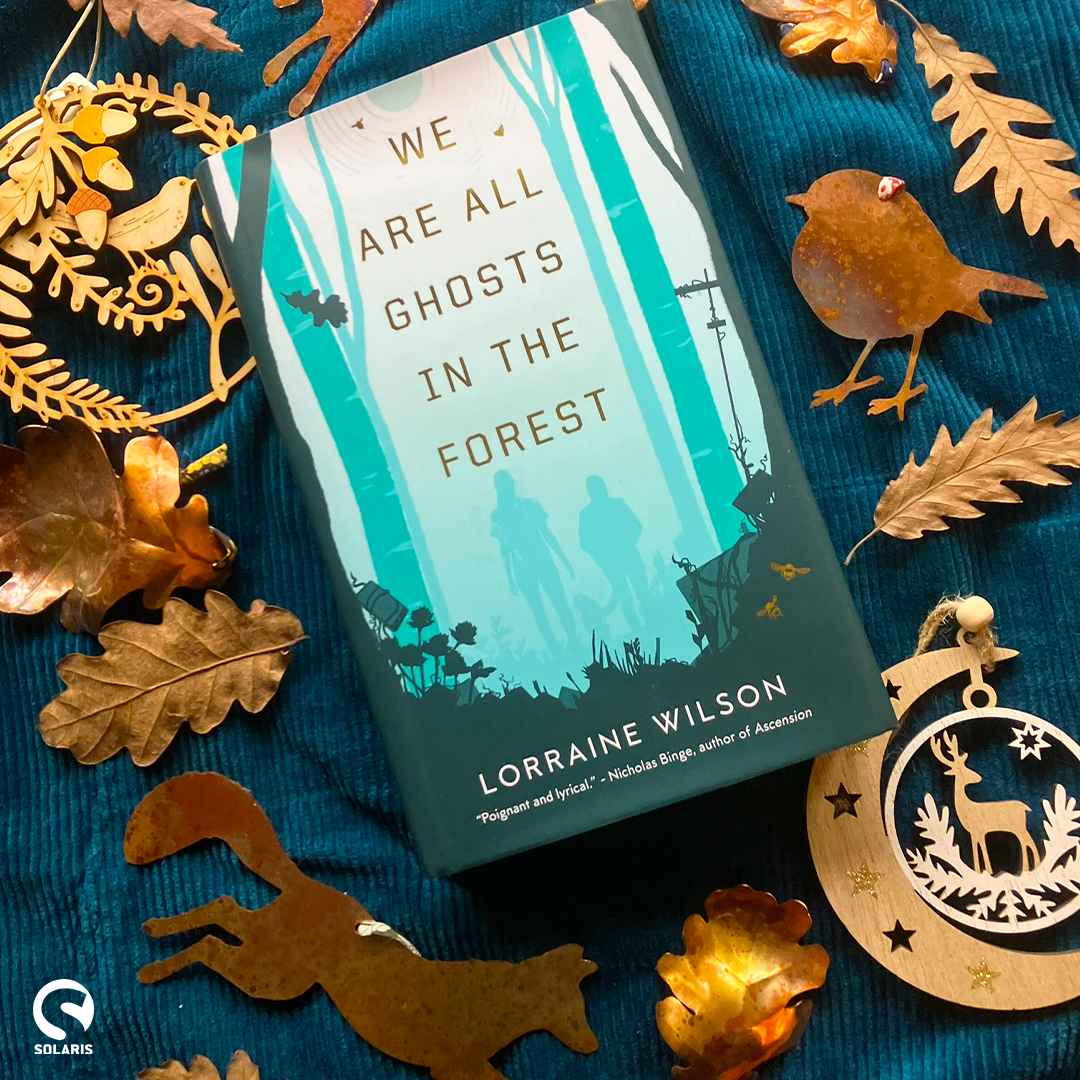
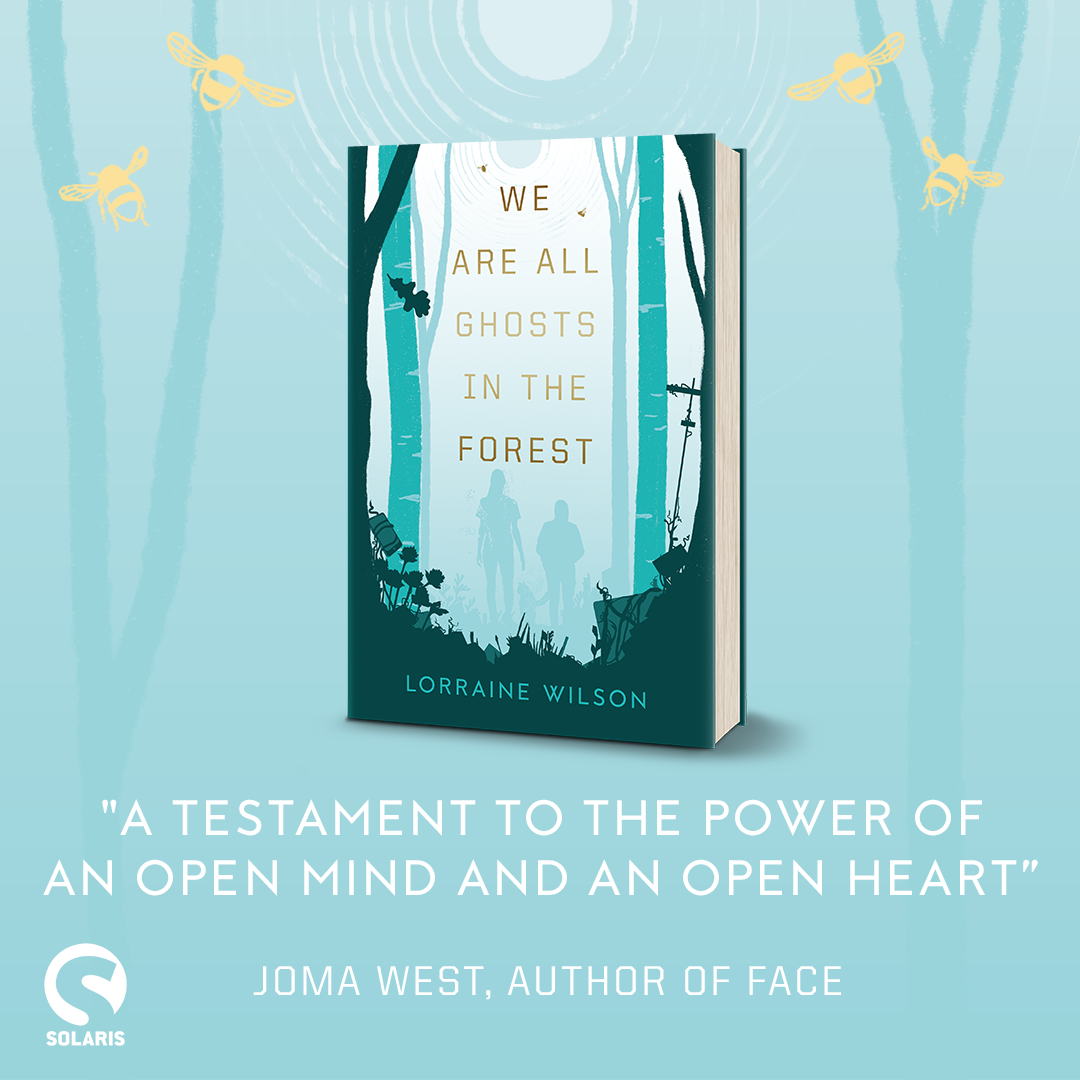
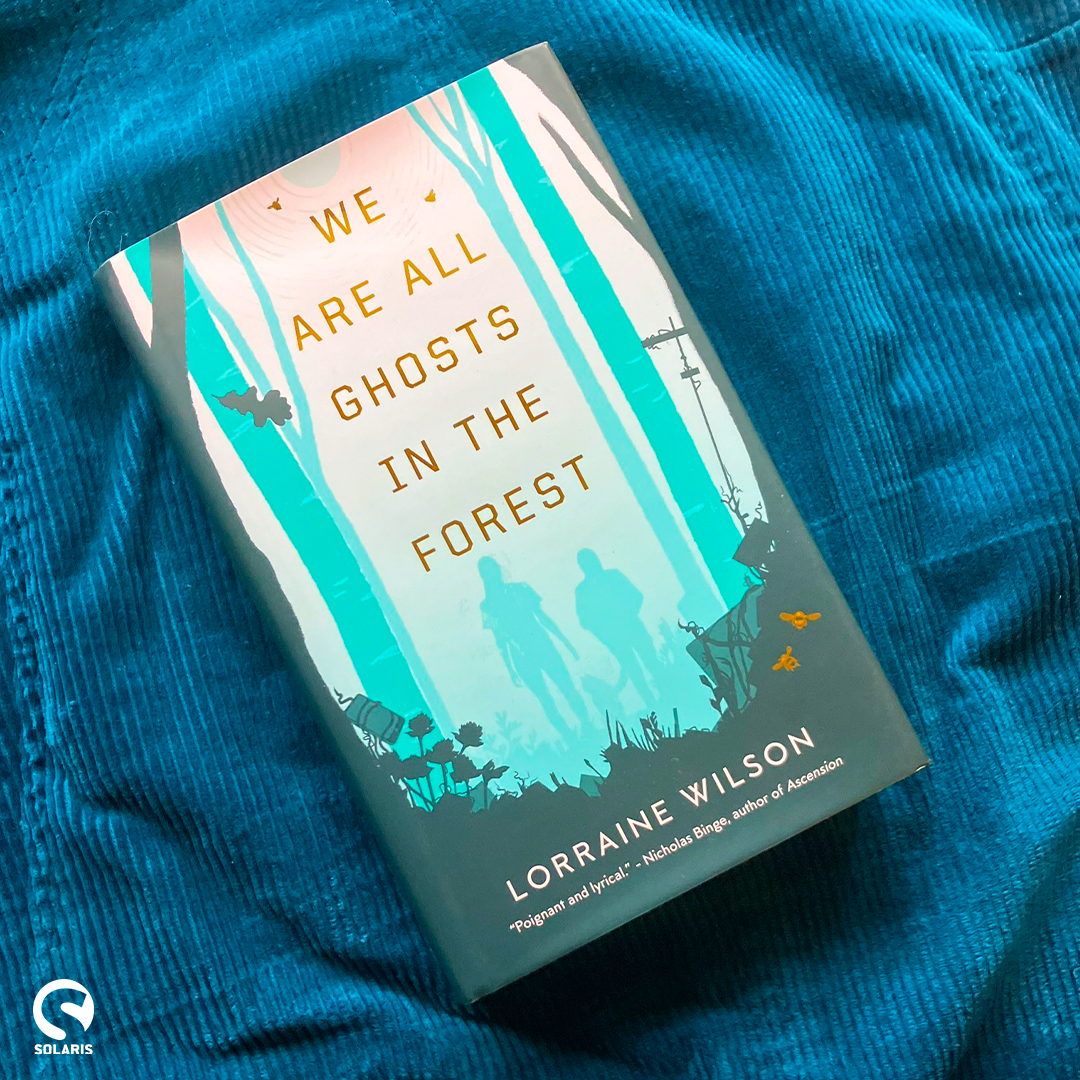
If you’ve managed to miss me hollering on social media – here is the gorgeous creation of Jo Walker, which I think captures so much of the essence of Ghosts from the colour palette to the tiny details.

Rather than just finish the blog here with an I HOPE YOU LOVE IT, I figured it might be interesting to talk through the process of cover designing in trad pub and perhaps share some ideas for how you the author can best intersect with that to increase your chances of getting the cover of your dreams.

Sound good? Okay.

[A version of this blog was shared on my Substack in January. Where-ever you read it, thank you for your interest and support]

I’m not as visual as some, so when I have a finished book my sense of what I want the cover to look like is generally quite vague. For my first book, I could only say ‘I don’t want people’ and ‘Moody, maybe with foxes.’ Which is … well it’s better than nothing. But there are several hundred directions that premise could take and many of them wouldn’t have really fitted my inner vague sense of the book.

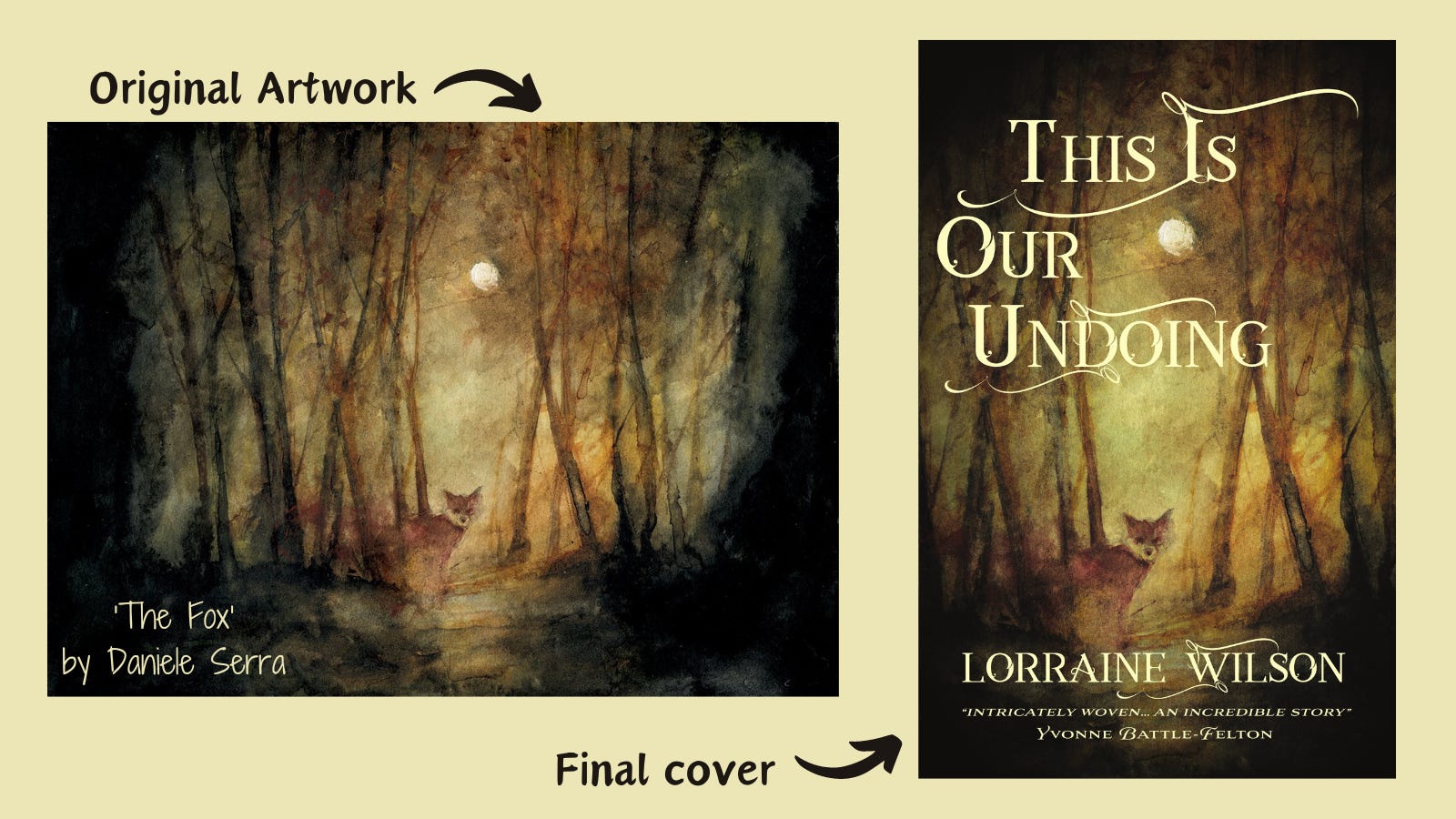
Incidentally, I got extremely lucky with my first book in that my publisher spotted a new piece of art by award winning cover artist Daniele Serra and knew instantly that it fitted the book perfect. So my vagueness didn’t shoot me in the foot and I adore my moody fox with no people cover!

Buying the rights to a pre-existing piece of art is a slightly unusual process though. In most cases a book cover is created specifically for the book according to a cover brief given to the artist.

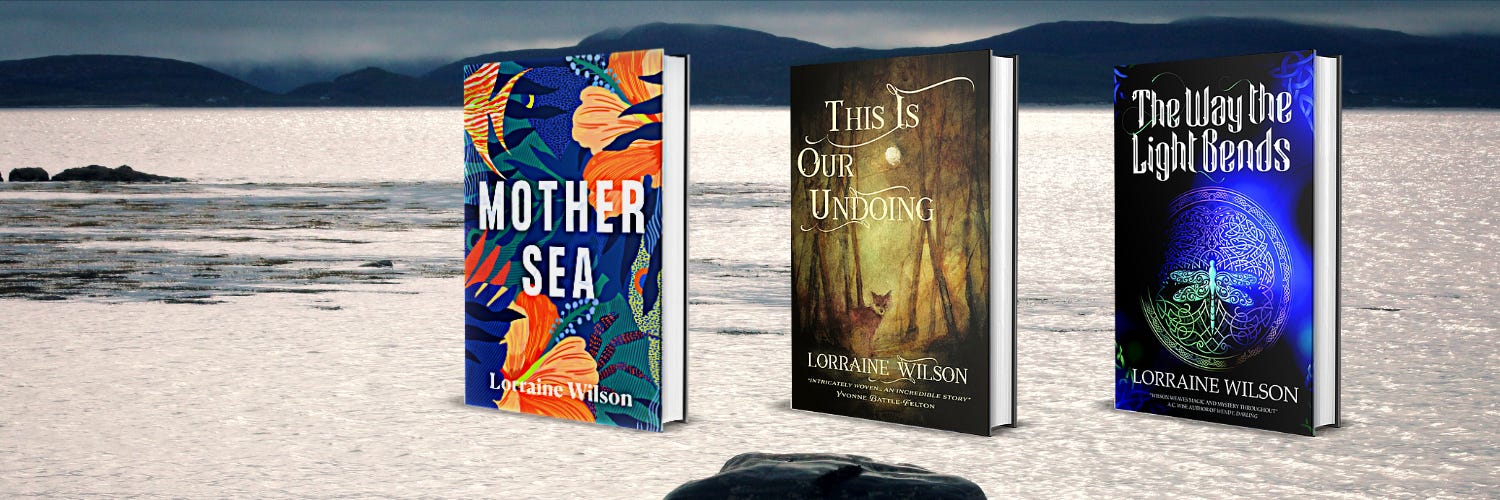
By my second book, I’d figured out that I needed to think more clearly about what I wanted. Now, I look for covers of books that both fit in the same marketing space and have stylistic approaches I like. I look up the designers of covers I admire and check out their portfolios. I try to come up with a list of aims that are more than ‘make it dreamy?’. Such as – ‘I think a minimalist & slightly eerie foresty vibe would work really well’ (Ghosts) or ‘I’d love lush tropical colours, including animals that are motifs in the book, and reference to the sea’ (Mother Sea).

And so for all my subsequent books, I’ve gone to my editor with some comp covers, a set of specific vibes that I want to convey, and some stylistic or design elements I am keen to see.

This step can take the form of a conversation in a bookshop (my second book), some email back and forth about comparative covers and photographs (my third book), or me sharing Pinterest boards and comparative covers, and us both pulling together a list of potential artists (We Are All Ghosts In The Forest).

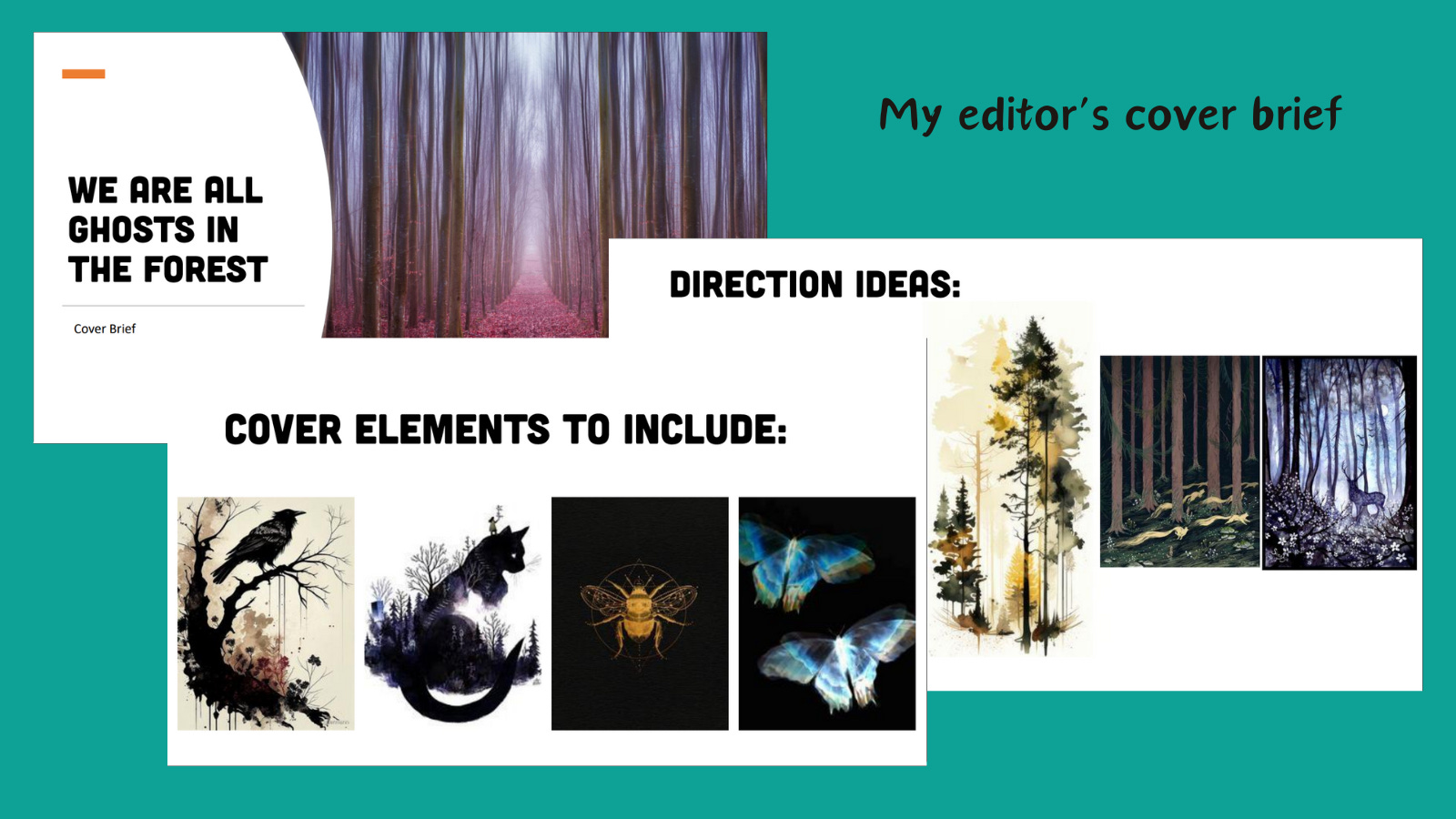
Once you and your editor have agreed a direction, your editor puts together a cover brief which contains all the above information, along with relevant themes and motifs, plot points and market placement aims. The cover brief my editor put together for Ghosts was amazing (I wish I could share all of it), and incorporated elements from my Pinterest board, many of my suggested cover comparisons, and some incredibly exciting author comps as well.

The next steps happen without author input, usually (but see below).

With the sign off of Marketing and Publicity (and Mysterious Others), this cover brief is then sent to whichever cover artist is hired for the job. We had a list of top favs, and which one we went with was a juggling act of their vision and availability versus our deadlines. The limits of my involvement in this stage was saying ‘fabulous’ once the artist was confirmed.

Normally, the artist provides a selection of initial cover visuals to the publisher and they go through a process of development to come up with a single draft cover before this is then shown to the author.

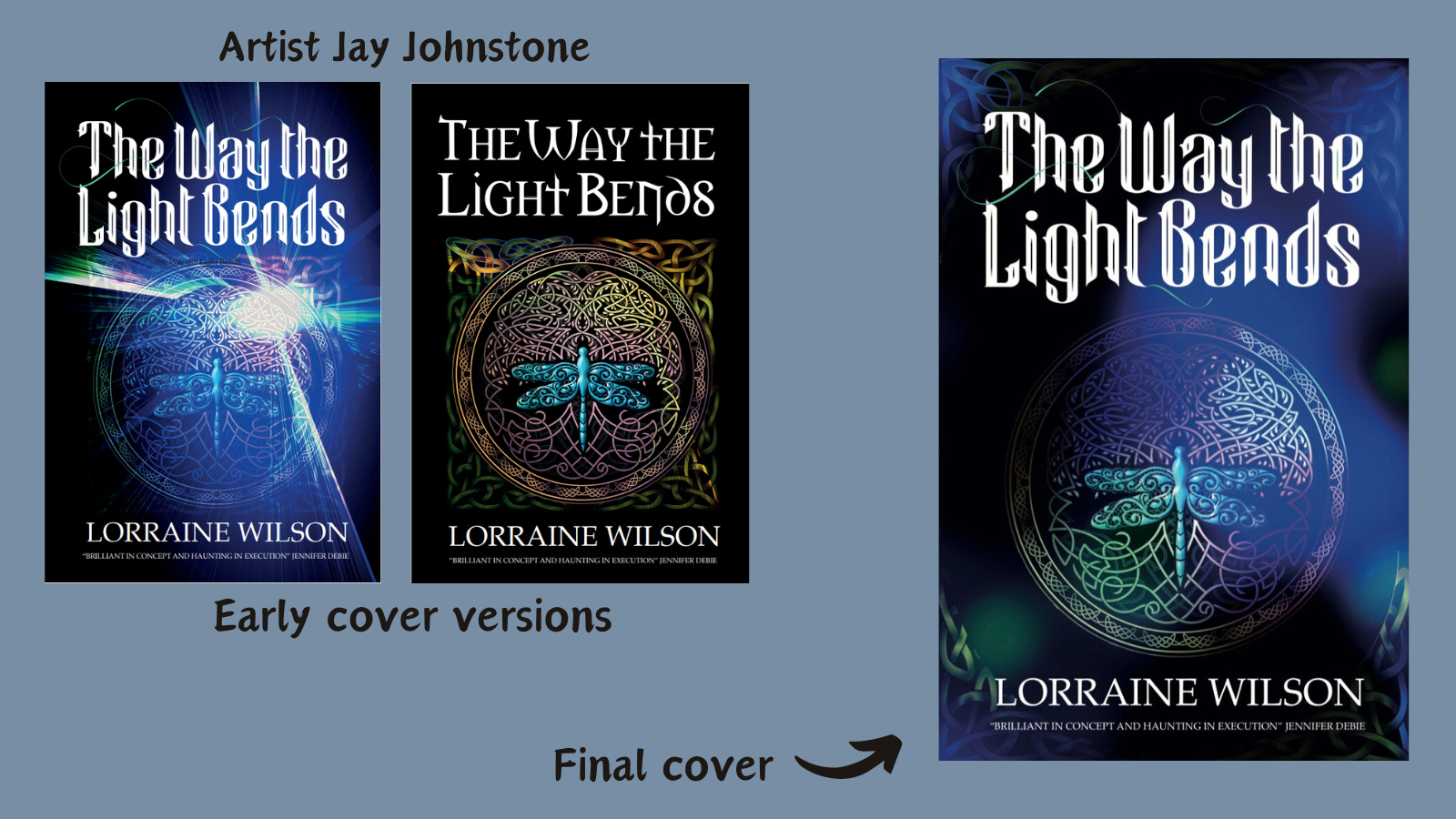
With my second book, publishing with a small press meant that I was more closely consulted at this stage. I got to see all the prelim draft versions, pick the elements that I liked and ask for fairly substantial changes in an iterative process that went from entire colour/layout changes to tiny tweaks of font size and contrast levels. While this isn’t something I can expect from most books, it was an incredible learning process. (Check out Jay Johnstone here)

With Ghosts, I was sent a draft cover that had already been through revision in-house. It was beautiful, and very much in line with how I’d envisaged it. There were a few tweaks I wanted though, and after consulting my agent to confirm, I sent this list of requests back to my editor. Now, the bottom line in all of this is that the publisher has final say on covers. Contractually, authors are to be consulted, but not obeyed, so to speak.

With Mother Sea, to be honest this draft was so sublime, I made one request about the title font, which was adjusted, and that was it.

I was a little nervous sending a few more tweaks for Ghosts, so was super grateful when my editor came back with ‘Yes, I agree with all of this, will send it on’. Happy days.

I then got sent a ‘final’ version to agree, which was amazing and incorporated all my requests. But there was one small detail I felt still needed tweaking. I asked; this time my editor said ‘maybe. it depends.’ Which is entirely fair. The artist was working on commission and that buys only so many hours of work. So I get it, and even if they couldn’t make that last change, I still fortunately had a cover I love.

Do I have to love it? Maybe not, but I do have to believe it will help sell the book. We are going to be looking at this cover SO MUCH over the next year or so. I’m going to be taking it to bookshops, sharing it online, using it to pitch myself for events. I have to trust that when I show it to someone, it will give them both a fairly accurate sense of the book, and also make them want to pick it up.

It is easy, as with editing the book itself, to get tied up in tiny details. To worry about comma placement, exact shades of green, the length of chapter 27, the perfect placement of the title to the millimetre. And yes, those things matter. But also they don’t? At some point we are fiddling with things that no shop browser or reader is going to spend more than 3 nanoseconds on, so it’s okay to step back and go – it’s fine. I’m happy. I trust it.

Which is what a lot of it is about, I think. Trust. Trusting the publishing team to know what will work for your book, trusting your gut, trusting your book to stand without you in the world and do its job on its own.

Conversely, if your gut is telling you this cover is wholly wrong for your book, then step 1 has to be to talk it through with your agent if you have one. How much is simply that you aren’t familiar with current trends in cover design in your sub-genre? How much is a genuine disconnect between where you see your readership and where your publisher sees them? I’m very lucky I’ve never had to deal with this particular minefield, but if you find yourself in it, speak to your agent. Ask trustworthy friends who both know your book and know enough of publishing to give an honest, informed take. It’s hard to find the line between standing up for your book and not trusting the expertise of others, but resolving a sticking point can only happen through gentle, clear communications. Ask me, if you like! I’m happy to offer my semi-informed opinion!

I love the cover design stage. I love the joy of pointing at beautiful covers of books I admire, and saying ‘I’d like something like that please’. I love the absolute wild magic of sending a set of bullet points and random pictures to an artist and them somehow, miraculously producing something that captures the essence of your book. How? They are amazing creatures, cover designers, and deserve far more recognition than they generally get.

Did I get my final adjustment? No. Does it matter? I’m glad I asked, I would have regretted not asking and I think my suggestion was a valid one, but I still have a cover I both love and trust, and have been bursting with the urge to show it to everyone.

With the cover of Mother Sea I usually shove it at people, shouting LOOK AT THE CRAB. With Ghosts, I think it’s gonna be GOLDDD BEEEEEEEES.