Category Archives: Uncategorized

Retreats, Arts Funding & Goats

Last year I was awarded a Creative Scotland grant through their open fund to support my writing of a novel that I generally refer to as Welsh Gothic. This was my first time applying for funding for my writing (years of applying for scientific research funding scarred me for life!), and being awarded a small grant was perhaps one of more validating experiences of my writerly career so far – A group of publishing professionals thought I & this unfinished book had enough potential to be worth supporting? Really? How great is that?

Aside from the wee confidence boost though, this funding represents something more widely important. As you likely know, I am too unwell to hold down a ‘real’ job. Last year I was fighting my own body in an attempt to earn something from freelance creative work – articles, workshops etc. – but that was taking a heavy toll on my ability to actually write. My spoonie body only has so much capacity, and this grant allowed me to protect more of my limited creative spoons during what has turned into quite a tough period. If I was hustling this year the way I did last year, I honestly may not have written a word.

Arts funding has suffered in the UK under Tory rule, and came under brief, cataclysmic threat in Scotland before a Scotgov u-turn. After the lockdowns proved emphatically that we all turn to arts when we’re under stress, anything other than wholehearted support for the arts seems a bizarre act of self-harm. And the voices first silenced by lack of funding are the voices of the marginalised – the disabled, the working class, the people already carrying the existential stresses of systemic bias. (Perhaps that explains the Tory desire to starve us out…)

Anyway rant over! A huge thank you to Creative Scotland for their support. It was a tiny sum of money in the wider scheme of things, but it means so much to me. And, to get back on track, part of the funding allowed me to go and stay at the location of Welsh Gothic for a research week.

CUE GOATS!

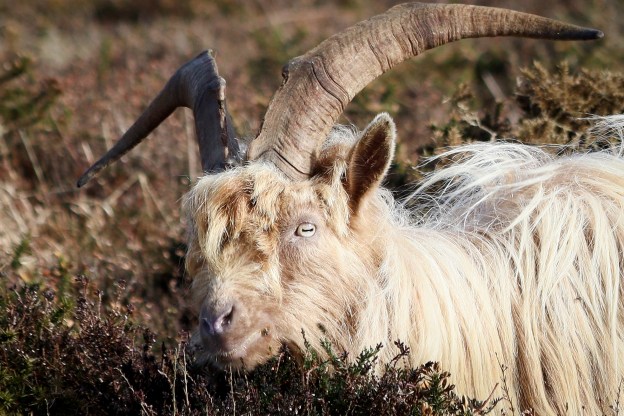
welsh feral goat amidst heather. He's long haired and pale gold with mad white eyes and curved spreading horns.

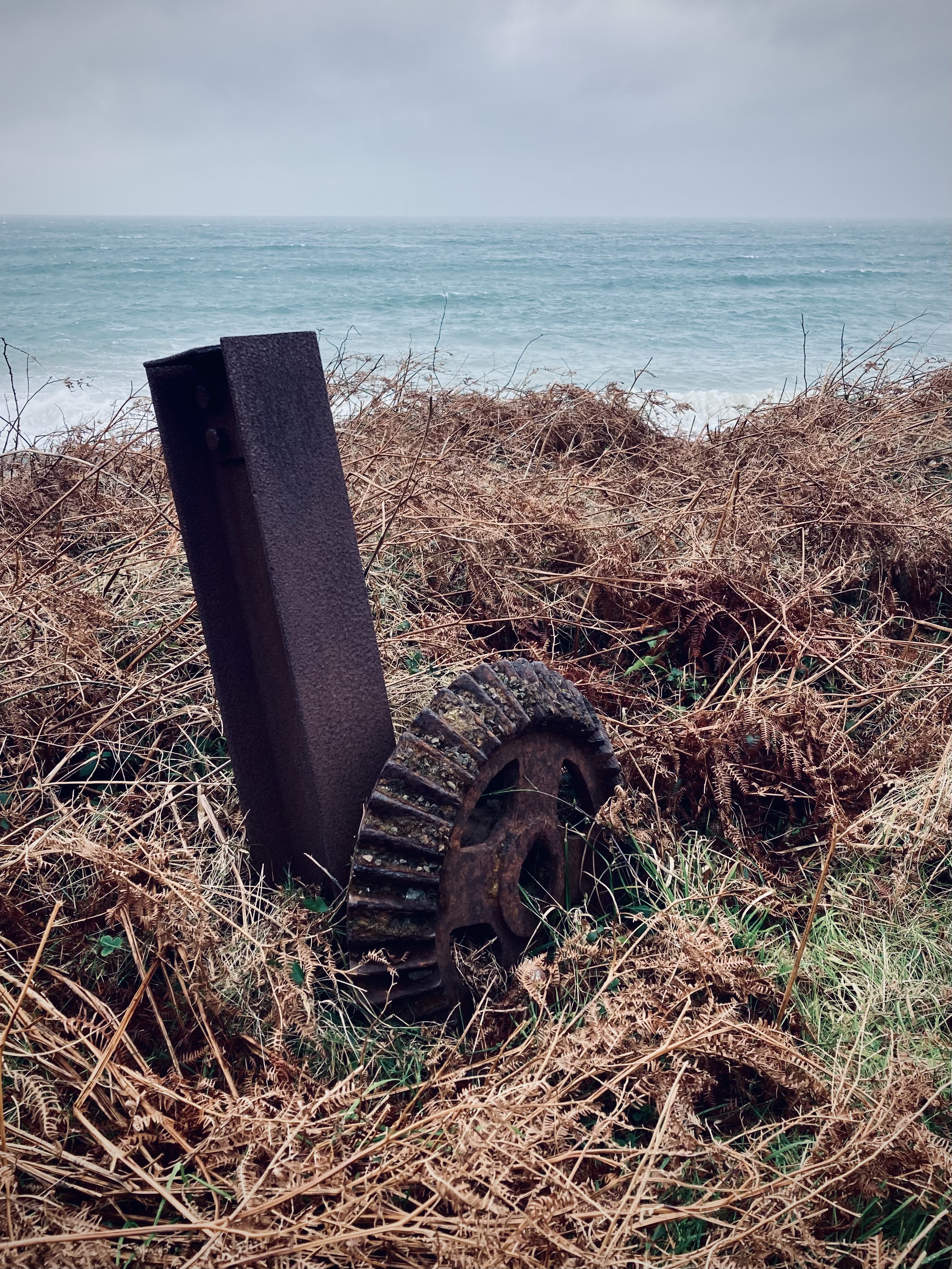
I stayed in a cottage in Nant Gwrtheryn – a granite quarrying community in a steep, tiny valley on the coast of the Llyn Peninsula that was abandoned when the quarries closed, then restored as a language centre. It’s a stunning location. Vast quarry cuttings and abandoned machine housings on the cliffs around the centre, the two neat rows of quarryman cottages and the abandoned farm at the top of three slim fields. Fog slipping in from the Irish sea and chough calling from the peaks. AND WILD (feral) GOATS.

These dudes weren’t here the first time I visited (to study Welsh about 14yrs ago), but they were pretty much resident this time. I wonder whether this was because they’d got used to the quiet during lockdowns & then just opted not to leave. Good for them. The world is theirs, we are just guests, and insignificant ones at that. They’re gorgeous aren’t they? Not saying they were the highlight of the trip but…

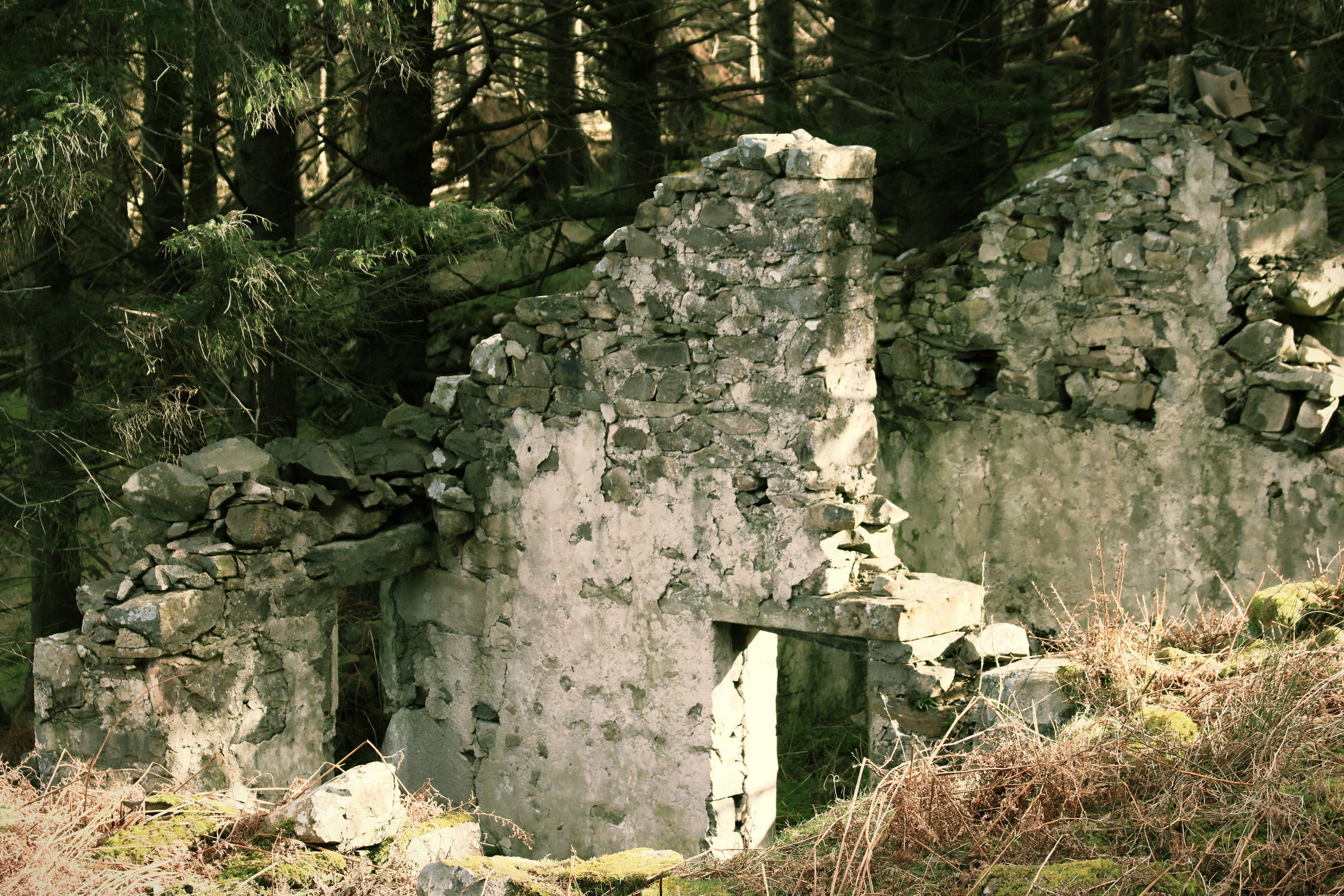
black and white photo of an abandoned stone farm house, seen through fir trees. It much gothic. Peak ooooh.

Welsh Gothic (real name All The Birds Will Be Hostile – a quote from the Mabinogion’s Blodeuedd of the Flowers tale) is set in the abandoned farm in this photo, unabandoned and occupied with a riding stables. This is the opening sentence of my pitch:

In a valley hemmed in between ruins and the sea, on the edge of the wild Llyn Peninsula in Wales, superstition and family secrets threaten to destroy the childhood home Blodwyn Jones has been running from for years.

Inspired by the story of Blodeuedd, Alan Garner’s The Owl Service and Laura Purcell’s Bone China, it’s full of watchers on the cliffs, curses painted in blood & some badly timed mists. It’s my first foray into gothic lit with all its symbolism and feminist underpinnings, and the time away really made me fall in love with the story again.

It was an amazing week. I went with a few writerly friends, and the mix of staring at the scenery (research!), drinking tea and chatting books made for a deeply lovely, enriching time. I spent the time rewriting the existing partial draft which was originally set further down the peninsula, making copious notes and taking lots of photos. Welsh Gothic has been given a new lease of foggy, spooky life and I am now in the final climax scene, wondering whether to slip a goat in there as a pivotal Deus ex Capra.

Return to main blog page

This Is Our Undoing

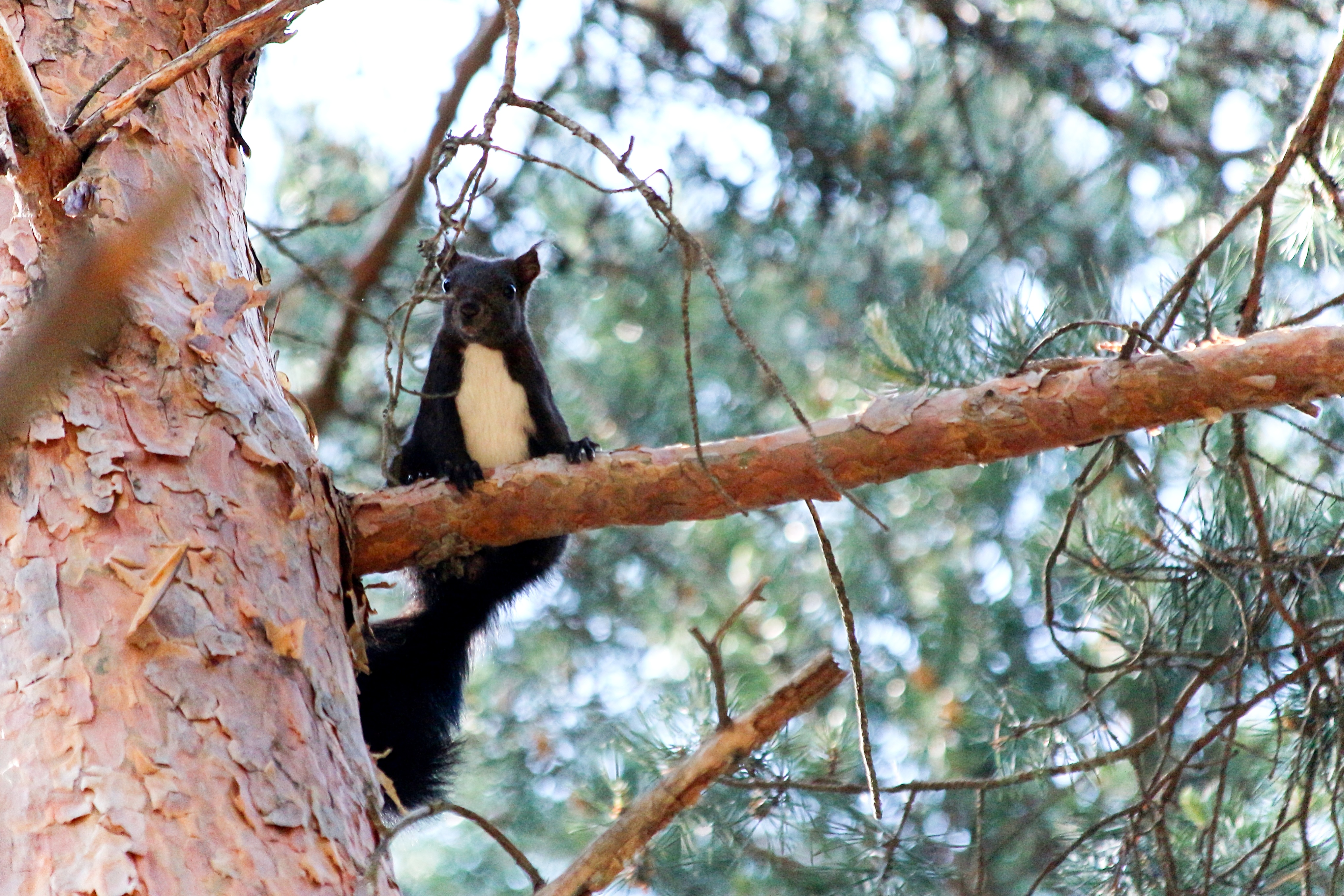
black red squirrel

My first novel, This Is Our Undoing, is going to be published by Luna Press Publishing sometime in 2022. As you might imagine, I am pretty excited about this. It’s not been easy getting to this point – lots of illness, near misses, more illness, some really near misses – but I’m so glad I found Luna as they are thoroughly lovely people and my book definitely feels happy in their hands. Sometime I might do the obligatory blog about my ‘journey’ to publishing, but not yet because there is still so much of the journey to go.

This is what I say about the book on Luna’s announcement blog post (here):

When I started writing This Is Our Undoing, the UK had recently voted for Brexit and the US had elected Trump, Asia was enduring a devastating heatwave and the Arctic ocean was warmer than it had ever been. I found myself attempting to process my own powerlessness in the face of events that were breaking my heart, and from there, trying to define what power I did have. Can I alone do anything that will make a difference? It’s an important question I think, today even more than it was then. It was this that became the central theme of this story – how do you hold onto the light when the world is growing dark?

The setting of the book felt perfectly suited to this theme. I wanted to explore a potential future but in the claustrophobia of complete isolation, and I wanted the wilderness. In folklore worldwide, forests and mountains are the unknown at the edge of civilisation, the home of Little Red Ridinghood’s wolf and Scotland’s bean sidhe, Slavic leshy and dragons. I’ve lived and worked in the boreal forests of Eastern Europe and Russia, and they are Forests with a capital F – entities that have a presence and resonance beyond the ordinary. I wanted that in this story, but I also see them as standing in contrast to the world beyond, a reminder of wonder and beauty.

This Is Our Undoing is my attempt to discover the power of love and hope in a world where both are increasingly hard to find. In the face of disempowerment, power is in the small things; the choice made, the lone voice, the comforted child. To go into the forest and breathe. To be kind to the lost.

Go back to Blog homepage

Do stories about dragons matter?

IMG_1383

So…I live in Scotland, and I was brought up by hippies. These are two fairly relevant things in explaining my love of celtic myths. Unrelated to those two things, it is also worth noting that I’m averse to happy endings (I love Thomas Hardy), and the old tales are neither forgiving nor saccharine. After all, sugar was a rare commodity then 😉  … actually I bet you can correlate the availability of sugar in Britain with the ‘lightness’ of current storytelling. We have too much sugar in our diets, and too much perfection in our literature, whether that is the happy ending to the love story, or the world being saved by a rugged hero/intelligent heroine. Pah. I want endless war, I want love stories that end in betrayal and misery, I want fate (or clever gods) to twist the world-saving moment so that the hero has actually condemned us all to darkness. Now that is something I can get my teeth into. You could argue that the YA literature comes closest to this…you could argue that ‘A Seeming Glass‘ does pretty well too.

I’m generalising, and I’m off on a tangent. I’m back now.

Celtic myths, and whether they are still relevant. That was what I was supposed to be talking about.

Who's afraid of the big bad wolf?

Who’s afraid of the big bad wolf?

There has actually been oodles of research done on this very subject by people far more knowledgeable than me, so I’m going to keep it personal (mostly). But I just wanted to fill you in on some background…the earliest written myths include wonders such as the Welsh Mabinogion (yes, I know that’s not the proper name, but it’s the recognisable one), and the Irish Táin Bó Chuailgné. These were both probably transcribed in the 12th Century, but if you trace back the events they mention (and those that they don’t), the Mabinogion in particular stems from pre-Christian roots. So it is all moderately old.

Psychologists have taken a liking to myths, and Carl Jung linked myths to his theory of a society’s ‘collective unconscious’, saying that myths fitted internal archetypes (the Trickster, the Shadow etc), allowing people to explore the hidden parts of their psyche without risk or recrimination.

Others, particularly André Favat, saw fairy tales as allowing children a non-real method of processing the changes they undergo, and the increasing intrusion of outside forces into the child’s world. He said, and I like this quote, that children “… believe in the magical relationship between thought and things, regard inanimate objects as animate, respect authority in the form of retributive justice and expiatory punishment, see causality as paratactic, do not distinguish the self from the external world, and believe that objects can be moved in continual response to their desires.”

That makes sense to me. I have seen experiments where children readily accepted the animation of supposedly inanimate objects, I have read studies showing that a child’s innate sense of morality is profound, and anyone who is a parent knows that children are essentially egocentric (in a good way).

It also makes sense to me to think of myths, and fairy tales, as a form of teaching. Providing explanations of the unknown (a god did it), and moral/life instruction to children (if you betray someone, you’ll get turned into an owl; don’t wander off into the bog, you’ll drown). They were also history lessons, the oral tradition, passing down memory of war or famine or heroes.

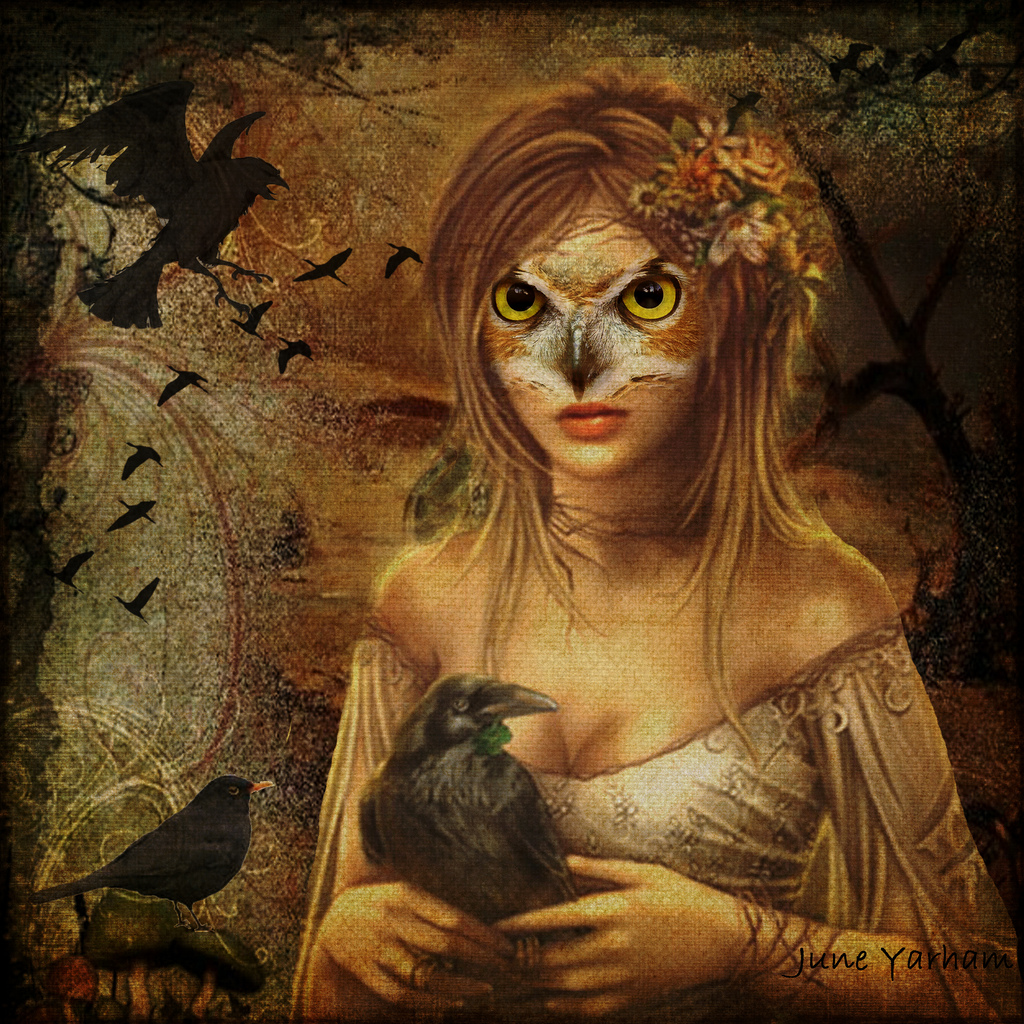
Blodeuwedd, made from flowers and turned into an owl. 'The Bird Woman' by June Yarham

Blodeuwedd, made from flowers and turned into an owl. ‘The Bird Woman’ by June Yarham

All well and good, but why do we (I) love them so much now, and love all the modern retellings of them (however much I might crave a little less sugar)?

Favat may be right – the world is still a big and scary place for a small child to make sense of. And the monsters and heroes (who invariably die, btw) (and then come back later, if they feel like it) are still good constructs for children to use to make sense of that world. As an adult, reading these tales, I am merrily reverting to my inner child. Which is very good for me, so there.

Jung, I’m not so sure about, although that might be because I don’t quite understand him. A collective unconscious, perhaps – we are a social species and we have a demonstrable cultural inheritance – like the ‘memes’ of Richard Dawkins et al. But does that mean that I read mythical tales because I need to vent my inner bad guy? If I didn’t read at all, would that mean those hidden inner unacceptable characters would become repressed (á la Freud), or pop out? I’d definitely be sad, but become violent, or unfaithful? Not likely.

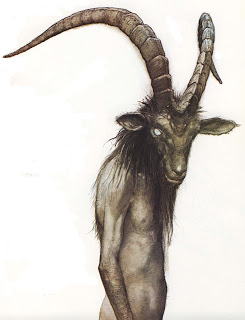
A phooka, the more sinister celtic origin of Shakespeare's Puck.

A phooka, the more sinister celtic origin of Shakespeare’s Puck. By Alan Lee.

However, it is kind of fun to explore all that darkness in books, isn’t it? I mean, who actually wants to be the cop in charge of a murder investigation? Not me, thanks. But I love Ann Cleeves. Perhaps Freud has a point…

So, this is what I think, and please let me know whether you agree. Fantasy in general, and mythological tales in particular, give me this: (I like lists)

  • Space for my inner child to restructure her world, and make sense of the things that she still finds scary.
  • Sight of an older moral society, which actually does not compare too badly with the global society we find ourselves in today.
  • Stories to fill my child’s life with magic. Kelpies and selkies and dryads and (kinder than the original) fairies. They make her smile, which makes me smile.
  • Hope. Many myths are cyclical. The hero fails, the gods change their minds, a new hero (or the mysteriously re-alive old hero) tries again, and succeeds at something entirely different etc. etc. So there is always hope. Even in the dark places, even after complete and utter failure. Second chances and your own small place in the scheme of things. I’ll take that.
  • And, occasionally, dragons.

Dragon-HD-Wallpaper-2014-For-Galaxy

Write a blog, they said.

Just a little sinister, aren't they? From a trip to Argentina a while ago. Just a little sinister, aren’t they? From a trip to Argentina a while ago.

At the risk of sounding recalcitrant, I was not planning on starting a blog. Not out of a superiority complex, or, really, out of lack of time. More because the sheer volume of blogging on the web daunts me. As does the very particular skill required to write a good blog. I read a couple of rather excellent blogs, and whilst I am glad that I do so, they do make for rather humbling bedfellows. If another piece of writing can count as a bedfellow to this piece of writing, it depends on the shape (and furnishings) of the great Cloud, doesn’t it?

Anyway, so, the thing that brought me here, and made me waste oodles of time faffing about with background pictures (but that’s the best bit!), was my wish to contribute to something that I am lucky enough to be a part of. (Excuse me while I maintain the mystery a little longer.) Is that not often the way it happens – you resist something through insecurity, perhaps, or just plain old inertia, and then suddenly you fall into it because it has become about others, for others, rather than just for yourself.

Now that I am here, and you are here (thank-you), I can tell you what it was that launched me into the blogosphere. However tiny and discretely-lit my corner of it is. Well, I am part of a writer’s group, known both individually and collectively as The Randoms. And this splendid group of writers is publishing an anthology of twisted and dark tales, reflections of fairy tales or myths, where the shadowy roots beneath the modern saccharine surface have been brought up into the light.

Do you look into mirrors and wonder what else they show? Do you tread lightly through the edges of the sea? Do you ever wonder how you would shape revenge? Do you, in fact, have a pulse? Then you will love this.