So a wee while ago I was asked a question at an event that very nearly launched me into a TED talk of an answer. We were out of time so I had to restrain myself, but I figured it would make a good article in which no-one is waving frantically at me from the sidelines begging me to shut up!
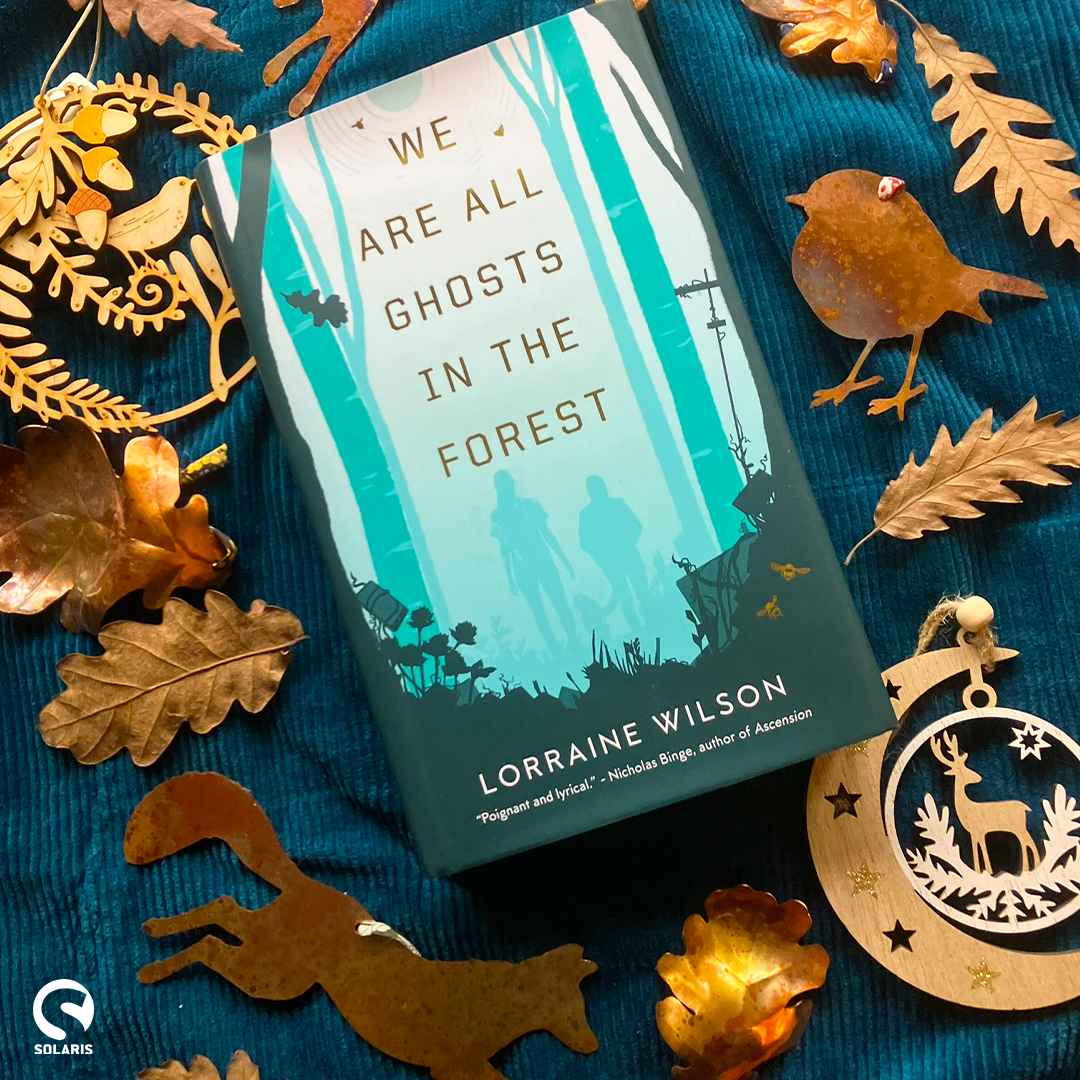
The question was something like this: You said you don’t call We Are All Ghosts In The Forest a dystopia, but several of your books have dystopic themes so why don’t you call them that?
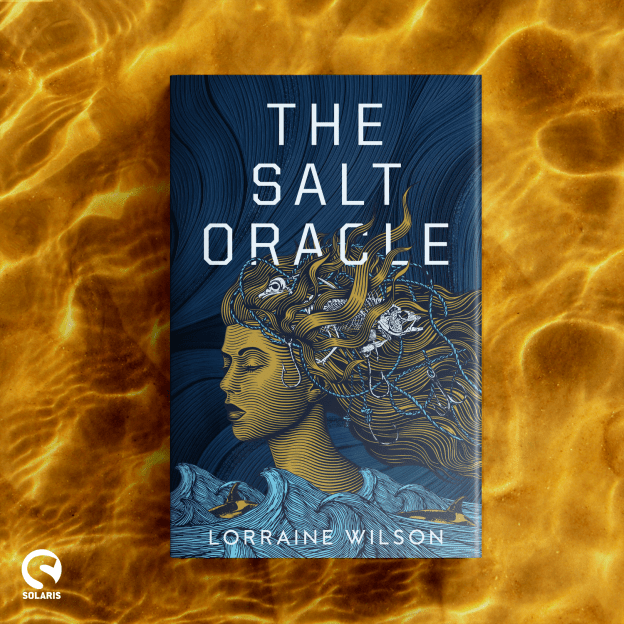
Which is a fair question. I had said earlier in the event that although Ghosts is often marketed and reviewed as a dystopia, I personally resist that label. And yes, the questionner was right that several of my books – Ghosts, The Salt Oracle, This Is Our Undoing, even Mother Sea (although we’ll come back to that) – have elements of socio-political or environmental settings that are pretty dark and dystopic.
Dystopian fiction
First off, for the sake of clarity – what is dystopian fiction?
It’s generally framed as a story that takes place in a society that is in some way repressive, cruel, unjust or otherwise plain ol’ nasty – a kind of worst case scenario of humanity as a society. It’s often worked in combination with environmental extremes that the system is a reaction to, and it’s often, but not always, propagandised as utopian. Or it is presented in contrast to some utopian other – the past, another country, another planet etc.
‘Dystopia’ is a genre label that’s had some pretty impressive waves in popularity, isn’t it? There have been times, around the Hunger Games era for example, when it was riding pretty high. Going back further, I remember reading A LOT of post-nuclear apocalyptic dystopias when I was a young kid growing up in the tail end of the cold war. They’ve been around for a long time, and range from commercial to the more literary examples like A Handmaid’s Tale or The Road. It’s one of those genres that never entirely drops off the popularity lists at all, but it’s … taking a wee bit of a back seat at the moment, from what I can gather. People, I think, are largely either looking for pure comfort, or for more ‘working through the disaster’ than ‘living in the aftermath of the disaster’ narratives, for very understandable reasons.
However, that slight popularity downturn is not why I avoid the label. I mean, I write quiet, genre-blending books, I clearly am no good at writing to market so I don’t worry about the trendiness of labels either.
Why I love but (kind of) avoid the label
My resistance to ‘Dystopia’ as a label is that for most (not all, but most) fiction in this genre, while it is generally accepted that the dystopia will hold echoes of the real world, it is framed very much as a fictional futuristic, often apocalyptic world. An omg can you imagine? How terrible that would be. And yet the elements of worldbuilding that make it dystopic are actually real things that exist today in the real world for many people individually and as societies.
- Oppressive totalitarian government? tick (check, if you’re weird)
- Violent persecution based on your identity? tick
- Profound injustice through corporate exploitation and corruption? tick
- Vast wealth hoarding built on a brutalised underclass? tick
- Even – An underclass struggling in a devastated landscape while the powerful buffer themselves from the disaster they unleashed? tick.
None of these are fiction. We all know that. And yet put them into a book and it gets labelled ‘Science fiction’. It gets labelled ‘Dystopia’. As if it is some entirely imaginary horror. When it isn’t. It is the daily lived experience of fellow humans right now today as you are reading this.
Can you tell I Feel A Way about this by the way my sentences have. got. very. short??
I do get it. I do. We explore the things that upset us by fictionalising them, because fiction allows us to parameterise and navigate our fears or horrors or heartbreak in a safe way. And exploring the very real brutalities of the world in fictionalised ways is a powerful tool for enabling us as a society to process our emotions enough to act on them.
So yes, Dystopia as a genre is one I vehemently think we need – I think it deals with big topics in accessible, captivating, mind-opening ways, and that’s amazing. I love this genre. And too, many Dystopia books are so distantly connected to real world issues that they lose that uncomfortable overlap. The Hunger Games, for example. Yes, you can trace elements back to real things from the Roman Games to Communist Russia and beyond, and Collins herself lays inspiration at the feet of the social media distraction engine burying genocide beneath cosmetics ads and clickbait. But the overall concept of the society and games themselves are disconnected enough, in my mind, to not raise quite the same adjacency discomfort in me.*
*Edited to add that yes, I read that news article from the US (in May, fortunately that madcap idea seems to have vanished), about an unhinged proposition to run ‘challenges’ for asylum seekers to win asylum. Yes, that might make this point no longer true.
The dystopic elements in my books, however, are nothing original. They are dystopias that are sadly, horribly real. I mean, Mother Sea isn’t even speculative – it’s straight up contemporary fiction (albeit on an imagined island). This Is Our Undoing simply extrapolated out from fragments of history and current news in Europe around the time of the Brexit vote. Ghosts … well, it’s fascinating to me that living without advanced technology is enough to earn the label Dystopia, to be honest. Its wider regional unrest and climate instability are both very real things, but those aside, I see the more egalitarian, community-based, slower life in Ghosts as less dystopic than the late-stage capitalism we’re currently living in in the west, modern healthcare (and digital ghosts!) notwithstanding.
One of the greatest wonders of SFFH as a genre space has always been its ability (not always utilised, but sometimes) to challenge the status quo and cast light on things the powers that be would like us to ignore. To ask the questions we should be asking of where we are headed and whether that’s what we actually want. Dystopias are a rich vein to draw from in that pursuit, and alongside the fully imaginary scenarios, real world injustices absolutely deserve to be visible and interrogated on the page – whether directly or in more fantastical or futuristic analogies.
But if we use the Dystopia label as a way to catharsise our discomfort and reframe reality as a safe make-believe, then we are letting ourselves and our readers down. We are inserting a safe deniability into the reading experience. And what could be about creating empathy and connection then instead buffers the reader from having to have uncomfortable thoughts about the systems they exist within.
So no, I don’t consider my books dystopian fiction. Because those very elements that people point at in applying that label are among the least fictional bits of my books. Digital ghosts are very fictional (sadly), communities living off the land without technology, modern healthcare or political stability? Not exactly a wild leap into the imaginary. I don’t think readers have to see the resonance between imaged and real world when they read dystopias, and I don’t think that resonance has to be central to the story. I personally know it’s there though, so I personally shy away from framing it as entirely futuristic worst-case fiction.
But…
But labels aren’t really about the meaning of a book, in most instances. They’re about the cogs within marketing that let a book sell.
I sound crabbit as all hell about this, don’t I? Honestly in real life, I have almost certainly used #dystopia to help market my books, and I am just shrugging and rolling with it when other people call them that. I promise I am not roaming the publishing world battering people with this rant. Books need to find their readers, and that involves playing the marketing game in whatever way helps, so labels are gonna label. And there’s very little to be gained by getting het up about it.
Dystopia as a marketing label tells readers instantly that a book is going to be set in some futuristic society that carries dark echoes of a recognisably contemporary one. And that’s all it needs to do at that level.
Do I think we should treat it with the same caution we use when calling things ‘Utopias’? Yeah, I kinda do. Because just like utopias, dystopias are not a simple thing to unpick. But the marketing engine needs simple labels more than it needs authorly caveats and squickiness, and honestly it’s not the job of marketing teams to make sure the real world resonance is there. That’s my job as a writer.
More than that, it’s our jobs as readers. To read with compassion not just for the fictional characters on the page but for the real world roots that the story world might contain. To resist the urge to comfortably shelve dystopic injustices under ‘make believe’ in our minds. To read just a little bit deeper.
I might grimace faintly when someone calls my books Dystopias, but if that label helps people pick them up, then I hope I’ve done my job well enough that those readers (as well as simply enjoying the story) connect to the real world echoes in my imagined darkness.
Thank you for coming to my TED talk. 😀 I feel much better for having got that off my chest!