Tag Archives: reading

Literary versus genre

These two terms and their meanings are something I’ve found myself talking about a fair number of times in interviews, because my writing spans both speculative and literary spaces and has been marketed as both straight SFF and straight literary. Being as I have Opinions, I figured I’d share them with you!

[I shared this post on my Substack a few months ago – to keep up to date with the newest posts, as well as publishing diaries and occasional short fiction, please consider subscribing to my page there]

‘Literary’ is generally used to refer to fiction that prioritises prose style and internal character development over external plot. It also is used (inaccurately) as a marker for books that don’t contain the obvious ‘genre’ ingredients of, say: a detective solving a crime, dragons, a historic setting, romance as the main plot etc.

I say inaccurately, because the writer’s approach to prose, and the contents of the story are clearly two different things. ‘Literary’ is one end of a scale that goes through odd terms like ‘book club’ & ‘accessible’ right the way to ‘commercial’ – which is prose written to focus on the external plot and not the internal.

The contents of the story on the other hand are what determine ‘genre’. Whether that’s mystery or romance, thriller, space opera, family epic or domestic noir – they are all labels that tell you something about the waypoints you’re likely to encounter in the story.

But a book can be both a thriller, and literary. It can be both a historic mystery and commercial. The spectrum of literary-to-commercial exists within each genre. Think Wolf Hall to The Duke And I, or The Fifth Season to The Kaiju Preservation Society. There are some books whose genre is hard to pinpoint – mainly because ‘mid-life crisis’ isn’t an acceptable label apparently so they get lumped into ‘contemporary fiction’ ‘literary fiction’ or ugh ‘women’s fiction’.

We all kinda know this, right? So it annoys me that ‘literary’ is often treated as something separate from (and better than) ‘genre’. When it isn’t (on both counts).

But the truth is that these are all really just marketing terms for booksellers to use to inform & direct readers, which is the main purpose of any genre labels after all. Bookshelves are two dimensional spaces (functionally), and a book has to sit somewhere.

So rather than fight the entire functioning of bookselling, my issue instead is with how the term ‘literary’ is wielded. It comes with a certain stamp of ‘quality’ that generally attracts more trade review inches and award nods. Literary = better, right?

Hmm. But literary also has undertones of older white men writing opaque deconstructions of the agony of being an older white man. It carries associations with ‘The Classics’ and establishment standards of what makes good writing. Which, let’s be honest, is another way of saying literary = western-centric narratives by people who are white, middle/upper class, cis/het/allo, able-bodied and male.

It is a familiar joke among writers that a woman writing about a mid-life crisis is writing ‘women’s fiction’ (ugh) but a man writing about a mid-life crisis is writing ‘literary fiction’. It’s a joke because it’s true. Anyone who doesn’t fit the dominant paradigm sees their stories pigeonholed first by their own identity and only second by the content of the book itself. Which sucks, let’s be honest.

I think perceptions are changing. More non-western voices are appearing on the big literary prize lists, translation prizes are gaining greater profile, and women are consistently more equitably represented on prize lists than they were 20 yrs ago. There’s still progress to be made – we need more global south voices, we need women and other marginalised writers to receive the same respectful language in reviews as men get, but it feels like the default image of a literary author as a narcissistic tweed & cognac toting silver fox is happily on the wane.

Until it’s firmly gone though, establishment preconceptions about what makes a novel literary will continue to act as a form of gatekeeping – sending a message to working class, BIPOC, disabled, queer & women writers that ‘oh honey no, you don’t belong here.’

So when my writing is referred to as literary, a small part of me winces. Because I know some people are put off by the term – it is what ‘that kind of person’ reads (and probably pontificates about). And I’m not gonna lie – the snobbery around the term is alive and kicking in some literary circles, which has been eye opening as I moved from largely SFF events in my first two years as an author to largely literary ones this year.

HOWEVER I think the huge popularity of books that span the literary and genre spaces is helping to erode that elitism bit by bit. Writers like Natasha Pulley, Bridget Collins, Sarah Moss, Martin MacInnes, Sequoia Nagamatsu etc are all challenging the clarity of the dividing lines. I wish some of these authors would embrace their genre audience more, but that’s complicated by SFF conventions not paying authors (and in fact expecting authors to pay to attend, but that’s a whole other post). And also by marketing decisions to set these books in the ‘Fiction’ departments, not the ‘SFF’ ones.

Genre divisions – and reductive marketing labels – aren’t going anywhere. We all know the comfort of picking up a book and knowing exactly what to expect from it – we want the familiarity of a cozy murder mystery or a historic romance sometimes, I definitely do. But I think many of us are also hungry for stories that take us in unexpected directions, that meld genres and challenge our assumptions. That inhabit a familiar world but add a twist of magic.

Likewise many of us love books that are both beautiful to read, and take place in space; or thoughtfully explore grief whilst also solving a murder.

‘Genre-blending’ fiction is on the rise, for good reason, but I think for it to reach its full audience, we need to rid ourselves of the boundary lines between ‘literary’ and ‘genre’. I would pay good money to never again be asked about moving between literary and SFF as if the two were separate islands in a sea of lava!

So in a bid to erase some lines, what’s your fav read that melds genres? Or that leans heavily into literary forms within a genre space? I love Natasha Pulley’s The Kingdoms – a mix of historic suspense and timey wimey alt history. Also can’t go without mentioning the timeless Never Let Me Go by Kazuo Ishiguro. A deeply thoughtful exploration of agency and humanity wrapped up in a terrifying dystopian SF.
A Christmas Book-buying Guide For All* Species Of Reader (*some)

Tis the season for the ‘Best Of’ lists, and rather than worry about whether I make anyone’s list, I figured I’d make my own. I read somewhere in the region of 150 books this year & so here are my fav reads of 2022 (not all published this year) and recommendations for Christmas presents for all your bookish relations. Enjoy & let me know what your top picks of the year have been.

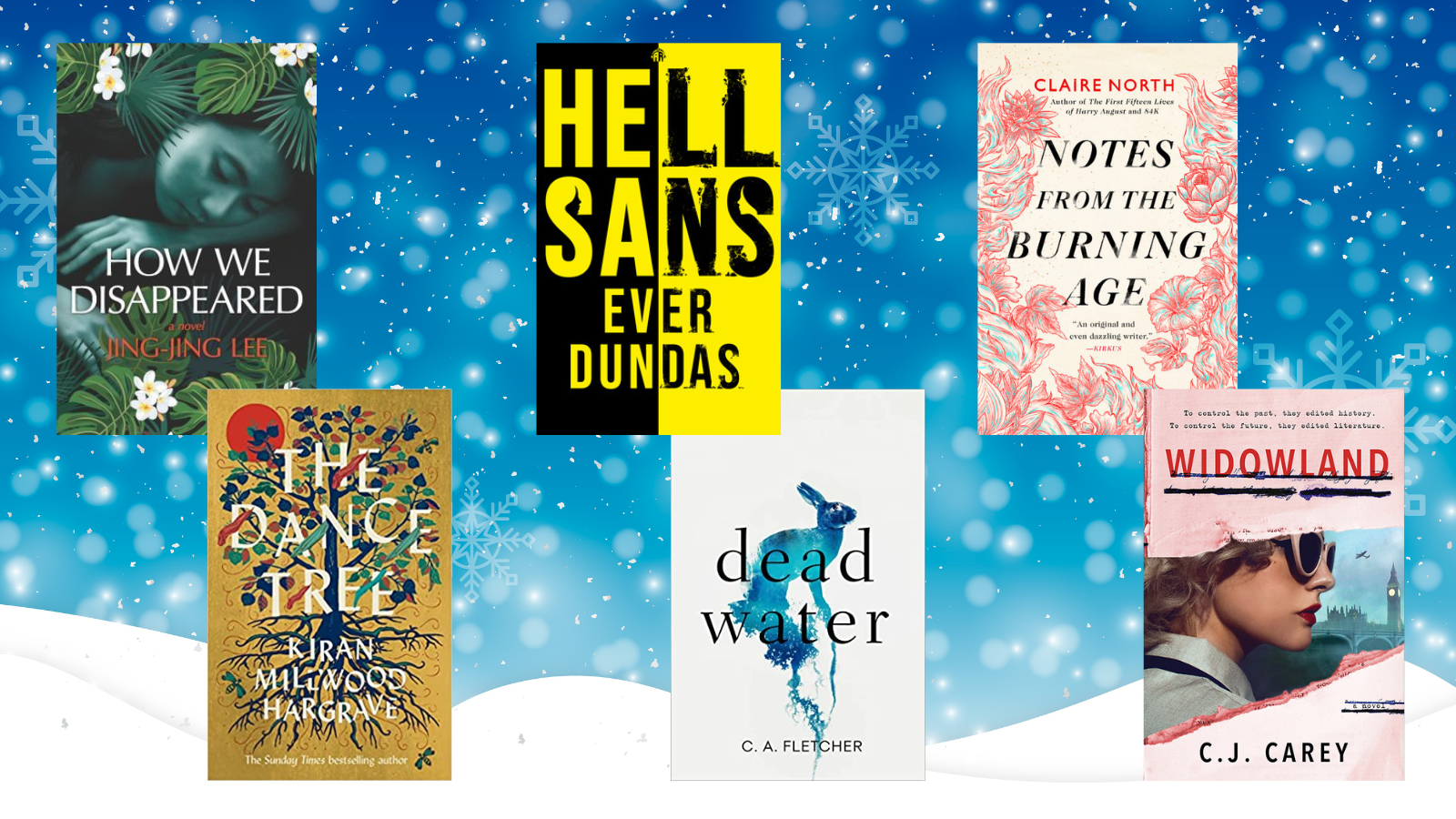
An image of six book covers against a graphic image of snowy landscape and falling snow against a blue sky. The books are as mentioned in the article.: How We Disappeared, The Dance Tree, HellSans, Dead Water, Notes From The Burning Age, and Widowland.

For the literary darling: They’ve probably read the Booker Prize shortlist already so what do you buy for the reader who loves the conversation-starters and the esoteric? Slight confession – I’ve not read much in this field this year. My spoons have been too low for anything too demanding. That said, I loved these two:

How We Disappeared – Jing-jing Lee

A searingly beautiful story of trauma and family, travelling from war-torn Singapore to the US. This was out in 2020 but I’d not encountered it until this year, and it absolutely broke my heart into shining pieces.

The Dance Tree – Kiran Millwood Hargrave

An intimate story of female friendships and the terrible burden of silence, told through eerie and unsettling events in a small town suffering a terrible heatwave and societal turmoil. This story moved me & resonated with me deeply.

For the gimme-the-darkness goth: They love stabby books and black as hell books, books that make you question their mental wellbeing, and wonder about the author’s FBI file. I’ve read more horror this past year than I have for ages, not sure why. It’s been a stabby kind of year, I guess. Top two were:

Dead Water – C. A. Fletcher

Zombies but in the Hebrides. Bring it on. I loved this dark and creepy tale combining folk horror, small island life and grief; with a cast of very relatably flawed characters and some genuinely shiver-inducing scenes.

HellSans – Ever Dundas

This could have sat under ‘dystopia’ or ‘science fiction’ too, but I’m putting it here for the body-horror. This is a punch to the face of a book, but one of those punches that just makes your blood sing (iykyk). Crip rage is a beautiful thing; I swallowed this book whole & it lives inside me now, all spiky and glorious.

For the ‘we’re all fucked’ eco-worrier. It me. I love a dystopia. We need these narratives as playgrounds for our fears and our desperate hopes. A struggle to pick out just two, but here they are:

Widowland – C. J. Carey.

Ok, more alt history than future dystopia, but dystopian nevertheless. I loved this exploration of the power of stories and the ways in which the holders of power seek to bend narratives to their purpose. Interesting and enticing & I’ve got the next one lined up on my kindle.

Notes From The Burning Age – Claire North.

Gentle, political, subversive and thoughtful, this story is full of dubious morals and twisty characters, and an intriguing take on the future.

With the same snowy background as the above image, this one has the following six books: The Half Life Of Valery K, The Winter Guest, The Metal Heart, The Awakenings, The Girl Who Fell Beneath The Sea, and The Skin Of The Sea.

For the big-dresses-and-tea person. I love that histfic is basically any genre at all but in the past, just like SF is any genre but in the future. As if time defines and overrides all else. Book marketing is so random. Anyway, these two are actually two of my absolute top-of-everything favs this year, so really, even if you don’t like big dresses (which feature in neither of these books to be fair) go buy!

The Half Life of Valery K – Natasha Pulley.

My god I love Natasha Pulley. She creates such fascinating, immersive worlds with characters that you just want to take home and hug and feed cake. This is her first straight histfic book but this story is equally magical & blew me away entirely. Set around a little-known real life nuclear disaster in Communist Russia, this is one to hurl yourself into and get lost in.

The Winter Guest – W. C. Ryan.

The moment I finished this book I went and bought another by Ryan. It is a murder mystery in post-WWII Ireland, but it is also so much more than that. A study on PTSD and a nation breaking its shackles, ghosts, love, loyalties and family secrets all come together in a deeply atmospheric, captivating story.

For the romantic. We all love a love story, don’t we? For that person who gets mushy at adverts, I have started the astoundingly good You Made A Fool Of Death With Your Beauty by Akwaeke Emezi, but haven’t finished it so two completed favs this year include:

The Metal Heart – Caroline Lea.

Orkney, prisoners of war and two sisters. The romance in this is lovely, but actually it was the relationship between the sisters that made this book for me. So complex and twisty.

The Awakenings – Sarah Maine.

Sarah Maine always does a good romance & this was no exception. A deft dual timeline story binding together two couples alongside themes of belonging, conflict and family into a truly lovely whole.

For the YA fiend, lover of all the good tropes. And I’m not talking tiktok All Tropes No Story books, oh no, these are for the readers who want depth as well as vibes. Oh man but I’ve read some good YA this year & it’s difficult to choose a top two, but here goes:

Skin Of The Sea – Natasha Bowen.

This is a powerful, deeply sad story told with captivating beauty and flair. A whole new side to the mermaid folkloric tale and one that I think anyone who loves tales of vengeance or the sea should read.

The Girl Who Fell Beneath The Sea – Axie Oh.

Huh, bit of a sea theme going on. This was an entirely different tale though – Korean folklore made feminist and captivating and new. Full of characters you fall in love with, this one lingers in the mind after you’ve finished.

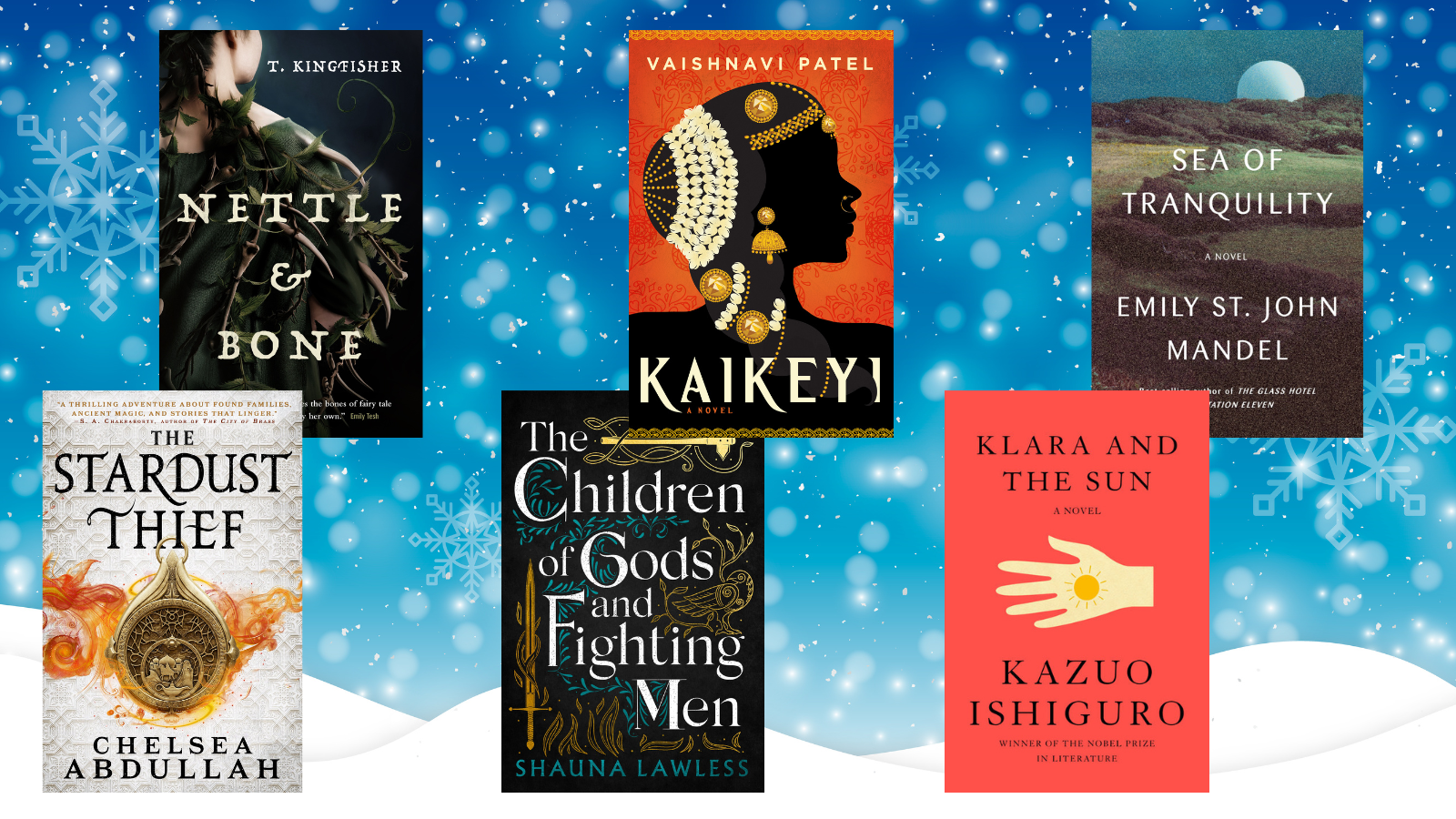
As before, but with the books: Nettle and Bone, The Stardust Thief, Kaikeyi, The Children of Gods and Fighting Men, Klara and The Sun, and Sea Of Tranquility.

For the ‘what day is it today’ fantasist. Too much good stuff in this genre. Just too much. I hate you all, making me choose. My top two at this exact second, although it will change any moment, are:

The Stardust Thief – Chelsea Abdullah.

Fabulous characters, amazing world, enticing narrative. This one hit all the right notes for me & I just loved every second of being immersed in this story of thieves, princes, haunted deserts and powerful djinn.

Nettle & Bone – T. Kingfisher.

What even is this book? Adventure, folk horror, low fantasy? Who knows, all I know is that it is weird and beautiful, gentle and unsettling and utterly memorable. Older protags & romance – yes please. Bone dog – YES PLEASE. Vicious chickens – OMG I love them so much.

For the Greek myth reader. These are not Greek myth retellings (gasp) but they are retellings from other mythologies & honestly it befuddles me why Greek retellings are ‘literary’ whereas all others are ‘SFF’. Anyway, there were some brilliant Greek retellings out this year, but lovers of those will also love these:

Children of Gods and Fighting Men – Shauna Lawless.

An exploration of Irish mythology and history that goes far beyond the stereotypes and male-centered narratives that frankly I’m a little bored of. This one is entirely original, lead by two flawed, powerful, nuanced and entirely empathic women, and setting up for an amazing trilogy. I can’t wait for book 2.

Kaikeyi – Vaishnavi Patel.

A feminist origin story for perhaps the greatest ‘evil stepmother’ villain of Hindu scripture – the step-mother of Rama. This is a beautiful retelling giving voice to a fascinating woman, and I know this author has had a hard time in the face of Hindu fundamentalists so go read this book.

And finally. TO INFINITY AND BEYOND. For your space-faring friends. I don’t actually read much straight SF as I tend far more towards either grounded spec or folklore. But I’ve read a couple this year that were definitely worth all the stars:

Klara And The Sun – Kazuo Ishiguro.

One of my all-time favourite authors, so I guess it’s no surprise this one makes the list. A heart-wrenching, enchanting tale of childhood, AI, innocence and morality. Understated to the extreme but all the more powerful for it.

Sea Of Tranquility – Emily St. John Mandel.

Another of my best-loved authors, so another obvious pick for me.  Time-travel, moon colonies and music. I loved this tale of inter-connectedness, rootlessness, identity and transience, told in the author’s inimitable floaty, deft, poetic way.

These books are a teensy, entirely subjective sample of some of the many books I’ve loved this year, I hope I have enticed you to try one or two. I’ve realised that of these 18 books, only 3 are by men, which is a splendid ratio imo. Whereas I think 11 are by authors who identify as belonging to a marginalised group (other than cis women). Not too bad, I suppose, although I do want to read more books in translation next year. Any recommendations for that TBR list would be welcome. Happy book shopping and happy Christmas all.

Go back to Blog homepage

Photo of a red squirrel sitting on a tree stump eating a hazelnut. He has much floof.