Tag Archives: dystopias

Dystopias, reality, and getting crabbit about labels

[This article was posted on my Substack in May, please do go check that out to stay up to date with my latest articles and news]

So a wee while ago I was asked a question at an event that very nearly launched me into a TED talk of an answer. We were out of time so I had to restrain myself, but I figured it would make a good article in which no-one is waving frantically at me from the sidelines begging me to shut up!

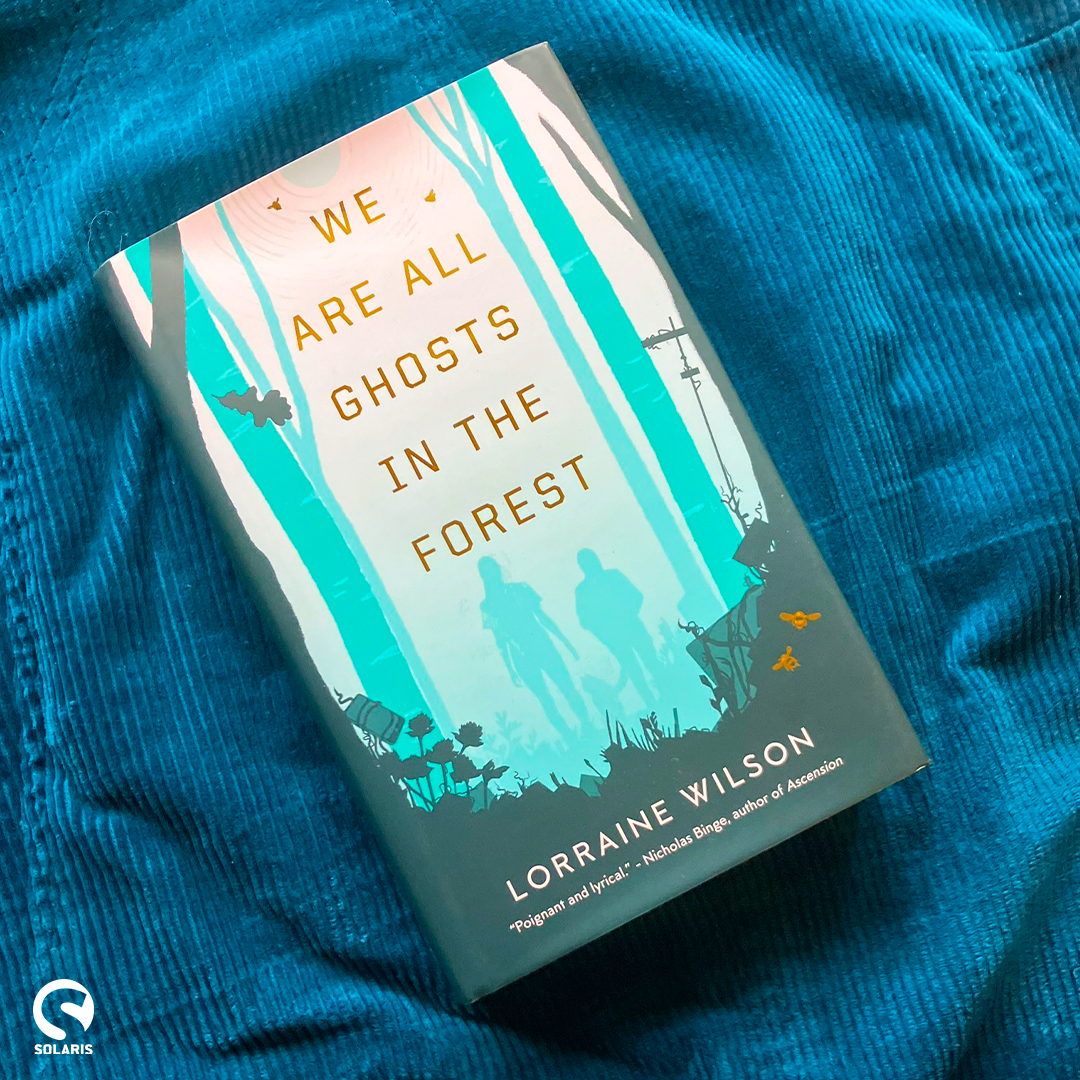
The question was something like this: You said you don’t call We Are All Ghosts In The Forest a dystopia, but several of your books have dystopic themes so why don’t you call them that?

Which is a fair question. I had said earlier in the event that although Ghosts is often marketed and reviewed as a dystopia, I personally resist that label. And yes, the questionner was right that several of my books – Ghosts, The Salt Oracle, This Is Our Undoing, even Mother Sea (although we’ll come back to that) – have elements of socio-political or environmental settings that are pretty dark and dystopic.
Possibly a dystopic gas cloud wasteland, possibly Iceland

Dystopian fiction

First off, for the sake of clarity – what is dystopian fiction?

It’s generally framed as a story that takes place in a society that is in some way repressive, cruel, unjust or otherwise plain ol’ nasty – a kind of worst case scenario of humanity as a society. It’s often worked in combination with environmental extremes that the system is a reaction to, and it’s often, but not always, propagandised as utopian. Or it is presented in contrast to some utopian other – the past, another country, another planet etc.

‘Dystopia’ is a genre label that’s had some pretty impressive waves in popularity, isn’t it? There have been times, around the Hunger Games era for example, when it was riding pretty high. Going back further, I remember reading A LOT of post-nuclear apocalyptic dystopias when I was a young kid growing up in the tail end of the cold war. They’ve been around for a long time, and range from commercial to the more literary examples like A Handmaid’s Tale or The Road. It’s one of those genres that never entirely drops off the popularity lists at all, but it’s … taking a wee bit of a back seat at the moment, from what I can gather. People, I think, are largely either looking for pure comfort, or for more ‘working through the disaster’ than ‘living in the aftermath of the disaster’ narratives, for very understandable reasons.

However, that slight popularity downturn is not why I avoid the label. I mean, I write quiet, genre-blending books, I clearly am no good at writing to market so I don’t worry about the trendiness of labels either.

Why I love but (kind of) avoid the label

My resistance to ‘Dystopia’ as a label is that for most (not all, but most) fiction in this genre, while it is generally accepted that the dystopia will hold echoes of the real world, it is framed very much as a fictional futuristic, often apocalyptic world. An omg can you imagine? How terrible that would be. And yet the elements of worldbuilding that make it dystopic are actually real things that exist today in the real world for many people individually and as societies.

  • Oppressive totalitarian government? tick (check, if you’re weird)
  • Violent persecution based on your identity? tick
  • Profound injustice through corporate exploitation and corruption? tick
  • Vast wealth hoarding built on a brutalised underclass? tick
  • Even – An underclass struggling in a devastated landscape while the powerful buffer themselves from the disaster they unleashed? tick.

None of these are fiction. We all know that. And yet put them into a book and it gets labelled ‘Science fiction’. It gets labelled ‘Dystopia’. As if it is some entirely imaginary horror. When it isn’t. It is the daily lived experience of fellow humans right now today as you are reading this.

Can you tell I Feel A Way about this by the way my sentences have. got. very. short??

I do get it. I do. We explore the things that upset us by fictionalising them, because fiction allows us to parameterise and navigate our fears or horrors or heartbreak in a safe way. And exploring the very real brutalities of the world in fictionalised ways is a powerful tool for enabling us as a society to process our emotions enough to act on them.

So yes, Dystopia as a genre is one I vehemently think we need – I think it deals with big topics in accessible, captivating, mind-opening ways, and that’s amazing. I love this genre. And too, many Dystopia books are so distantly connected to real world issues that they lose that uncomfortable overlap. The Hunger Games, for example. Yes, you can trace elements back to real things from the Roman Games to Communist Russia and beyond, and Collins herself lays inspiration at the feet of the social media distraction engine burying genocide beneath cosmetics ads and clickbait. But the overall concept of the society and games themselves are disconnected enough, in my mind, to not raise quite the same adjacency discomfort in me.*

*Edited to add that yes, I read that news article from the US (in May, fortunately that madcap idea seems to have vanished), about an unhinged proposition to run ‘challenges’ for asylum seekers to win asylum. Yes, that might make this point no longer true.

The dystopic elements in my books, however, are nothing original. They are dystopias that are sadly, horribly real. I mean, Mother Sea isn’t even speculative – it’s straight up contemporary fiction (albeit on an imagined island). This Is Our Undoing simply extrapolated out from fragments of history and current news in Europe around the time of the Brexit vote. Ghosts … well, it’s fascinating to me that living without advanced technology is enough to earn the label Dystopia, to be honest. Its wider regional unrest and climate instability are both very real things, but those aside, I see the more egalitarian, community-based, slower life in Ghosts as less dystopic than the late-stage capitalism we’re currently living in in the west, modern healthcare (and digital ghosts!) notwithstanding.

One of the greatest wonders of SFFH as a genre space has always been its ability (not always utilised, but sometimes) to challenge the status quo and cast light on things the powers that be would like us to ignore. To ask the questions we should be asking of where we are headed and whether that’s what we actually want. Dystopias are a rich vein to draw from in that pursuit, and alongside the fully imaginary scenarios, real world injustices absolutely deserve to be visible and interrogated on the page – whether directly or in more fantastical or futuristic analogies.

But if we use the Dystopia label as a way to catharsise our discomfort and reframe reality as a safe make-believe, then we are letting ourselves and our readers down. We are inserting a safe deniability into the reading experience. And what could be about creating empathy and connection then instead buffers the reader from having to have uncomfortable thoughts about the systems they exist within.

So no, I don’t consider my books dystopian fiction. Because those very elements that people point at in applying that label are among the least fictional bits of my books. Digital ghosts are very fictional (sadly), communities living off the land without technology, modern healthcare or political stability? Not exactly a wild leap into the imaginary. I don’t think readers have to see the resonance between imaged and real world when they read dystopias, and I don’t think that resonance has to be central to the story. I personally know it’s there though, so I personally shy away from framing it as entirely futuristic worst-case fiction.
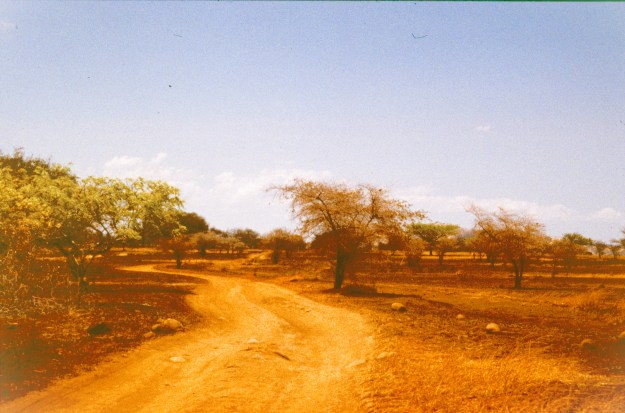
Possibly a dystopic arid wasteland, possibly Madagascar

But…

But labels aren’t really about the meaning of a book, in most instances. They’re about the cogs within marketing that let a book sell.

I sound crabbit as all hell about this, don’t I? Honestly in real life, I have almost certainly used #dystopia to help market my books, and I am just shrugging and rolling with it when other people call them that. I promise I am not roaming the publishing world battering people with this rant. Books need to find their readers, and that involves playing the marketing game in whatever way helps, so labels are gonna label. And there’s very little to be gained by getting het up about it.

Dystopia as a marketing label tells readers instantly that a book is going to be set in some futuristic society that carries dark echoes of a recognisably contemporary one. And that’s all it needs to do at that level.

Do I think we should treat it with the same caution we use when calling things ‘Utopias’? Yeah, I kinda do. Because just like utopias, dystopias are not a simple thing to unpick. But the marketing engine needs simple labels more than it needs authorly caveats and squickiness, and honestly it’s not the job of marketing teams to make sure the real world resonance is there. That’s my job as a writer.

More than that, it’s our jobs as readers. To read with compassion not just for the fictional characters on the page but for the real world roots that the story world might contain. To resist the urge to comfortably shelve dystopic injustices under ‘make believe’ in our minds. To read just a little bit deeper.

I might grimace faintly when someone calls my books Dystopias, but if that label helps people pick them up, then I hope I’ve done my job well enough that those readers (as well as simply enjoying the story) connect to the real world echoes in my imagined darkness.


Thank you for coming to my TED talk. 😀 I feel much better for having got that off my chest!
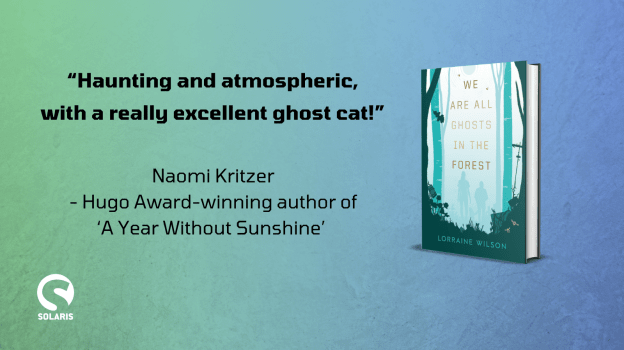
Publication day waffle

The book, the backstory, the question, and my hopes.

I have grown a habit without plan or forethought, of posting on/around each new book’s publication with my thoughts on what that particular book means to me and where it came from. For Mother Sea, that post was an explanation of the content warnings for the book, for The Last To Drown it was about the experience of writing chronic pain and the craft of novella writing.

With the publication of We Are All Ghosts In The Forest this week, I have been attacked by a fit of the pensives again and wanted to do the same for this book. Because the weird thing about publishing multiple books is that each one somehow means something unique to you. It’s important to you in an entirely different way to your previous (and likely next) books. Which when I type it, sounds perfectly reasonable, but I don’t know – I think a part of me was under the impression that publishing books would become … not rote because obviously each book is unique, but that the act of publication at least would become familiar and comfortable. Like wearing different outfits every day but then slipping into the same coat to go out.

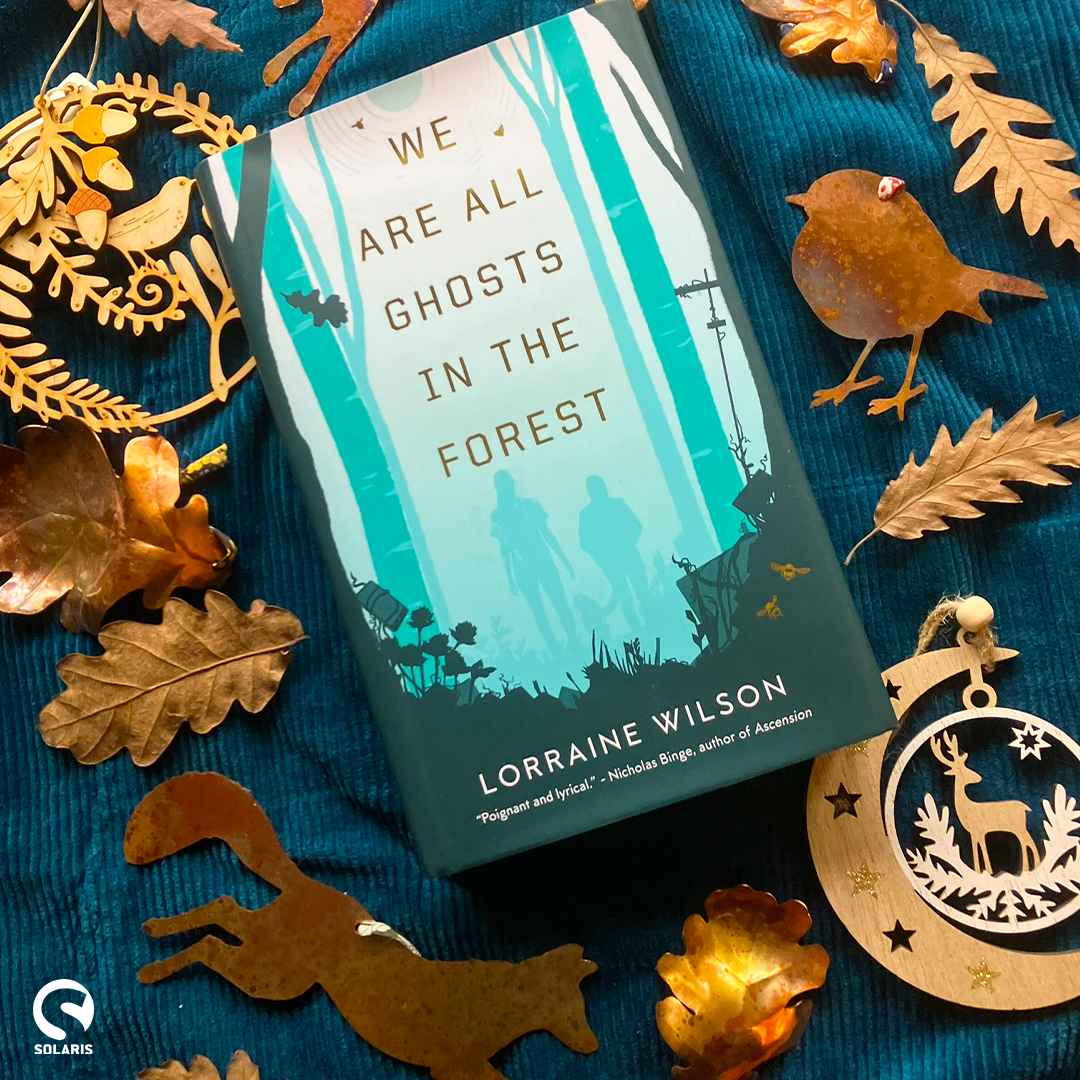
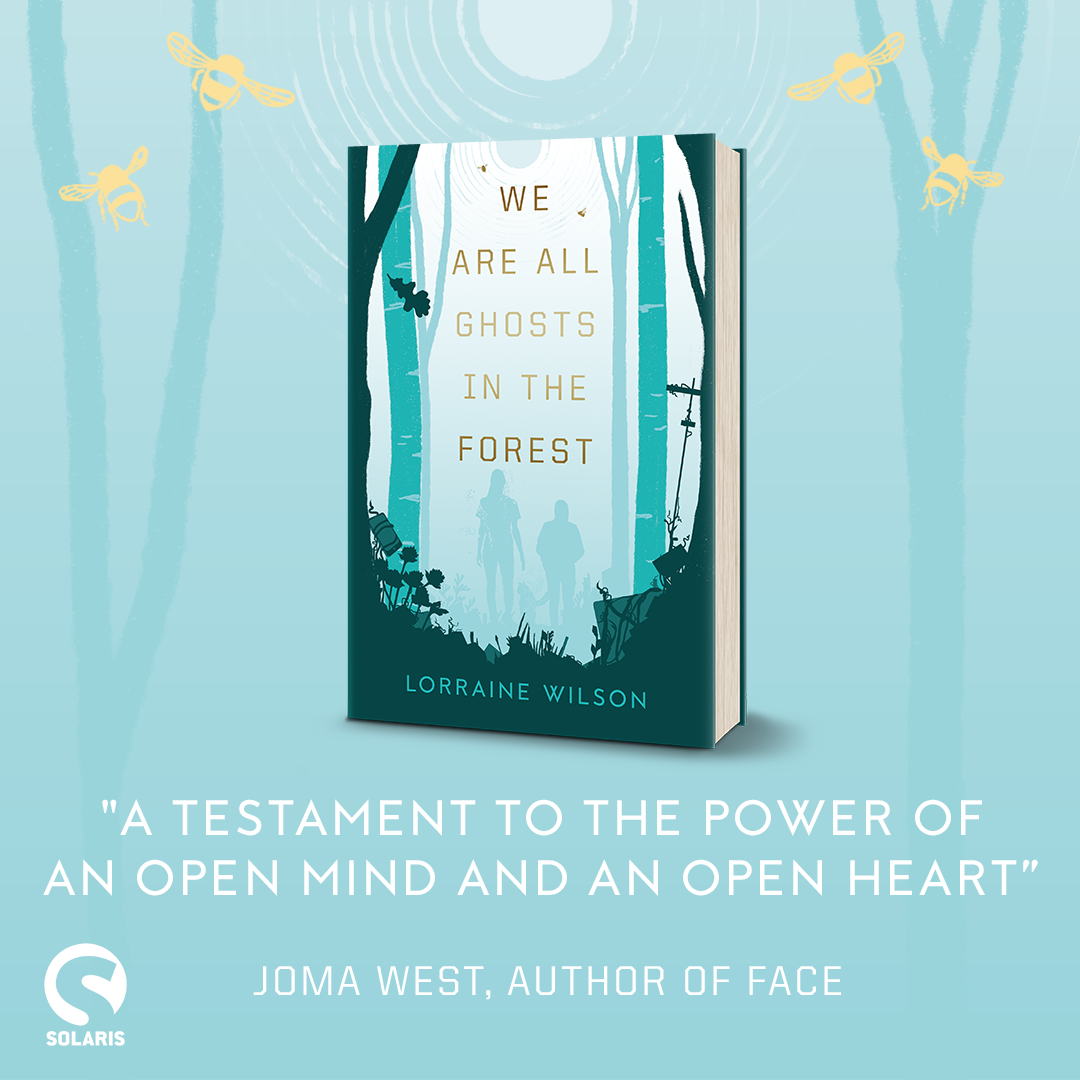
And yes, there are aspects of the publication hullabaloo that feel very different (mostly less fraught) than they did the first time round simply because we’ve been here before. But Ghosts does have its own new territory to break, both personally and professionally, and I guess that’s where I’m gonna go with this publication day (weekend) waffle. Alongside a lot of shiny promo graphics that my fab publicity person sent me & I can’t resist using!

Craft, learning and lockdown.

One of my writer hopes is that each new book I embark on will teach me something new about writing. It’ll push me in a slightly different direction – whether that’s in genre or subject matter, form or voice – so that with every project I am challenging myself to grow as a writer. I aspire to be braver at this, if I’m honest with you, to be bolder in leaping into things I’m not sure I can pull off, more fearless (or unhinged, your choice) in being willing to tear something down that’s merely ‘good enough’ and rebuild something better from the ruins.

However, that’s for the future. For Ghosts, I look at it and think that the best lesson I learned from it is to trust in the small flashes of wonder more. To not get stalled on ‘yes but how does that work’ until the editing, to leap merrily into a half-arsed shiny idea without the comfort of the usual planning I do. I don’t think I’ll ever be someone who regularly writes without a good map (of character psychology and setting at least), because that stage does feel important and enriching to me. But I think there’s real value in knowing you aren’t tied to that planning. That sometimes, when the wind and the tides are right, you just have to leap aboard, hoist sail, and see what happens.

Which is how Ghosts materialised. At least the initial shape and opening chapters.

See, the thing is, I started writing Ghosts in March 2020.

Mmm hmm. That March 2020. I had a child two terms into their first year of secondary school, just forming new friendship groups, just adjusting to this new world … then suddenly at home, isolated, with their education, friendships and world reduced to pixels.

[See where the idea of the ghosts came from? More on this below…]

Homeschooling in that first lockdown was … not brilliantly structured, so even though I had it undoubtedly easier than parents with younger children, I was still rarely getting more than 20 mins of uninterrupted time. And the vast majority of my attention, emotion, and organising capacity was being used up on my child, which left exactly zero capacity for me to do intelligent, thoughtful things like plan and research and worldbuild.

When I sat down to write Ghosts, I had the opening image in my mind – of a woman returning to a remote village with a stranger boy – in my mind and nothing else.

Two paragraphs in, I mentioned a ghost. The line is ‘There were three people on the street, two of them real’. I wrote that, thought huh, so we’ve got ghosts then, and carried on. By the end of the first chapter – and the appearance of a certain image-shifting cat – I’d realised the ghosts were the remains of the internet, that the village was in Estonia, and that Stefan, the boy, was non-verbal. All my worldbuilding, character development, and plotting began then, and it was a patchwork ad hoc affair that later required a lot (so much) patching up and weaving in of broken threads.

Without the particular circumstances of lockdown and homeschooling, I’d never have written a book with such wild absence of planning. I quite probably won’t again. But thanks to that experience, and to Ghosts as a final product being something I’m quite proud of, my relationship with planning has evolved significantly. I still spend a good amount of time exploring the imagery and layers of the book’s core theme, because that’s the lodestone upon which everything else is built. And I do still plan, but it’s much less ‘I need to know everything before I can start’ and much more ‘I need to know enough not to get too tangled while I’m finding my feet in the opening chapters.’ It’s less character arc graphs, and more floorplans! (I’ve discovered a bit of a love for floorplans with Salt Oracle and the current wip both being largely in one big, complicated building)

Is this growth? Not really. I mean, there’s no wrong or right way to do this, so my approach adjusting doesn’t mean it’s better. But I do feel like this particular change, for me, is about confidence. I trust my instincts more, I trust those flashes of wonder to guide me well; I trust that if I make an unholy mess I can (grumpily) unpick and restitch it. Let’s be honest, I will also always love a graph, but this new more relaxed approach to tackling new projects might just give me the freedom to be bolder in the next project, and the next…

Ghosts and loneliness

There’s always one question that comes up again and again with each book that gets published. One particular theme or issue that stands out enough with enough people to become a feature of most interviews or informal chats about that book. For The Last To Drown it was about the experience of writing chronic pain. For Mother Sea it was questions about the importance of climate fiction.

For Ghosts I think one is already emerging, and it’s going to be ‘Where did you get the idea for these ghosts?’. The easy answer is that scene above – me watching my child struggle through the loneliness of a life reduced to four walls and pixels on a screen. The strange thing is that lockdown wasn’t isolating for me, in fact with both my husband and daughter suddenly in the house all day every day, I lost the peace and solitude I actually relied on quite heavily to manage my chronic pain. Being housebound apart from occasional short trips out? Well, hi, welcome to my world, please tidy up after yourself. BUT it was a horrible experience for my daughter, at an awful point in her life, and watching that was heartbreaking.

The chain of thought from that to a world haunted by fragments of our digital detritus, by our online echoes, is fairly obvious. And then the rest of the world in Ghosts had to be built up around that central concept.

So if anyone reading this was wondering, there’s the answer to that particular question. Where did the ghosts come from? Loneliness and lockdown. Homeschooling, society’s fragility and resilience; most of all the search for connection.

Growth, ladders and doing the daunting things

Ghosts represents something more prosaic to me too. This is the first book in my Solaris contract, and my first book with a publisher that has Big 5 distribution and main player reach within the SFF world. All three of my publishers have been/are amazing, and in my opinion punch above their weight with the quality of their lists, but Solaris are a step into a bigger room for me, if you like.

So Ghosts feels a lot like the next rung in the ladder of my career. It’s exciting. I’m hopefully going to be reaching new audiences with this book, hopefully gaining new readers who’ll stick around for future books. I’m doing more events for Ghosts’ launch than I’ve done for all my previous books’ launches combined! And with some brilliant author friends! My fabulous marketing/publicity goddesses are helping me reach new venues and platforms too. If the reception to Ghosts is positive, that in turn will pave the way for other opportunities (foreign rights sales for Ghosts, further book deals etc).

This is all wonderful new ground to be breaking. I am extremely fond of, and proud of, Ghosts, and am excited to have it out in the world finding people it resonates with. It’s also, not gonna lie, just a teensy bit daunting. I say this because I’m leery of doing the Instagram ‘Everything is intensely wonderful actually’ thing. Several events plus travel in a month is going to be a physical test, but I’m interested to see how I cope and how quickly I recover. It’s good data for the future! There’s also the fear, of course, that no-one will show up to my events, or that everyone will hate the book and hunt me down to tell me so, or, or, or… But those are normal, unavoidable fears to have and I have an ace in my back pocket…

…I have readers. I may not have many compared to other authors, but there are amazing, strange, beautiful people who have come with me from book to book, frequently cheered me on, voted for me, recommended me to others. These readers have trusted me each time I’ve veered off in a new direction. So I trust them in turn. I trust that they’ll read Ghosts and find something worthwhile in it. And that’s kind of all that matters. Yes, I hope I reach new readers as Ghosts takes the stage. Yes, I hope it opens new doors for me and my career. But I hope even more that the readers who’ve supported me thus far will enjoy this next step on my bookish travels.

Thank you for reading & supporting this blog. I’ll be back soon on my Substack with less ‘please buy my book’ and more about what makes a good book event, parting ways with your agent, and more…