Tag Archives: author

Book launches – survival, celebration and chocolate

Hello fellow creatures. I usually write a ‘the story behind the book’ post around publication day, but I feel like I’ve chatted a lot about The Salt Oracle over the last year either here or on my mothballed Substack, both in free and in paid posts. So what else around book publication time might be interesting to you, my splendid readers?

How about the odd emotional complexity of book release?

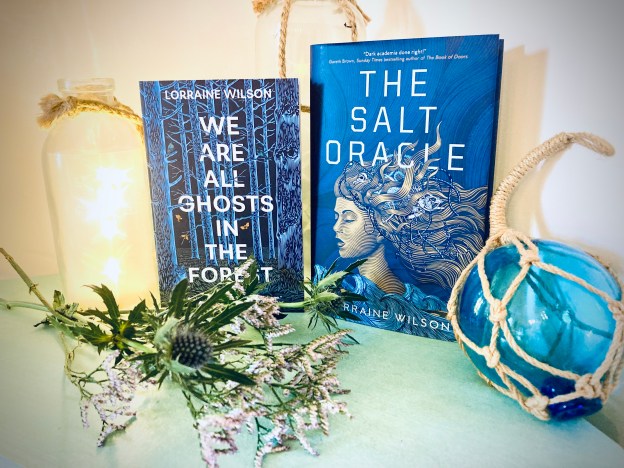
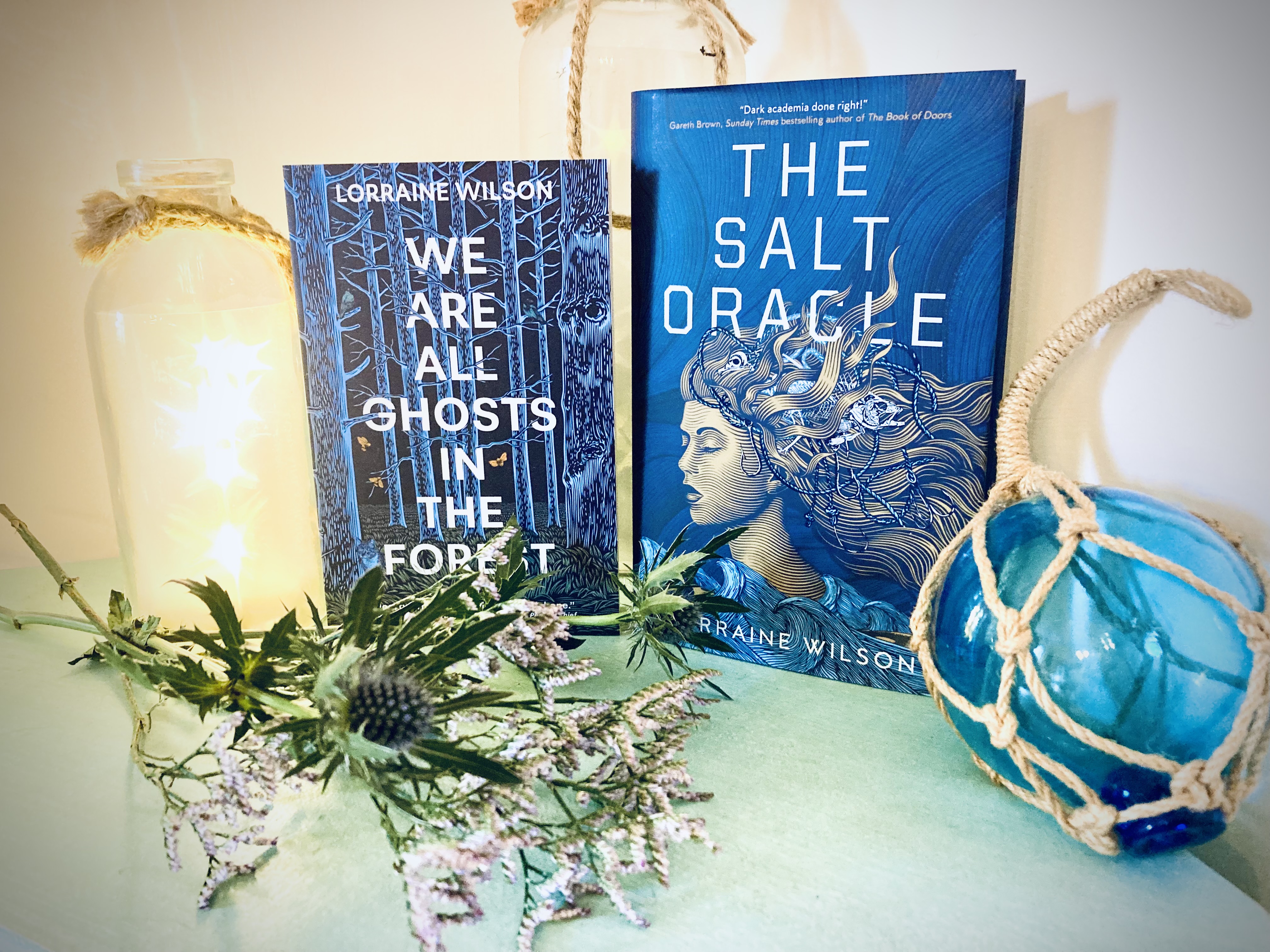
Last Thursday, We Are All Ghosts In The Forest was released in paperback, and The Salt Oracle was released in hardback/ebook/audio. Which is Lovely and An Achievement! Publication day is generally seen as an unconditionally joyous moment. In my experience though, having your books unleashed into the world is not as emotionally straightforward as a lot of people assume. Yes, it’s wonderful, no doubting that but there’s more to it than unbridled enthusiasm.
To be fair I am six books in now, which flavours this, but while there are some things that have stayed the same, others feel very different to when I was debuting. I am, for example, far better now at not looking at reviews! And far more resigned/unworried by the inevitable tagging into ‘meh’ reviews or hearing that some readers don’t like a thing you did deliberately. I am much more relaxed at and about events, and more aware of what to expect from the next few weeks both practically and personally.

However many books you’ve published though, and however big or small your publisher/deal/reach, there is excitement and tension around pub day – the sudden visibility, vulnerability and achievement of it all never goes away (or at least is hasn’t yet). But in my experience there’s also a touch of non-event-ness to publication day – not deflation per se but maybe a kind of suspension.

The excitement is understandable – this book you have loved, hated, fought with, loved again, fought for, built hopes around and yet still fear for, is finally fully out of your hands. It is going to be read by people you will never meet, and people you will meet because of it, it’s going to be adored and ignored, recommended and wildly misinterpreted, it’s going to fulfill some of your hopes and fail others but it will almost certainly fulfill all of the dreams you had when you first stepped into publishing. (Which is worth remembering, no?)

The suspension is a little more opaque. Why wouldn’t you be high on adrenaline and love on this day more than any other? Well, you are. And maybe it’s just me showing my inner zen master/energetically flatlined beastie, but the thing about publication day is that… well, let me see:

The day itself can feel a little focusless…

  • Your books have been arriving in shops/on people’s doorsteps for the last week or so, unless there was a sales embargo (in which case you’re huge and definitely not reading this post!). So the ‘released’ thing is a formality on the actual day. OR there’s the inverse – delivery issues which have left many authors wandering shops on pub day forlornly searching for books that haven’t arrived yet!
  • Your book has been read, reviewed and blurbed for the last several months, so while you will continue to cross your fingers for good reader interest, good reviews and the elusive trade review uptake, those events or statistics are spread over some time, not arriving suddenly on pub day.

So even though you’re excited, you can also feel at a bit of a loose end on the day itself. Fortunately this is where launch day events and social media come in. I always spend much of publication day keeping up with all the lovely comments I get on social media, thanking everyone and generally basking in the glow of belonging to a lovely community of supportive friends. It’s really nice.

And on that note – launch events are a great way to mark the day. Emotional complexity comes in here too though – not just because it can be hard to get a launch event organised. Booksellers might not have space or interest, publishers might not have the budget to help you organise your own, etc. But if you are lucky enough to have something organised… events on the day are generally best framed as an opportunity to celebrate with friends. You may get attendees who were curious about your book, or who just wandered in, but almost no one at the event has read your book. I’m at the truly amazing point now where people come to new book launches having loved my previous books, which never fails to make me a bit fuzzy and emotional. But they haven’t read this book.

Later events, in the months after launch are where you’ll start meeting readers who’ve read the thing and loved it enough to show up and meet you. Which means that Q&As can take on a much richer life, and reader interactions shift into a new form. That is such a joyous moment which comes some time after your launch day event.

Whether you have an event on the day or not (I did for the last book, for this one I just went and signed a tonne of stock in my local Waterstones which was still quietly lovely), it’s often a strange day full of joy and community, but also perhaps a sense of unreality or, as I said earlier, suspension.

The thing is…

(I always have to bring it back to ugh publishing don’t I?) ……There’s a lot of quiet pressure on a book around publication. We get told repeatedly that pre-orders and early sales predict the overall success of a book. I don’t know if that’s true, or just indicative of the marketing around publication. But when those early numbers will dictate recontracting decisions, it’s an odd period of time – you are doing a lot of public facing work, aware of how much is riding on it, but oblivious to whether any of it is working. I love celebrating my new books, I truly do, but the background tension around whether they are Doing Okay definitely feels more intense around launch than the rest of the book’s life (for this book more than any previous one perhaps). Some authors are told that their book is being targeted at a bestseller list – a rare privilege, but definitely a heavy expectation to add to publication week!

Do I sound like I don’t love publication day? I hope not, because I do. It’s the culmination of so much work and love, and with every book, I have reached publication day proud of what I and my publishers have achieved. It’s a waypoint that unreservedly deserves all the celebration.

But I’m six books in, and without diminishing the joy around this publication day, I am more aware now than ever that one book alone does not a publishing career make. Or one week does not… Or one event or one win.

Talking of which, I won an award at WFC! My novella The Last To Drown – a dark Icelandic ghost story about family secrets, chronic pain, the sea and recovering from trauma – won the British Fantasy Award for Best Novella. That’s extremely bloody awesome, and I couldn’t be prouder of this book and of Luna Press who are such a special small press doing amazing work within SFFH.
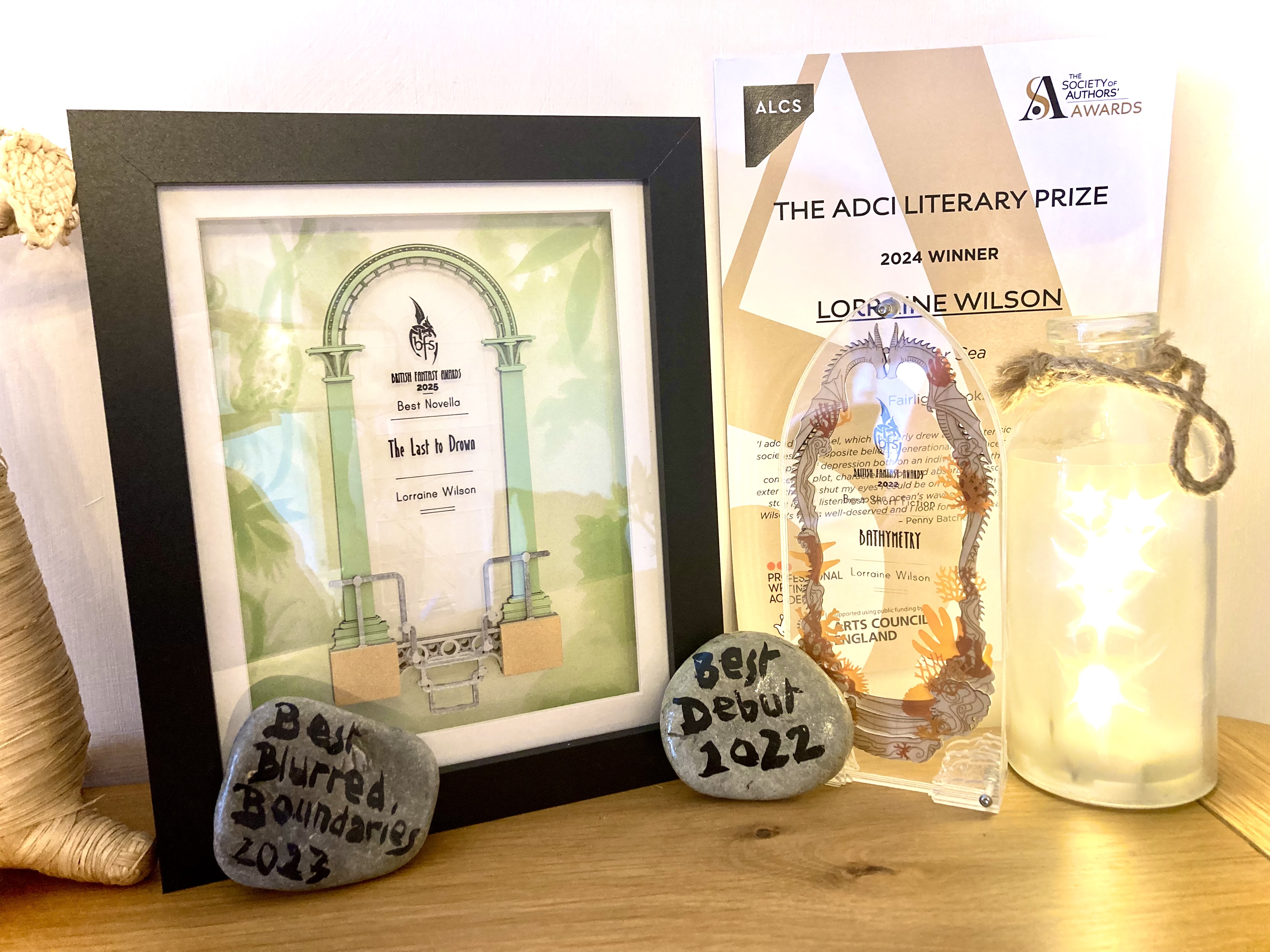
New award joining its friends

[An aside – Over the last 15 years of chronic migraine, I have learned to temper my emotions because any emotional extreme – good or bad – is a trigger for hours or days of extreme pain, nausea, muscle weakness etc etc. This is a bit of a superpower in publishing, in that while I will have a solid moan to friends sometimes, I can generally roll with the punches with some equanimity. The downside is that I am not very good at just celebrating, because that emotional even keel is so ingrained in me now. Hoo boy am I throwing metaphors around today, I apologise]

In the last week (at time of writing), I have won this fabulous award, met a lot of lovely readers, launched both Ghosts paperback and The Salt Oracle with a fun event at World Fantasy Con and a friendly signing at my local bookshop, and had a splendid time at WFC besides.

It’s a wonderful, gratitude-inducing position to be in. But whether it’s post-con fatigue, that emotional even keel, or the point in my career, I am finding my overall mental state to be ‘Okay, this is great, but let’s just wait to see whether it means anything‘. Will the early sales mean my editor can (or wants to) open recontracting talks? Will the award provoke interest from submission-list editors? Will early apparent enthusiasm, and mine & my publisher’s hard work mean these books get the momentum to exceed my prior reach?

I really truly hope these books – one for its first flight, and one in this 2nd format – do well, for their own sakes. Because I believe in them, and feel like I did something interesting with both of them. I also hope they do well to reward my editor and marketing team’s championing of them. We’re allowed to say that, aren’t we? Those are acceptable reasons to publicly want your books to succeed.

A little less acceptable, but no less true, is the hope that they do well because I need them to if I’m going to continue to publish. But there is little point dwelling on that hope when it’s 95% out of my hands. So as always, my question to myself when staring publishing in the face is ‘what can I actually do?’

  • I can keep working to organise events & publicity, and be as open as possible to my publicist’s suggestions and opportunities.
  • I can manage my spoons and my outlook so I am well enough to treasure all the positive things coming my way, and keep the negatives in perspective.
  • I can eat some emergency chocolate.
  • And, of course, I can work on something new. Aside from winning an award or selling lots, I can’t influence the success of books currently out on submission to editors, so the only thing I can do right now to maximise my chances of selling more books is to write another one. Write a better one, or a more pitchable one, or just a luckier one.
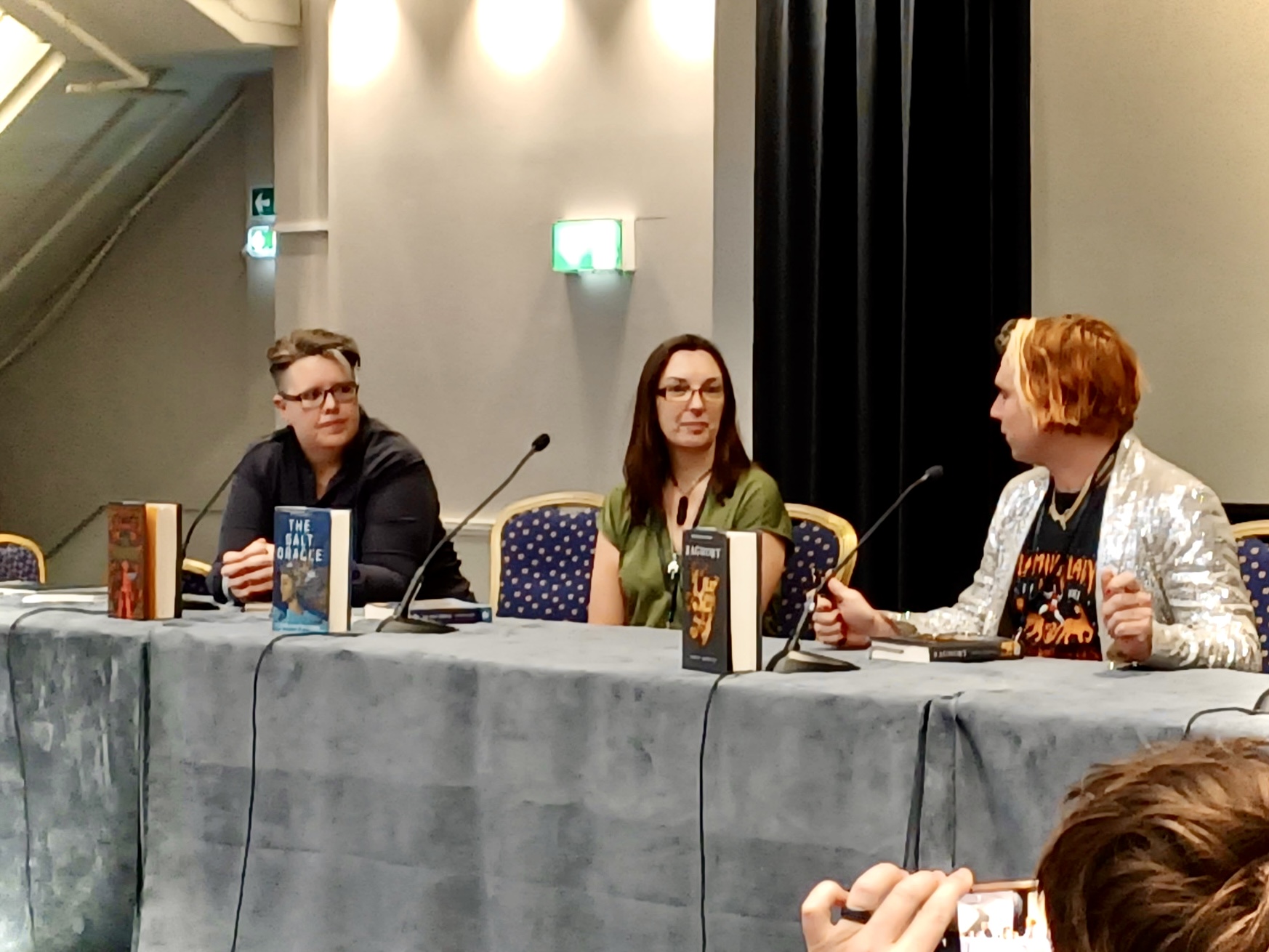
Launching alongside splendid authors Sam K Horton & (half of) MK Hardy

Technically, the point in the publication process where your book is fully out of your hands (editorially) is the page proofs checking stage. After that, you can’t change anything and it’s entirely up to readers to either connect with it or not. You get no further say on how your words land. But between proofs and publication you have a window of relative calm where a small number of reviewers and authors are reading the book but the wider public are yet to join the conversation. So publication day, for all that other things diffuse the singularity of the day itself, is still a huge shift in the life of a book.

That’s scary, but also freeing. I believe a book is unique to every reader who finds it, because a book is a conversation with that reader – their experiences and imagination and heart. That’s why the same book lands so differently with different people, because it is different. So finding out what your book became in different readers’ minds is a marvel, and stands apart from what your book is to you.

In my opinion, and as with so many things in publishing, it’s important to separate out your relationship with your craft, from your relationship with the publishing industry. A book release is worthy of celebrating because you should be proud of your own craft, and excited for that story to find the readers who will love it. It’s worth holding a little bit in perspective because you need to maintain your publicity momentum beyond this week, or even this month; and you need to maintain your writing momentum entirely beyond this book.

I am guilty of pinning all my hopes on this book sometimes, of focusing on how much is riding on this one doing better than the previous ones according to one measure or another. And there’s enough truth in that to overwhelm the joy of publication day, or award wins, if I’m not careful. So perspective, even keels and focusing on what I can do is good, but taking a wee moment to feel proud of myself independent of publishing’s shenanigans is just as important.

So please wish these books luck on their maiden flights, and meanwhile I will be diving into the edits and pretending that my next article will not be a Christmas reading recommendations post (scream).

Thank you as always for your support. Because accessibility in publishing is important to me, I keep all my craft and publishing posts free, so any shares or tips are greatly appreciated. Wishing you a fabulous weekend.
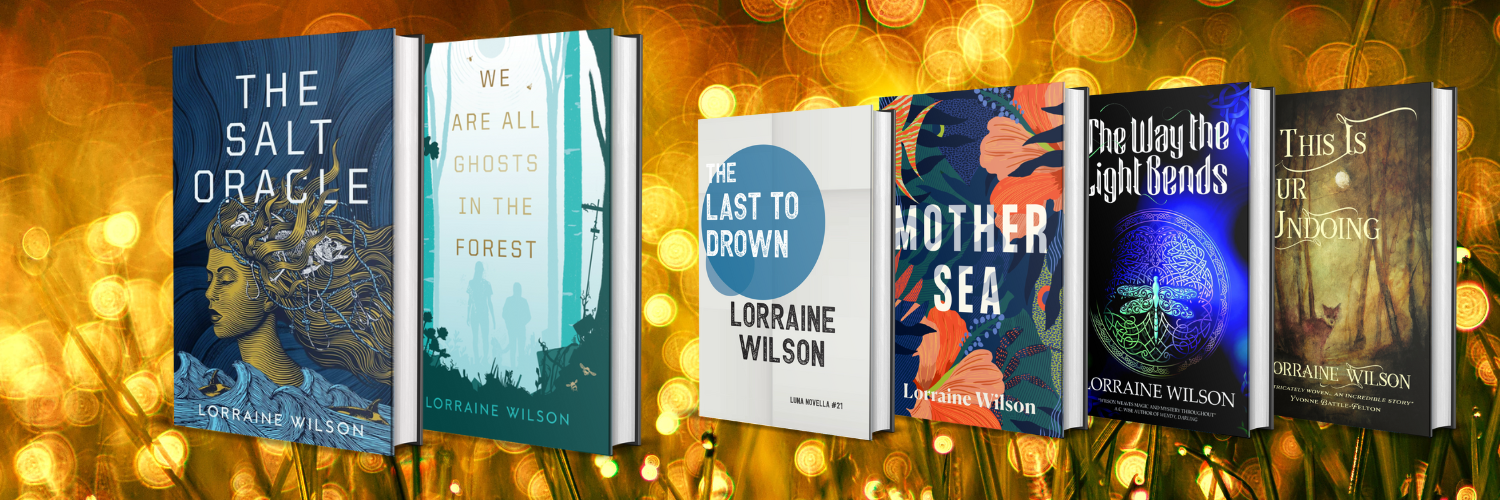
Introducing The Salt Oracle

Well, my loves, I promised a proper introduction to my next book, and ta da! Here finally it is! Along with a deep dive into how I navigated a challenging developmental edit process, which I hope will prove useful/comforting to you if you ever face similar.

[This article was published on my Substack in early April and forms a part of a regular ‘Diary’ series of posts diving into the publishing process for my individual books].

As you may have gathered from the last newsletter, The Salt Oracle is coming out in November this year, and is set in the same post-internet digital ghosts future as We Are All Ghosts In The Forest, but is another stand alone. Because of my appalling series staying power (or lack thereof) I am rather loving the rise of same world standalones at the moment and am delighted to have accidentally fallen in line with a kind-of trend. For the one and perhaps only time in my publishing life!

These Diary posts are usually a wee behind the scenes perk for my paying subscribers but I figure as this is by way of an introduction, I’ll keep this one public. As well as telling you a wee bit about the book and where it’s at, I thought it also might be interesting to talk about the developmental editing round I recently finished on this beasty. Because, let me tell you, it was tricky. And, well, difficult publishing things are generally useful publishing things to share, right? So strap in…

The book

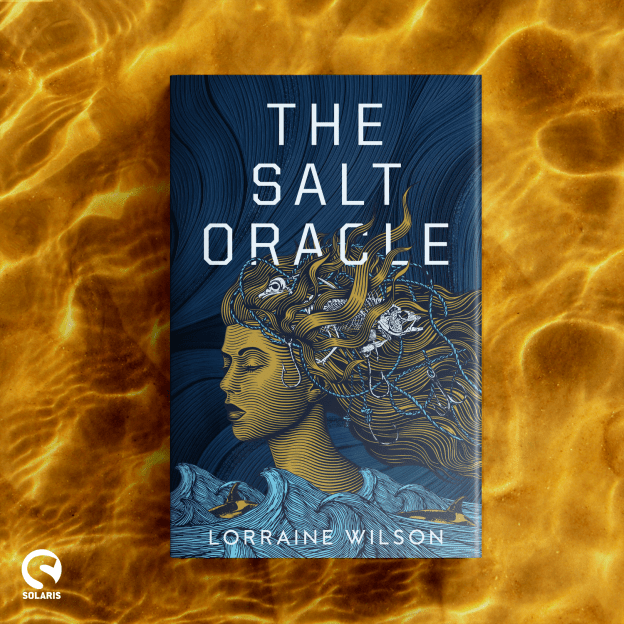
This book is my take on Dark Academia, set on a floating college fortress in the Baltic Sea where her mentor’s murder thrusts a quiet researcher onto a path towards discovering the secrets behind the strange, deadly Oracle child that the college guards so carefully.

If We Are All Ghosts In The Forest was built on the folklore of forests, then The Salt Oracle is built on the folklore of the sea. It’s about our relationship with the sea, as much as it is my character’s relationship with the college she loves, and it’s full of darkness and terrible choices, and perhaps, just perhaps a whole lot of love too.

The cover for this book, as revealed in the last article, is to die for, and might in fact be my favourite book cover to date. Although let’s be honest, I have been really, really lucky with all my covers so far.

The Edit Letter

I’ve written before about dealing with the Edit Letter for We Are All Ghosts In The Forest (and Edit Letters in general), but to paraphrase, the Edit Letter is the foundation of editorial input on a manuscript from your editor (or agent, although those notes are often less formal). It tends to be a breakdown of big overarching issues, and then smaller more specific areas to address. Sometimes with a by-chapter breakdown and/or marked up manuscript.

My Ghosts edits were extremely light, but I knew Salt Oracle would be a different kettle of fish because it was significantly less polished when I sent it to my editor. That’s fairly normal for a contract book – you’re likely to be working to tighter deadlines and with less agent input before your editor sees it, so they are generally not scared off by a rougher second book.

But the edits I got for Salt Oracle were by some margin the most comprehensive edits I’ve yet received – 19 whole pages of overarching issues and by-chapter breakdown – and there were a few things in the mix there that meant they initially really knocked me for six:

  • I came away from reading the Edit Letter convinced my editor hated the book.
  • The edits were, for very valid reasons, later than anticipated so I felt very pressed for time.
  • The edits asked for changes that would shift the feel of the book’s setting significantly, and I wasn’t convinced it would work.
  • I was told I needed to cut my book’s length by over 20%. From 126k to 100k words.

Now, that first one can be put down to an over-sensitive author being over-sensitive. But it actually raised an interesting nuance to publishing that I think is worth talking about, hence its inclusion.

I got these edits just before Christmas 2024, and spent much of Christmas in a bit of a blue funk. I’m used to needing a few solid sulking days after getting an edit in, so at first this didn’t much bother me. I expected solutions to form in my mind, and the doubts and worries to morph into enthusiasm, because they had done before. But they didn’t.

I planned out my edits. The doubts and fears didn’t pass.

I started the edits. They still didn’t pass. In fact, if anything they were getting worse.

So around about New Year, I stopped and really looked at why I was reacting so negatively to the edits and what I could do about it. That, more than the details of the edit letter itself, is what I wanted to talk about here, as that’s what might prove useful to others if they too find themselves stuck.

Did my editor hate the book?

My editor had offered a call from the outset, but I usually prefer to just check in by email if I get stuck on anything particular and otherwise sort things out myself. Come early January, I realised I needed to talk some things through, and we jumped on a call. This call addressed a few things, but most importantly this first question.

And of course, no, she didn’t hate the book. She loved much about it, and the characters, the dilemmas and the messages of the book had struck home perfectly. Which was nice.

Something we talked about on the call though was the difference between an edit letter on an acquired book and an edit letter on a contract book. Because I realised that at what will be Book Six in my career, this was my first time with a contract book, and so my first time working with an editor on a book they hadn’t fallen in love with enough to fight for through acquisitions.

When an editor acquires your book, you know beyond doubt that they love it. So when they send an edit letter, you know it’s coming from a place of absolutely being on Team This Book.

Conversely when you have just yeeted a book at your editor that they maybe saw a rough pitch of over a year ago … you do not start with that same assurance.

It sounds a small detail. But when you are facing pages and pages of ‘this needs fixing’, not knowing whether there’s a preceeding ‘I love this but-’ matters. It’s hard processing pages of criticism, so you want to know whether the feeling behind them was ‘this is great, but let’s make it better’, or ‘ye gods why have I been cursed with this’.

This was, I think, a useful lesson for both of us in openness and taking the time to make sure we both know what the other is thinking. It made me incredibly grateful to have a relationship with my editor that makes these conversations easy and positive.

Time pressures

Again, on the call and follow up emails this was a source of anxiety that my editor was able to almost entirely remove.

We shifted the delivery deadline from mid-February to early March, with the knowledge that I could shift it further if need be without it impacting the publication date (which was my biggest worry). Shifting too much further would start to impact our ability to get ARCs out to reviewers though, as well, frankly, as bleeding into time I’d scheduled for other projects. So I didn’t want the deadline to slide too much. But it was very reassuring to know I wasn’t at risk of losing my late 2025 publishing slot.

Edits that don’t feel ‘right’

There were two overarching ‘structure’ changes my editor requested. One was to cut out the wider state-level politics to keep the threats surrounding the College more direct and tangible. The other was to cut the number of characters by some way, as it currently felt too confusing with many of them mentioned too briefly to stick in the mind.

The state-level politics was a fairly easy fix, although the College still needed external connections, otherwise how was it funded? So I’ve not been able to cut all ties to the wider world, and instead have replaced state politics with the politics of appeasing multiple contractors and a university main office. At the outset therfore, I wasn’t sure this background change would really improve the book materially.

The character cull was trickier. I had intended the College to feel like a busy, multifaceted research organisation, full of disparate teams all with their internecine rivalries and my main character isolated within it all. Cutting a lot of characters would fundamentally shift the nature of the College from busy academic institution to small research outpost. More of a remote field station than a center of learning. That’s quite the vibe change, and I wasn’t sure I liked it – I felt it was important that the College look successful For Reasons.

But my approach to edits I’m unsure of is generally to try them and then decide, so that’s what I did. After making sure I had back up copies of the book!

Now it’s done, I think shifting the College’s management structure from political to contractual has simplified and tightened things in a way that works nicely. The move from busy to small I also think now works well – I have leaned into the idea of the College being half-empty due to the umm… attrition rate (!), and the echoing spaces and survivorship atmosphere add some vibes to the book that I wasn’t initially looking for but that I think are pretty cool. And yes, it’s easier to keep track of the characters now too. So although at first I was really hesitant about these edits, guess what? My editor was right? Curses.

Cutting word counts

Perhaps, now I’m out the other end of this edit, this was the trickiest issue of them all. You see, although a good amount of tightening and cleaning up of the prose was definitely needed, the main driver behind the 20% wordcount cut was actually the high price of paper and printing at the moment.

It is, it turns out, one thing to make any number of edits that are intended to make your book better. It’s a whole other thing to make edits to your book that are primarily about making it cheaper. I worried that in cutting words which didn’t strictly need it, I was stripping my book of some of its nuance, its subtlety, its beauty. And as I wrote about recently, I like that stuff! So that editing pass felt rather soulless, if I’m honest, which was a shock – editing is something I generally enjoy and that gets me excited about the book.

I absolutely understand the requirement. Publishing margins for independent presses are under very real pressure from printing costs alongside other factors. So I don’t resent the expectation, although I will endeavour not to be in this position in future (by having those conversations at the contract stage, I imagine, so I’m not caught unawares).

Fortunately having read the shorter version, it does still have nuance and subtlety and beauty. The book’s themes still feel vibrant and strong, perhaps more so for the (relatively) pared back prose matching the vibes. Plus, the cuts have helped me sort out several plot tangles and hone the pacing. It is still, vitally, the book I wanted to write and a story I am very proud of. Honestly, being forced to cut so much whilst not losing the feel of the book has probably been a useful experience for someone like me, who does love a long sentence.

But where I was able to put to rest all my other worries about this book and its edits, this one remained. It wasn’t until I got comments and line edits back from my editor last week that I knew I’d nailed the challenge – my editor was delighted and my line edits took me less than two days. *cue celebratory dancing*

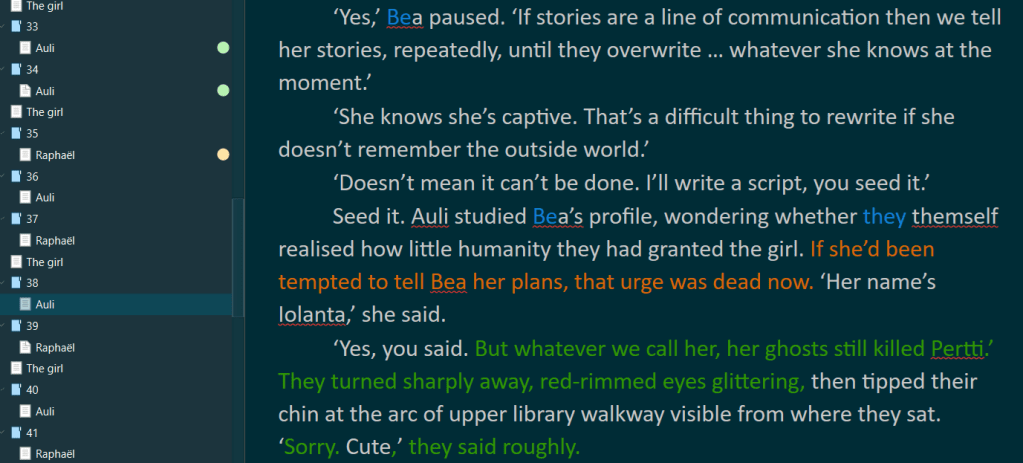
An in-progress editing screenshot from Scrivener showing three different edit passes as different coloured text. This let me keep track of what I had changed & why.

The actual editing process

Just a quick note here, in case anyone is wondering how I went about such a big edit. The answer is I broke it up into five separate edit passes dealing with different things each time. I dealt with all the actual editorial changes on the first three passes, then did a Big Cut pass where I focused purely on cutting words, then finally did a kindle read-through to catch errors, smooth out over-edited bits, and generally reassure myself that it still worked and I still liked it.

It does and I do. Fortunately.


So, there it is, the next book in all its complicated glory. I love it, and I hope you will too when it reaches you. But man, this one has put me through my paces. It’s been a valuable learning curve though – both in terms of my process, and in being able to continue loving a book through all its permutations.

Thank you for reading and I wish you all a relaxing weekend.

A year in review, a year in anticipation

A year of writing – the numbers and why they don’t matter.

Welcome to 2025! (late but don’t judge, we have approximately 16 milliseconds of daylight this time of year, I’m 90% dozy bear)

Being as I talk the talk about resilience and not falling into the traps of comparanoia or shifting goalposts, I figure I ought to walk the walk with a wee review post about where I am and how I feel about that.

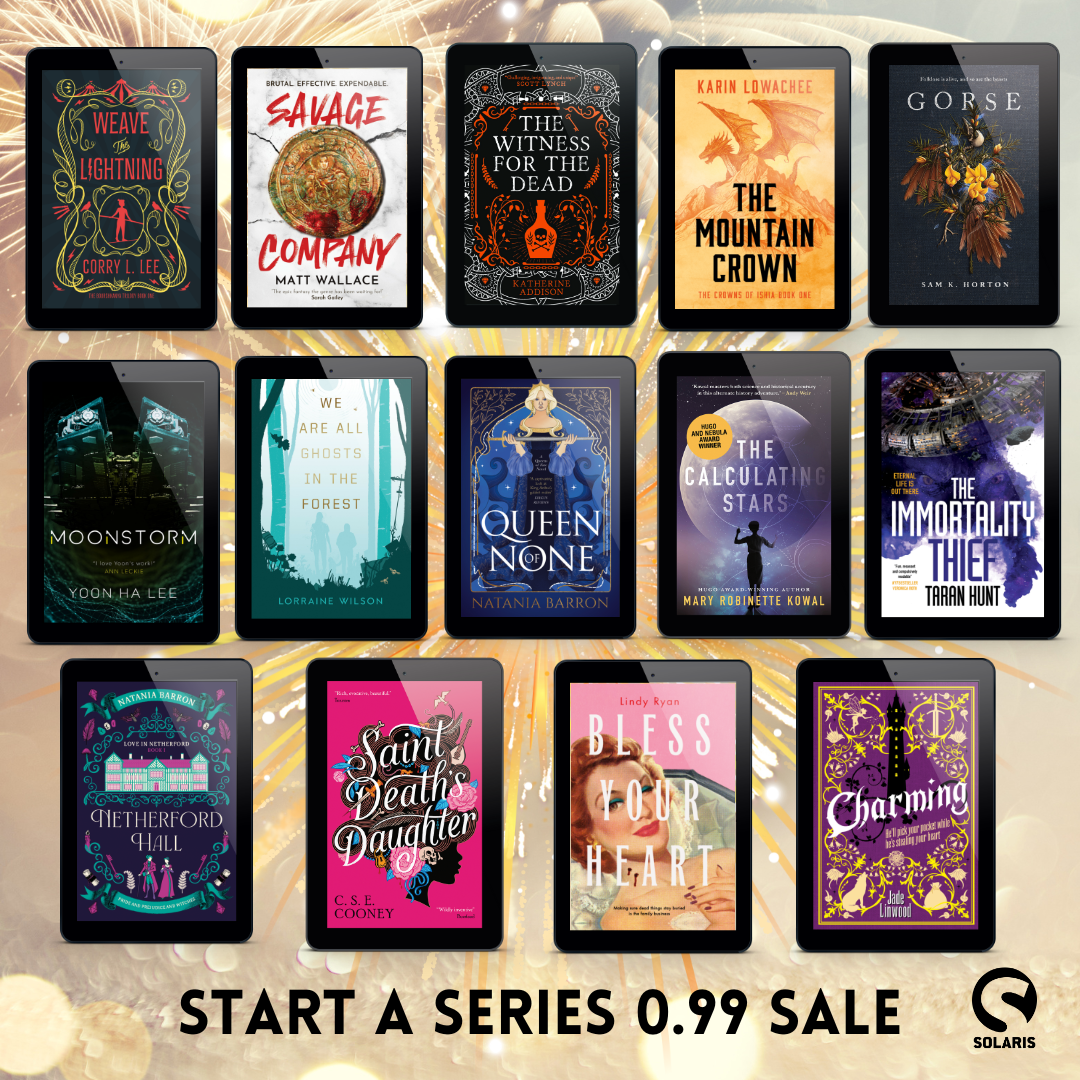
First though, a lil book sale treat – my publishers for We Are All Ghosts In The Forest are running a 99p ebook sale for firsts-in-series from now until the 18th Jan. Which means you can snag a copy of Ghosts for a bargain price if you’re quick (and maybe some other excellent books too?). Click here to shop!

Now then. Down to business.

The year in review

What are the stats for 2024?

I published 1 novella – The Last To Drown, 1 novel – We Are All Ghosts In The Forest, and 1 short story – Mhairi Aird in the Nova Scotia 2 anthology.

I was longlisted for 2 awards (BSFA and Kavya Prize for Mother Sea), shortlisted for 1 award (Kavya Prize for The Last To Drown) and won 1 award (the Society of Authors ADCI Prize for Mother Sea).

I left one agent and signed with another.

I attended two festivals/conventions, took part in oh god I don’t know … a whole bunch of events.

I wrote & revised 1 novella, fully revised 2 novels, and got a 3rd novel through copyedits & proofs. And I wrote 85k of a 4th novel. Totaling about 120k written, 340k edited.

I signed no new publishing contracts, got no new books out on submission, and (lol) received no further parts of my advance because of delays to edits. So my writing income last year was solely from royalties on my previous books, the short story sale, and writing-adjacent work like workshops and this Substack (thank you!).


The year in anticipation

What’s on the programme for 2025?

I will be publishing 1 novel (The Salt Oracle).

I will finish & revise the current wip. Edit/copyedit/proof The Salt Oracle, and edit 1 further novel & 1 novella.

I should be going on submission with that 1 novel and 1 novella.

I will be at two festivals/conventions (Cymera Festival & World Fantasy Con), plus a bunch of other events & podcasts tbc.

How’s about the wishlist for 2025?

That I sell both submissions to good people for good deals.

That I maybe get some foreign rights sold.

That I get all or most of another book drafted.

That The Last To Drown and We Are All Ghosts In The Forest maybe get an award listing or two.


What does it all even mean though?

So how do these stats look to you? Busy? Easy? Perhaps wildly ambitious, perhaps laughably unambitious? It will depend on your viewpoint, right? Your own current ‘normals’. And that’s sort of why I have listed them all out – to say that they don’t really matter.

The number of words I write, the number of events I do, the number of awards listings (especially those omg) or trade reviews or sales … those make for some nice neat numbers but do they mean anything to me, the writer alone (plus cats) at my laptop? They’re all to varying degrees out of my control after all – even how much I get to write is influenced by other people’s editorial timelines, the amount of publicity interest in my newest book, and my health. So when I look back at 2024 or look forward to 2025, what can I take from these lists that really truly intrinsically reflects on me and my writing?

I’ve been mulling over this because as I saw everyone posting their ‘my writing year’ type posts I got increasingly squinty eyed about how good that sort of framing actually is. It’s nice to look at concrete things and pat yourself on the pat, or set a particular aim and work towards it. It can also be really helpful to track these things so you can appraise your relationship with writing/publishing and make any necessary changes. So no shade on tracking these stats at all – I do it all myself, hence being able to reel off the lists above without much thought. And my god, we should celebrate our wins at any opportunity, shouldn’t we? Smell the roses every time, because publishing is a hell of a briar patch.

I came up with two reasons though, why I think these particular roses – these lists of achievements – can sometimes be … maybe not unhelpful, but an incomplete picture.

Reason one is simply the comparanoia of it all. Have you looked at other people’s statistics and Had Sads because yours don’t match up? Or looked at your own previous years and Had Sads because you’ve dropped off in some area or another? Yeah, me too. But if we measure our success or productivity or writerly brownie points by fixed metrics – words written or events held or contracts signed – we are holding ourself to metrics that are (at least partly) out of our control. Which aint all that healthy, folks.

The second reason is that I want to think my creativity matters more to me than my output. I mean yes, I need the output to, you know, have books to sell and hence a hope of a career. So of course words written/books sold/awards won matters. If I look back at 2024 though, while I am extremely proud of the high points on that list, I am perhaps most proud of something that’s not on the list at all – the way in which I’ve pushed my craft.

As I think I’ve talked about a few times, I like to feel that I am trying something new-to-me with everything I write – challenging myself to always be growing as a writer. And honestly, I am really excited by the things I’ve done in Novella2 (which I wrote about here) and the current wip. They are both in their own way taking risks I’ve not been brave enough to take until now, and I think I’m pulling it off. Which is so incredibly cool, I can’t even tell you.

Everything else I did last year, from the simple number of hours I got to write to the joy of winning an award, was connected to other people & other factors. My craft though? That win is wholly and entirely my own.

Which means that whatever those other people & other factors are doing in 2025, I can hold one ambition entirely independent of all that uncertainty – challenging my craft in a new way. If I can succeed in that one thing, then that’s something to be proud of and excited by even if some of my statistics look worse compared to 2024. (They will – I’m not going to get two books out in 2025, let alone a bonus short story, so from the get-go I’m a man down, so to speak).

Depending on other things (lol, see?), my next projects may be pushing me in really, really structural ways, or in attempting a new subgenre, or maybe something that’s going to be so tricksy narratively… I am excited by all these ideas, but I’ve honestly no idea which one will be next on the drafting board.

So do I have a point? Yes!

It is that listing your achievements and ambitions can be really fun, a useful gauge, and an opportunity to take stock and celebrate your awesomeness. But that the most important metric of you as a writer, far more than the subjective whimsy of publishing successes, is whether you are finding joy in your art. (Or catharsis. Or hope. Or freedom.) (Or revenge)


So my gorgeous creatures, may 2025 bring you publishing joys but may it also bring you wonder and courage in your writing. If you want to stay up to date with my blog posts please consider subscribing to my Substack as that’s where I’m most active.

A Letter to Debut Authors

This blog was first posted in December 2023 on my Substack, inspired by a few conversations I’d had with authors at various stages of their career, and someone mentioning an article I wrote at the time of my second book’s publication, looking back on my debut year and the things it taught me.

I first wrote it before a spate of Happenings around the 2024 debuts, review bombing and general unpleasant shenanigans, so I then edited it to talk about some of the worries I’d seen folks expressing around GR reviews and debut groups.

If you are a debut author, you’re probably already swimming in a veritable sea of advice, information and general flailing. So I’m not going to talk about debut year. Suffice to say I hope you are finding your path through this exciting, uncertain time and remembering to celebrate the truly amazing thing you’ve achieved.

What I wanted to talk about instead was preparing yourself for what happens next. Because much as the industry likes to put a huge emphasis on debut books and the debut year, this is only the first step on a hopefully-long road. And if I’m honest, I think it would be helpful for a lot of debuts to do a little more looking ahead and a little less staring at the ground beneath their feet, wondering if it’s a pedestal or a cliff edge.

(Hint: it’s both)

There have been several reports recently about mental wellbeing in debut authors, author incomes declining, and the brevity of most authors’ careers. These studies don’t paint a pretty picture of life as an author, and suggest that most of you beautiful, shiny debuts – maybe a whole 80% of you – will not publish more than three books. Only one in ten of you will make it beyond six books. I look at my debut twitter/facebook group and those numbers are already holding true, which is … ugh. Dreary, right?

When we sign that first publishing deal, most of us hope we’re launching a – well, maybe not a career, given those average incomes lol, but definitely a long term publishing journey. So what can we do to try to be one of the minority who last the distance?

[Obvious caveat here: I’m contracted up to book 6 currently, with several more in various stages. So although I’ve not quite made it into the 10% yet, it is looking likely I’ll get there]

[Second obvious caveat: I’m not a Big Name, so my income is definitely on the low side of that author average. I’m not talking about how to be successful here, I’m talking about how to survive]

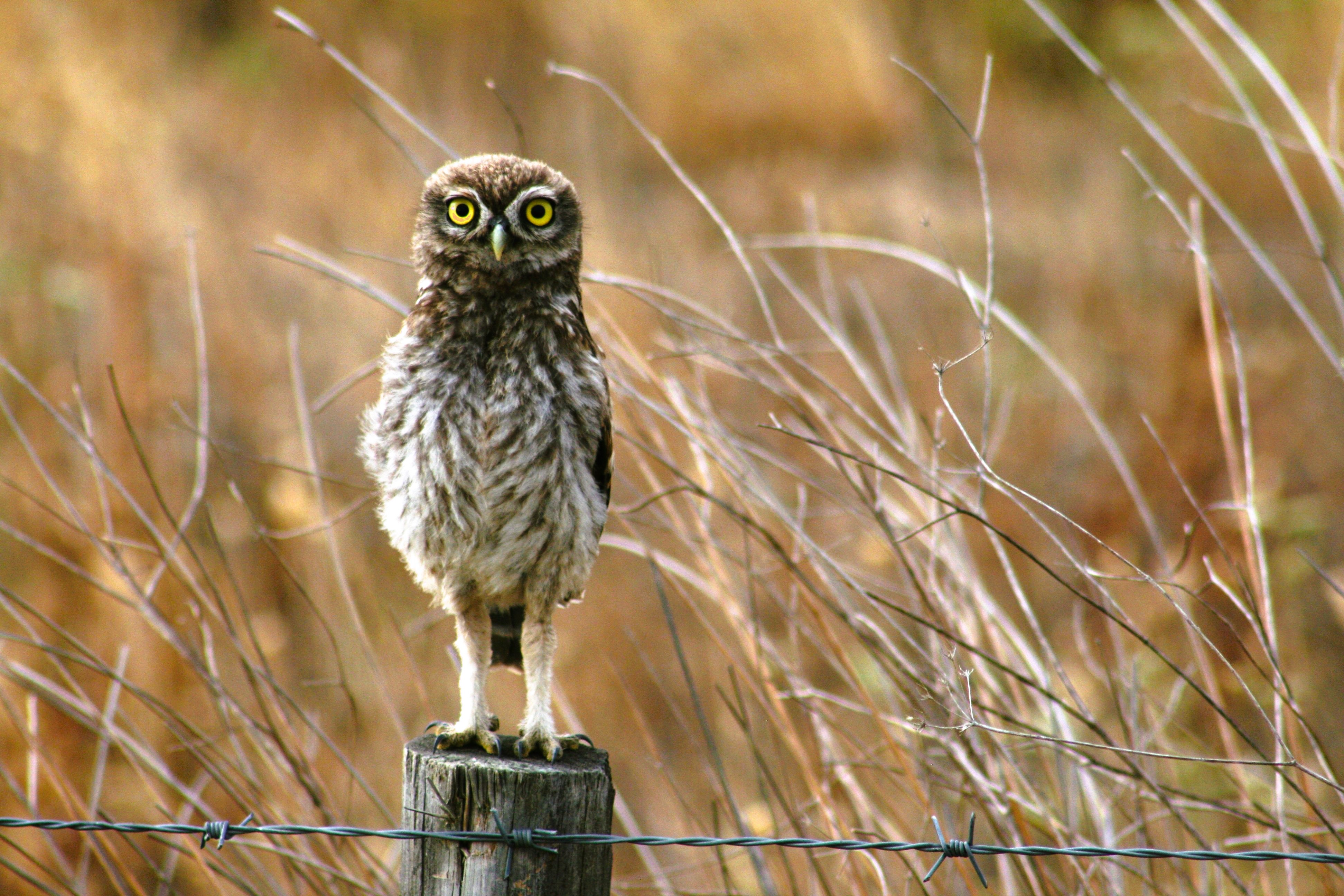
A very wise and elegant owl

So, back to that pedestal/cliff face… If I could tell you anything from four years in, it would be this:

  1. Be aware of the cliff-face, but don’t be paralysed by it. The cliff-face in my tenuous metaphor is the fear we all face that if our book doesn’t sell enough, we won’t get another deal. There is truth in that – poor sales (relative to publisher expectations, which vary ENORMOUSLY between books) will likely lead to smaller advances and/or fewer offers next time around. Publishers are rarely open about the sales figures they have predicted for your book though, so you cannot know with any certainty what’s ‘enough’ and what’s ‘not enough’. Remember they will be in profit long before you earn out your advance, so chances are good that you’ll be okay even if you don’t get an Amazon orange banner or a Sunday Times bestseller number.

BUT even if your book does ‘under-perform’ it is not the end of the road. It just might mean the road looks a little different to the one you anticipated. A lower advance next time still means you are getting a next time, which is great! And there are a lot of publishers of all sizes & visions out there. One of them might be a better home for your next book, maybe even helping it do better than your debut. The adage that nothing sells your book as well as publishing the next one is kinda true – you’re building momentum. Be the bonfire, not the firework, so to speak. And hey, if it’s truly not working, you can always reinvent yourself under a pen name to start afresh! So yes, hope for the best, but don’t tie your whole self to the success of this one book! That way lies way too much anxiety.

  1. Be aware of the pedestal, and the step down. My metaphorical pedestal is the shininess of the debut experience. It’s the way that publishing loves you right now – you’re the untarnished new thing they get to shout about. Everyone around you is telling you how excited they are by you & your book & omg you’ve cracked this whole thing! You’ve won at publishing! Finally!It’s a wonderful feeling! This is something you’ve worked so hard for, probably for many years, and you should bask in the glow of success.

BUT it is a small pedestal, and sadly a not insignificant fraction of the love and attention you’re getting now will wane with your subsequent books when there’s a whole new cohort of debuts to celebrate. So try to build your sense of self as a writer around internal metrics of success, not external buzz. Next year is going feel very different to this one, and the one after that different again. The highs are worth celebrating, but they aren’t worth pinning your energy or your confidence on. Try to focus on the things that are within your control – developing your craft, building a community of bookish friends who genuinely uplift one another, learning new writing-adjacent skills like mentoring, blogging, event chairing etc (which will all help with the first two)remember to stop & smell the flowers

  1. While you’re on the pedestal, don’t throw peanuts at the gallery. It is very tempting to feel like you’ve cracked some secret code and now Have The Answers, but remember you’re working from a sample size of one! Your experience is certainly helpful context for others, but it will not be the Only Way, or necessarily the Best Way for them. The landscape of publishing is mercurial and what worked for you this time around will probably not even hold true for you next time around, let alone anyone else. There are also many routes through publishing and much as some routes get the ticker-tape parade, the truth is no one route is ‘better’ than another when you look at the longevity of authors’ careers.

For example, selling in a highly contested big money auction looks like the dream but it’s a vulnerable place to be, career wise. Whereas selling to a smaller press looks unglamourous but you’re far more likely to earn out your advance & be positioned to ask for a higher one next time. Neither route is ‘better’ or makes you a better or worse author.

When I graduated from my undergrad degree with a 1st class honours, I felt I knew quite a lot actually about zoology. When I graduated from my PhD though, I knew I knew almost nothing and had only barely started learning the skills I needed to progress. Publishing feels a little like that to me. It is a process of constantly learning and relearning both our craft and the publishing experience, and there is no point at which any of us gets to look down on, or claim authority over, anyone else (see my comparanoia post for more on that). This is GOOD! I love that writing is a constant evolution of the self! Sure, financial security and a little less reliance on luck and stochasticity would be nice. But that aside, I love that no-one’s journey is the same and no-one’s books are the same, and we’re all just figuring it out as we go.

Remember to stop and smell the flowers
  1. Okay, this is the bit I’m adding in response to the review bombing furore in the 2024 debut group. For anyone who gets caught up in one of the sporadic debut publishing storms, I’m so sorry your entry into publishing has that added stress. I hope you managed to step back from it when need be & that it doesn’t entirely tarnished the communal joy to be gained from the debut groups you’re part of. A little perspective on reviews and debut groups, for what it’s worth:

First off, a few one star reviews are not going to tank your book. Publishers care (sometimes) about the number of reviews or the number of ‘to reads’ – they don’t care about average ratings. Because every book gets a handful of 1-2 star ratings & everyone accepts that those are both inevitable and meaningless. So if you see this happen to your book, yes it messes with your average and it’s horrible to feel unfairly targeted, but please know it’s not going to harm your book in the grander scheme of things. (For the record, there’s a neat inverse correlation between my average GR rating and the number of award noms/wins my books have, so make of that what you will!)

Secondly, debut groups can be a wonderful way to find your tribe, make connections & generally enjoy sharing the love. Howmsoever. They can also be breeding grounds for misinformation, comparanoia, and bluntly snobbery around publisher or deal size. (see point 3 above!) They also tend to fizzle out as people leave once their book is out or they hit 2nd book deadlines or or or. So my wizened wisdom would be to treat them lightly – make friends, be supportive, but don’t invest more time or emotional energy into the group than you can afford. The benefits to your book of authors (particularly those writing in entirely different genres) sharing your posts are slim in the grand scheme of things, so don’t stick around if the group vibe is not working for you.

This doesn’t need saying, I know, but your fellow writers are not your competition. This industry is tough and a positive community will give you the resilience to build a long term career, so be that community. Viewing (and treating) your potential friends as rivals will only make you more vulnerable to stress and burn out in the long run (and career-damaging public tailspins, as this week has shown).

  1. PACE YOURSELF. Please. Pretty please. I wrote a very long and nerdy blog about the relationship between authors, social media and book sales & if you want to feel empowered to step back from some of your social media then go give it a read. TL:DR book sales aren’t on you, so do what you enjoy and no more. Social media aside, also pace yourself with writing and deadlines. One of the biggest changes that you’re probably now in the middle of is the switch from being able to focus on one book at your own pace prior to publishing, to juggling 2, 3, even 4 (wait *counts on fingers* 7!) active book projects at the same time. With publishers setting editorial deadlines, publicity introducing a whole cavalcade of blogs, podcasts and events all with their own timelines, and your agent gently murmuring that you need to maintain momentum … it’s A Lot. If you need more time, ask for it early. Publishers would much much rather know in advance that you’re gonna be late, and they won’t be annoyed – it is very normal. If you can’t do an event, tell folks as early as possible. Say no to things if you need to. I live with disabling illness so I have to guard my energy pretty carefully. This means asking for generous timelines from the start, and being very careful about what events I say yes to, and how I manage them. Folks are okay with that, as long as you communicate. This is all about building an authorial life that is sustainable for you. What that looks like will be different for each of us, but if you want to avoid burn out & buffer yourself from the worst of the workload stresses, then you need to find your balance and hold tight to it.
  1. And lastly, as mentioned above but it deserves its own bullet point, build your sense of self as a writer around things within your control. Advance size, reviews, media buzz, foiled arcs and book boxes, bestseller lists, awards … all of these things are a) largely subjective, and b) entirely out of your control. If you stake your self-belief as a writer on such flimsy things, you will struggle when that subjectivity inevitably swings the wrong way. They are all wonderful, undoubtedly, but do they define whether you’re any good? Absolutely not. Do they define whether you’re a success? I guess that depends why you write. If you, like me, write to connect with others, then you don’t need an award or an auction to succeed. Instead, try to focus on the wins that are less subjective – the readers who reached out to tell you they cried, the simple fact that a publishing house believed in you enough to commit to your book, the joy of sitting on a stage talking about books with writers you admire. Your friends’ belief in you, that gorgeous scene you wrote yesterday, the art you inspired someone to create. Those are incredible things, and they will carry you further than anything else.

I’m not that much further ahead of you on this road, and I’m not in any way an expert. But if my strange and difficult combination of publishing, disability and marginalisation has given me anything then it’s the ability to hold myself steady through a storm. To view both the highs and the lows as passing weather fronts and focus on my community & the page in front of me. I think that’s why I’m still here, working on what will likely be my 8th & 9th books, mostly sane and still madly in love with writing.

I hope you are proud of yourselves, debut authors. Only 1% of aspiring authors do what you’ve done – so you’re amazing! I hope you can carve space within the madness that is debut year to celebrate this marvellous thing, and ready yourselves for the years and books to come. You’ve come so far, you have so many adventures awaiting you ahead.