Category Archives: Publishing

Publication day waffle

The book, the backstory, the question, and my hopes.

I have grown a habit without plan or forethought, of posting on/around each new book’s publication with my thoughts on what that particular book means to me and where it came from. For Mother Sea, that post was an explanation of the content warnings for the book, for The Last To Drown it was about the experience of writing chronic pain and the craft of novella writing.

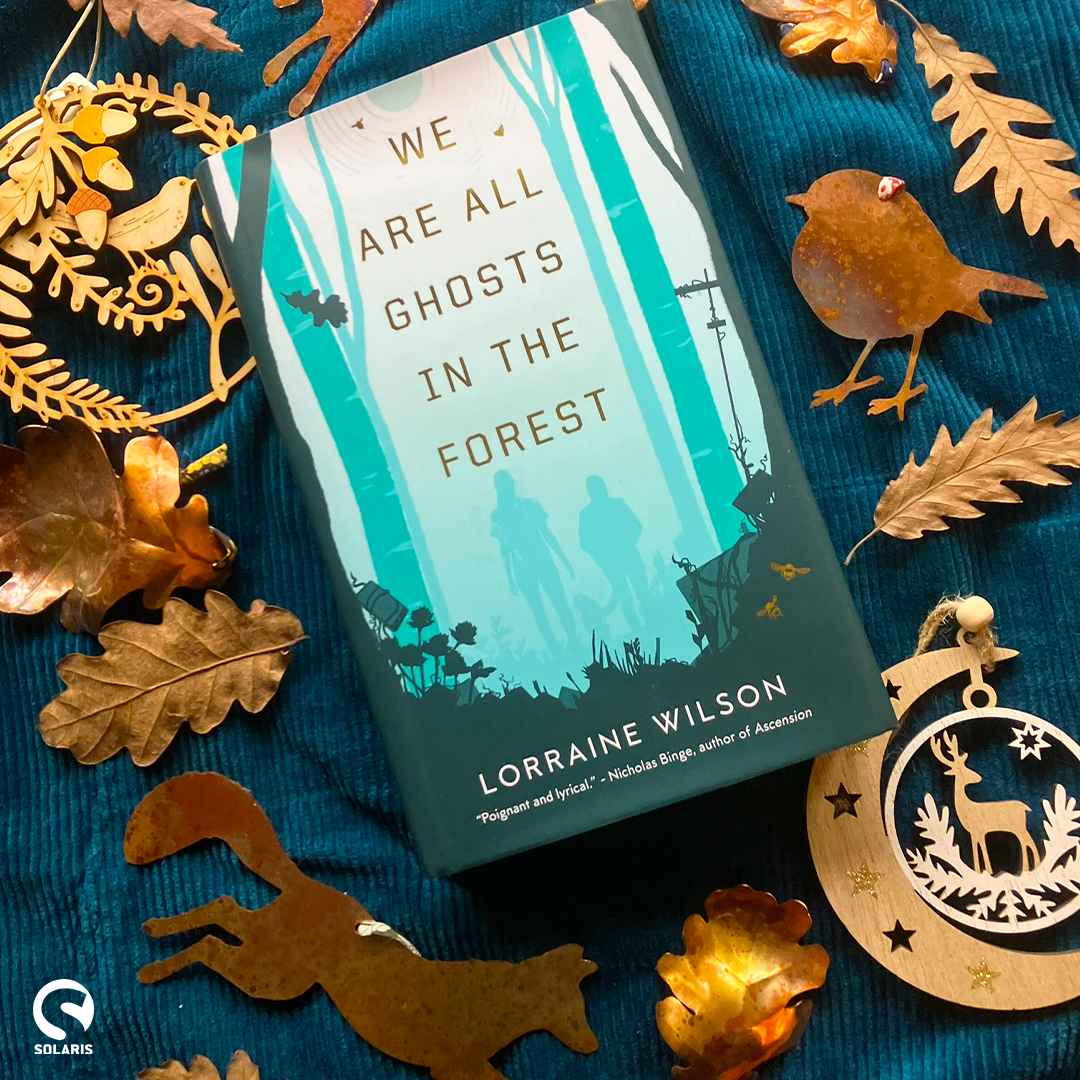
With the publication of We Are All Ghosts In The Forest this week, I have been attacked by a fit of the pensives again and wanted to do the same for this book. Because the weird thing about publishing multiple books is that each one somehow means something unique to you. It’s important to you in an entirely different way to your previous (and likely next) books. Which when I type it, sounds perfectly reasonable, but I don’t know – I think a part of me was under the impression that publishing books would become … not rote because obviously each book is unique, but that the act of publication at least would become familiar and comfortable. Like wearing different outfits every day but then slipping into the same coat to go out.

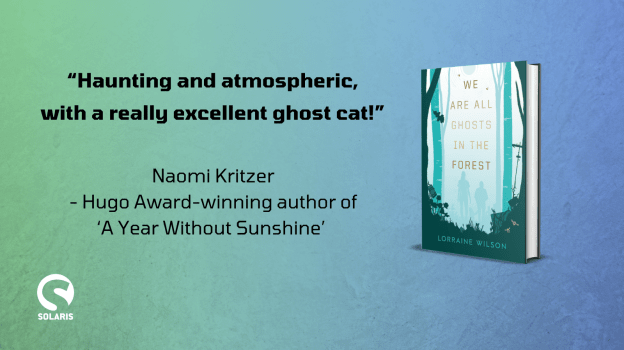
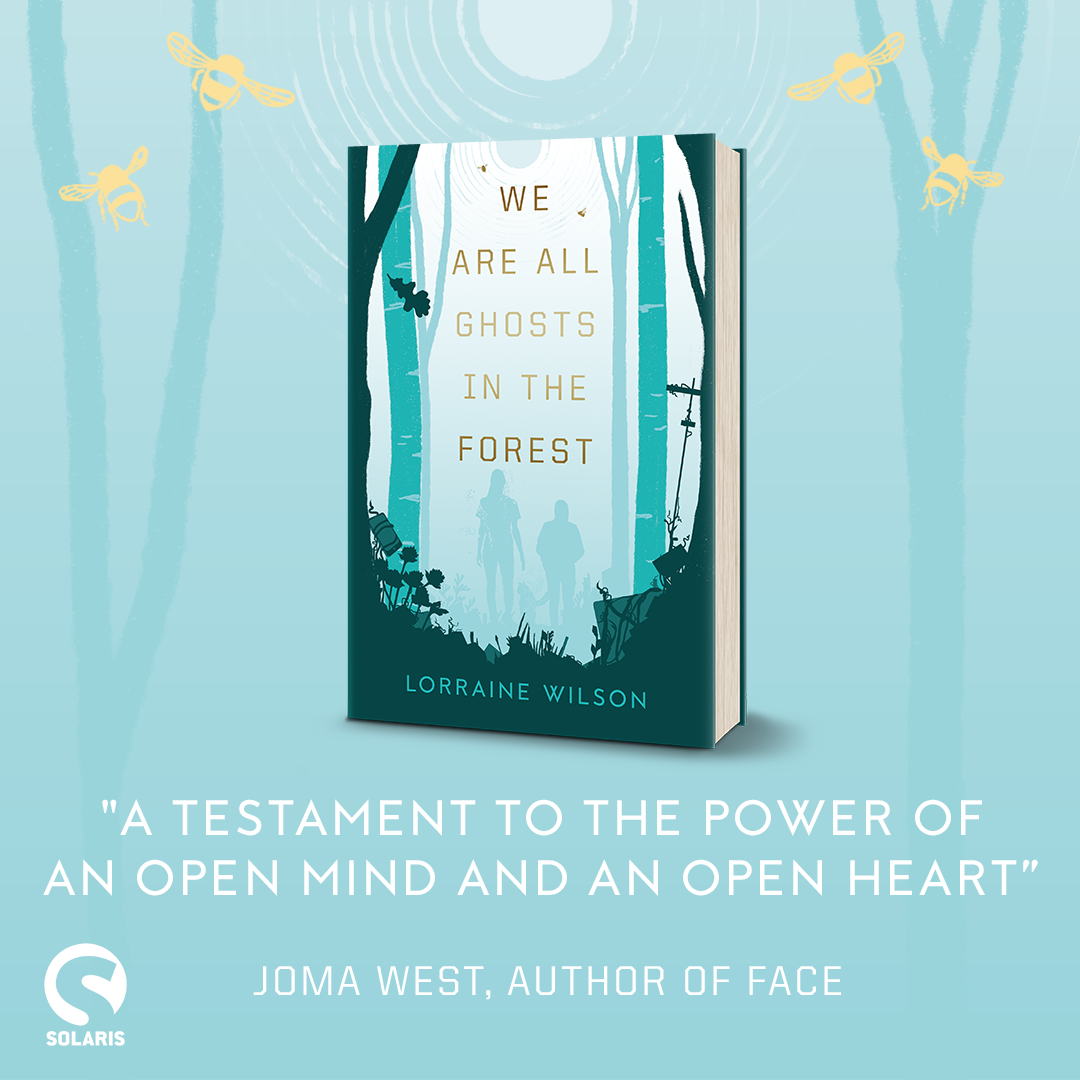
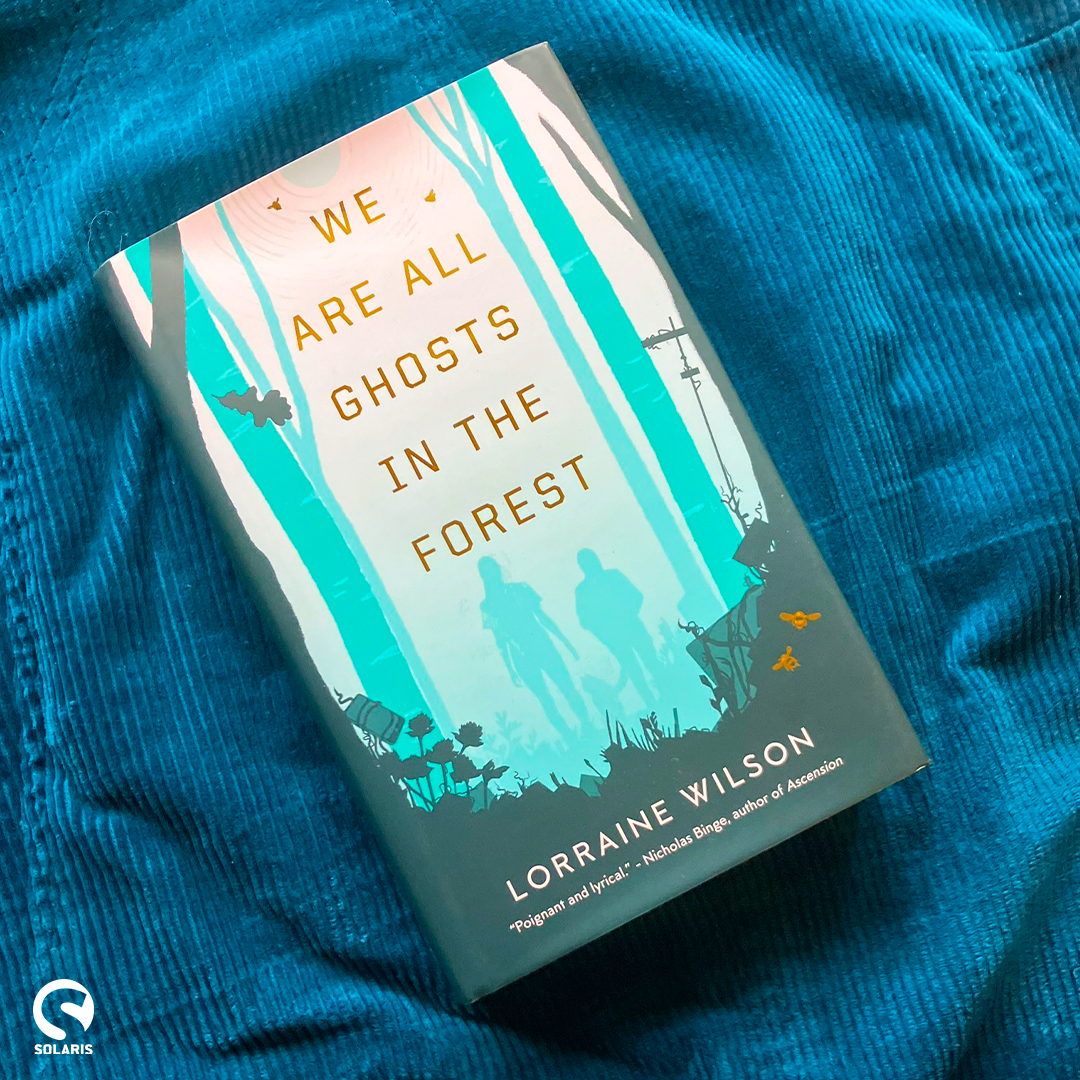
And yes, there are aspects of the publication hullabaloo that feel very different (mostly less fraught) than they did the first time round simply because we’ve been here before. But Ghosts does have its own new territory to break, both personally and professionally, and I guess that’s where I’m gonna go with this publication day (weekend) waffle. Alongside a lot of shiny promo graphics that my fab publicity person sent me & I can’t resist using!

Craft, learning and lockdown.

One of my writer hopes is that each new book I embark on will teach me something new about writing. It’ll push me in a slightly different direction – whether that’s in genre or subject matter, form or voice – so that with every project I am challenging myself to grow as a writer. I aspire to be braver at this, if I’m honest with you, to be bolder in leaping into things I’m not sure I can pull off, more fearless (or unhinged, your choice) in being willing to tear something down that’s merely ‘good enough’ and rebuild something better from the ruins.

However, that’s for the future. For Ghosts, I look at it and think that the best lesson I learned from it is to trust in the small flashes of wonder more. To not get stalled on ‘yes but how does that work’ until the editing, to leap merrily into a half-arsed shiny idea without the comfort of the usual planning I do. I don’t think I’ll ever be someone who regularly writes without a good map (of character psychology and setting at least), because that stage does feel important and enriching to me. But I think there’s real value in knowing you aren’t tied to that planning. That sometimes, when the wind and the tides are right, you just have to leap aboard, hoist sail, and see what happens.

Which is how Ghosts materialised. At least the initial shape and opening chapters.

See, the thing is, I started writing Ghosts in March 2020.

Mmm hmm. That March 2020. I had a child two terms into their first year of secondary school, just forming new friendship groups, just adjusting to this new world … then suddenly at home, isolated, with their education, friendships and world reduced to pixels.

[See where the idea of the ghosts came from? More on this below…]

Homeschooling in that first lockdown was … not brilliantly structured, so even though I had it undoubtedly easier than parents with younger children, I was still rarely getting more than 20 mins of uninterrupted time. And the vast majority of my attention, emotion, and organising capacity was being used up on my child, which left exactly zero capacity for me to do intelligent, thoughtful things like plan and research and worldbuild.

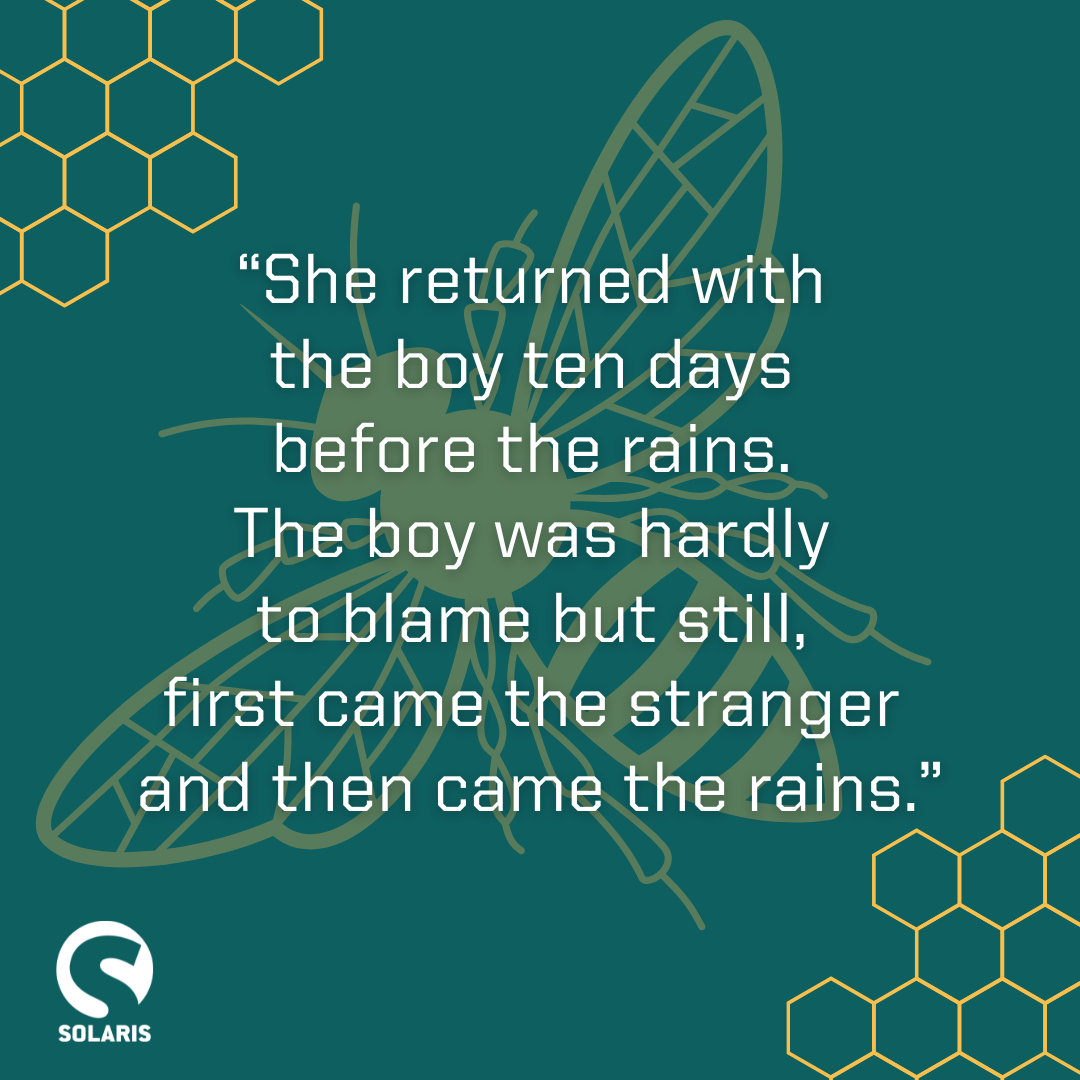
When I sat down to write Ghosts, I had the opening image in my mind – of a woman returning to a remote village with a stranger boy – in my mind and nothing else.

Two paragraphs in, I mentioned a ghost. The line is ‘There were three people on the street, two of them real’. I wrote that, thought huh, so we’ve got ghosts then, and carried on. By the end of the first chapter – and the appearance of a certain image-shifting cat – I’d realised the ghosts were the remains of the internet, that the village was in Estonia, and that Stefan, the boy, was non-verbal. All my worldbuilding, character development, and plotting began then, and it was a patchwork ad hoc affair that later required a lot (so much) patching up and weaving in of broken threads.

Without the particular circumstances of lockdown and homeschooling, I’d never have written a book with such wild absence of planning. I quite probably won’t again. But thanks to that experience, and to Ghosts as a final product being something I’m quite proud of, my relationship with planning has evolved significantly. I still spend a good amount of time exploring the imagery and layers of the book’s core theme, because that’s the lodestone upon which everything else is built. And I do still plan, but it’s much less ‘I need to know everything before I can start’ and much more ‘I need to know enough not to get too tangled while I’m finding my feet in the opening chapters.’ It’s less character arc graphs, and more floorplans! (I’ve discovered a bit of a love for floorplans with Salt Oracle and the current wip both being largely in one big, complicated building)

Is this growth? Not really. I mean, there’s no wrong or right way to do this, so my approach adjusting doesn’t mean it’s better. But I do feel like this particular change, for me, is about confidence. I trust my instincts more, I trust those flashes of wonder to guide me well; I trust that if I make an unholy mess I can (grumpily) unpick and restitch it. Let’s be honest, I will also always love a graph, but this new more relaxed approach to tackling new projects might just give me the freedom to be bolder in the next project, and the next…

Ghosts and loneliness

There’s always one question that comes up again and again with each book that gets published. One particular theme or issue that stands out enough with enough people to become a feature of most interviews or informal chats about that book. For The Last To Drown it was about the experience of writing chronic pain. For Mother Sea it was questions about the importance of climate fiction.

For Ghosts I think one is already emerging, and it’s going to be ‘Where did you get the idea for these ghosts?’. The easy answer is that scene above – me watching my child struggle through the loneliness of a life reduced to four walls and pixels on a screen. The strange thing is that lockdown wasn’t isolating for me, in fact with both my husband and daughter suddenly in the house all day every day, I lost the peace and solitude I actually relied on quite heavily to manage my chronic pain. Being housebound apart from occasional short trips out? Well, hi, welcome to my world, please tidy up after yourself. BUT it was a horrible experience for my daughter, at an awful point in her life, and watching that was heartbreaking.

The chain of thought from that to a world haunted by fragments of our digital detritus, by our online echoes, is fairly obvious. And then the rest of the world in Ghosts had to be built up around that central concept.

So if anyone reading this was wondering, there’s the answer to that particular question. Where did the ghosts come from? Loneliness and lockdown. Homeschooling, society’s fragility and resilience; most of all the search for connection.

Growth, ladders and doing the daunting things

Ghosts represents something more prosaic to me too. This is the first book in my Solaris contract, and my first book with a publisher that has Big 5 distribution and main player reach within the SFF world. All three of my publishers have been/are amazing, and in my opinion punch above their weight with the quality of their lists, but Solaris are a step into a bigger room for me, if you like.

So Ghosts feels a lot like the next rung in the ladder of my career. It’s exciting. I’m hopefully going to be reaching new audiences with this book, hopefully gaining new readers who’ll stick around for future books. I’m doing more events for Ghosts’ launch than I’ve done for all my previous books’ launches combined! And with some brilliant author friends! My fabulous marketing/publicity goddesses are helping me reach new venues and platforms too. If the reception to Ghosts is positive, that in turn will pave the way for other opportunities (foreign rights sales for Ghosts, further book deals etc).

This is all wonderful new ground to be breaking. I am extremely fond of, and proud of, Ghosts, and am excited to have it out in the world finding people it resonates with. It’s also, not gonna lie, just a teensy bit daunting. I say this because I’m leery of doing the Instagram ‘Everything is intensely wonderful actually’ thing. Several events plus travel in a month is going to be a physical test, but I’m interested to see how I cope and how quickly I recover. It’s good data for the future! There’s also the fear, of course, that no-one will show up to my events, or that everyone will hate the book and hunt me down to tell me so, or, or, or… But those are normal, unavoidable fears to have and I have an ace in my back pocket…

…I have readers. I may not have many compared to other authors, but there are amazing, strange, beautiful people who have come with me from book to book, frequently cheered me on, voted for me, recommended me to others. These readers have trusted me each time I’ve veered off in a new direction. So I trust them in turn. I trust that they’ll read Ghosts and find something worthwhile in it. And that’s kind of all that matters. Yes, I hope I reach new readers as Ghosts takes the stage. Yes, I hope it opens new doors for me and my career. But I hope even more that the readers who’ve supported me thus far will enjoy this next step on my bookish travels.

Thank you for reading & supporting this blog. I’ll be back soon on my Substack with less ‘please buy my book’ and more about what makes a good book event, parting ways with your agent, and more…

A Letter to Debut Authors

This blog was first posted in December 2023 on my Substack, inspired by a few conversations I’d had with authors at various stages of their career, and someone mentioning an article I wrote at the time of my second book’s publication, looking back on my debut year and the things it taught me.

I first wrote it before a spate of Happenings around the 2024 debuts, review bombing and general unpleasant shenanigans, so I then edited it to talk about some of the worries I’d seen folks expressing around GR reviews and debut groups.

If you are a debut author, you’re probably already swimming in a veritable sea of advice, information and general flailing. So I’m not going to talk about debut year. Suffice to say I hope you are finding your path through this exciting, uncertain time and remembering to celebrate the truly amazing thing you’ve achieved.

What I wanted to talk about instead was preparing yourself for what happens next. Because much as the industry likes to put a huge emphasis on debut books and the debut year, this is only the first step on a hopefully-long road. And if I’m honest, I think it would be helpful for a lot of debuts to do a little more looking ahead and a little less staring at the ground beneath their feet, wondering if it’s a pedestal or a cliff edge.

(Hint: it’s both)

There have been several reports recently about mental wellbeing in debut authors, author incomes declining, and the brevity of most authors’ careers. These studies don’t paint a pretty picture of life as an author, and suggest that most of you beautiful, shiny debuts – maybe a whole 80% of you – will not publish more than three books. Only one in ten of you will make it beyond six books. I look at my debut twitter/facebook group and those numbers are already holding true, which is … ugh. Dreary, right?

When we sign that first publishing deal, most of us hope we’re launching a – well, maybe not a career, given those average incomes lol, but definitely a long term publishing journey. So what can we do to try to be one of the minority who last the distance?

[Obvious caveat here: I’m contracted up to book 6 currently, with several more in various stages. So although I’ve not quite made it into the 10% yet, it is looking likely I’ll get there]

[Second obvious caveat: I’m not a Big Name, so my income is definitely on the low side of that author average. I’m not talking about how to be successful here, I’m talking about how to survive]

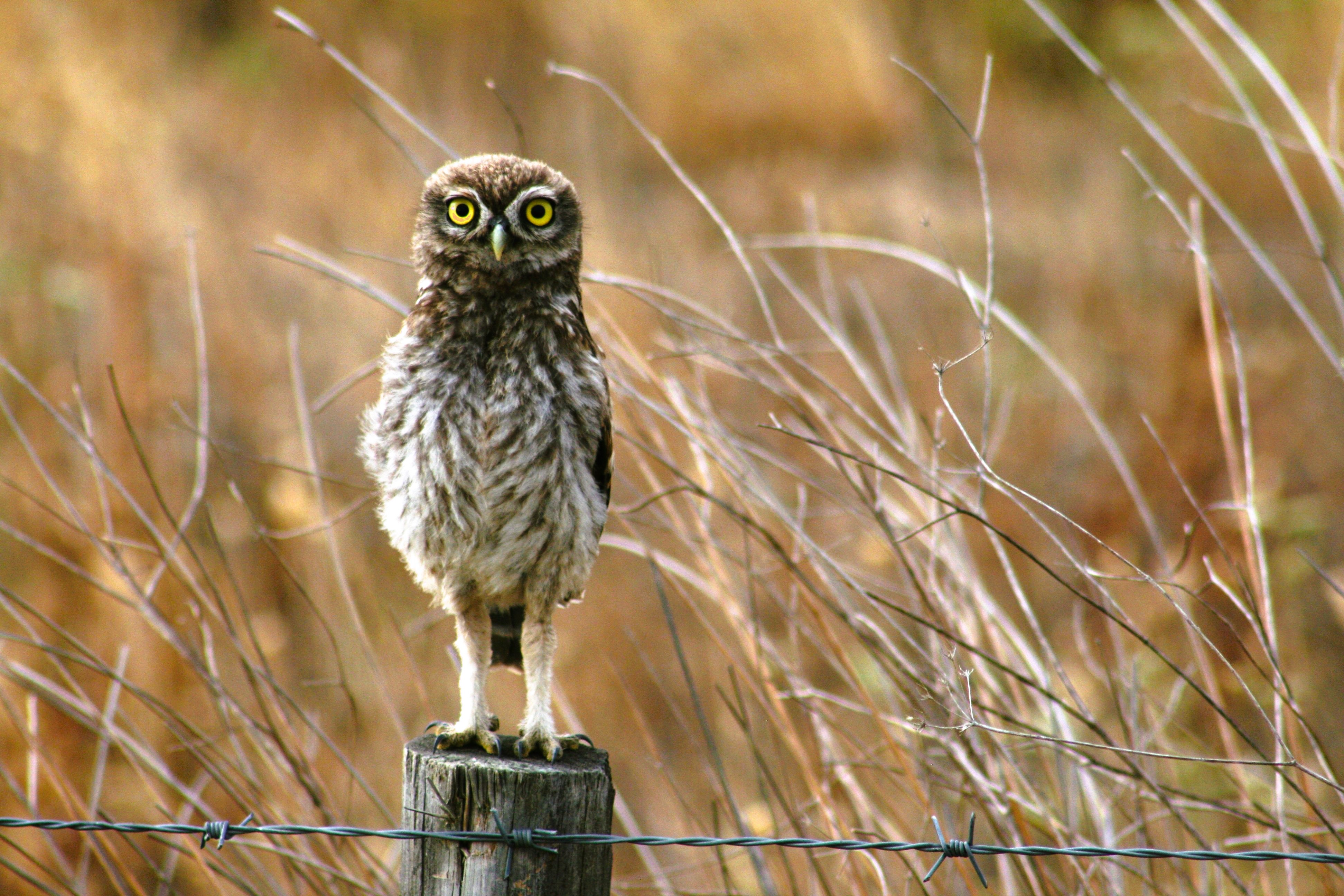
A very wise and elegant owl

So, back to that pedestal/cliff face… If I could tell you anything from four years in, it would be this:

  1. Be aware of the cliff-face, but don’t be paralysed by it. The cliff-face in my tenuous metaphor is the fear we all face that if our book doesn’t sell enough, we won’t get another deal. There is truth in that – poor sales (relative to publisher expectations, which vary ENORMOUSLY between books) will likely lead to smaller advances and/or fewer offers next time around. Publishers are rarely open about the sales figures they have predicted for your book though, so you cannot know with any certainty what’s ‘enough’ and what’s ‘not enough’. Remember they will be in profit long before you earn out your advance, so chances are good that you’ll be okay even if you don’t get an Amazon orange banner or a Sunday Times bestseller number.

BUT even if your book does ‘under-perform’ it is not the end of the road. It just might mean the road looks a little different to the one you anticipated. A lower advance next time still means you are getting a next time, which is great! And there are a lot of publishers of all sizes & visions out there. One of them might be a better home for your next book, maybe even helping it do better than your debut. The adage that nothing sells your book as well as publishing the next one is kinda true – you’re building momentum. Be the bonfire, not the firework, so to speak. And hey, if it’s truly not working, you can always reinvent yourself under a pen name to start afresh! So yes, hope for the best, but don’t tie your whole self to the success of this one book! That way lies way too much anxiety.

  1. Be aware of the pedestal, and the step down. My metaphorical pedestal is the shininess of the debut experience. It’s the way that publishing loves you right now – you’re the untarnished new thing they get to shout about. Everyone around you is telling you how excited they are by you & your book & omg you’ve cracked this whole thing! You’ve won at publishing! Finally!It’s a wonderful feeling! This is something you’ve worked so hard for, probably for many years, and you should bask in the glow of success.

BUT it is a small pedestal, and sadly a not insignificant fraction of the love and attention you’re getting now will wane with your subsequent books when there’s a whole new cohort of debuts to celebrate. So try to build your sense of self as a writer around internal metrics of success, not external buzz. Next year is going feel very different to this one, and the one after that different again. The highs are worth celebrating, but they aren’t worth pinning your energy or your confidence on. Try to focus on the things that are within your control – developing your craft, building a community of bookish friends who genuinely uplift one another, learning new writing-adjacent skills like mentoring, blogging, event chairing etc (which will all help with the first two)remember to stop & smell the flowers

  1. While you’re on the pedestal, don’t throw peanuts at the gallery. It is very tempting to feel like you’ve cracked some secret code and now Have The Answers, but remember you’re working from a sample size of one! Your experience is certainly helpful context for others, but it will not be the Only Way, or necessarily the Best Way for them. The landscape of publishing is mercurial and what worked for you this time around will probably not even hold true for you next time around, let alone anyone else. There are also many routes through publishing and much as some routes get the ticker-tape parade, the truth is no one route is ‘better’ than another when you look at the longevity of authors’ careers.

For example, selling in a highly contested big money auction looks like the dream but it’s a vulnerable place to be, career wise. Whereas selling to a smaller press looks unglamourous but you’re far more likely to earn out your advance & be positioned to ask for a higher one next time. Neither route is ‘better’ or makes you a better or worse author.

When I graduated from my undergrad degree with a 1st class honours, I felt I knew quite a lot actually about zoology. When I graduated from my PhD though, I knew I knew almost nothing and had only barely started learning the skills I needed to progress. Publishing feels a little like that to me. It is a process of constantly learning and relearning both our craft and the publishing experience, and there is no point at which any of us gets to look down on, or claim authority over, anyone else (see my comparanoia post for more on that). This is GOOD! I love that writing is a constant evolution of the self! Sure, financial security and a little less reliance on luck and stochasticity would be nice. But that aside, I love that no-one’s journey is the same and no-one’s books are the same, and we’re all just figuring it out as we go.

Remember to stop and smell the flowers
  1. Okay, this is the bit I’m adding in response to the review bombing furore in the 2024 debut group. For anyone who gets caught up in one of the sporadic debut publishing storms, I’m so sorry your entry into publishing has that added stress. I hope you managed to step back from it when need be & that it doesn’t entirely tarnished the communal joy to be gained from the debut groups you’re part of. A little perspective on reviews and debut groups, for what it’s worth:

First off, a few one star reviews are not going to tank your book. Publishers care (sometimes) about the number of reviews or the number of ‘to reads’ – they don’t care about average ratings. Because every book gets a handful of 1-2 star ratings & everyone accepts that those are both inevitable and meaningless. So if you see this happen to your book, yes it messes with your average and it’s horrible to feel unfairly targeted, but please know it’s not going to harm your book in the grander scheme of things. (For the record, there’s a neat inverse correlation between my average GR rating and the number of award noms/wins my books have, so make of that what you will!)

Secondly, debut groups can be a wonderful way to find your tribe, make connections & generally enjoy sharing the love. Howmsoever. They can also be breeding grounds for misinformation, comparanoia, and bluntly snobbery around publisher or deal size. (see point 3 above!) They also tend to fizzle out as people leave once their book is out or they hit 2nd book deadlines or or or. So my wizened wisdom would be to treat them lightly – make friends, be supportive, but don’t invest more time or emotional energy into the group than you can afford. The benefits to your book of authors (particularly those writing in entirely different genres) sharing your posts are slim in the grand scheme of things, so don’t stick around if the group vibe is not working for you.

This doesn’t need saying, I know, but your fellow writers are not your competition. This industry is tough and a positive community will give you the resilience to build a long term career, so be that community. Viewing (and treating) your potential friends as rivals will only make you more vulnerable to stress and burn out in the long run (and career-damaging public tailspins, as this week has shown).

  1. PACE YOURSELF. Please. Pretty please. I wrote a very long and nerdy blog about the relationship between authors, social media and book sales & if you want to feel empowered to step back from some of your social media then go give it a read. TL:DR book sales aren’t on you, so do what you enjoy and no more. Social media aside, also pace yourself with writing and deadlines. One of the biggest changes that you’re probably now in the middle of is the switch from being able to focus on one book at your own pace prior to publishing, to juggling 2, 3, even 4 (wait *counts on fingers* 7!) active book projects at the same time. With publishers setting editorial deadlines, publicity introducing a whole cavalcade of blogs, podcasts and events all with their own timelines, and your agent gently murmuring that you need to maintain momentum … it’s A Lot. If you need more time, ask for it early. Publishers would much much rather know in advance that you’re gonna be late, and they won’t be annoyed – it is very normal. If you can’t do an event, tell folks as early as possible. Say no to things if you need to. I live with disabling illness so I have to guard my energy pretty carefully. This means asking for generous timelines from the start, and being very careful about what events I say yes to, and how I manage them. Folks are okay with that, as long as you communicate. This is all about building an authorial life that is sustainable for you. What that looks like will be different for each of us, but if you want to avoid burn out & buffer yourself from the worst of the workload stresses, then you need to find your balance and hold tight to it.
  1. And lastly, as mentioned above but it deserves its own bullet point, build your sense of self as a writer around things within your control. Advance size, reviews, media buzz, foiled arcs and book boxes, bestseller lists, awards … all of these things are a) largely subjective, and b) entirely out of your control. If you stake your self-belief as a writer on such flimsy things, you will struggle when that subjectivity inevitably swings the wrong way. They are all wonderful, undoubtedly, but do they define whether you’re any good? Absolutely not. Do they define whether you’re a success? I guess that depends why you write. If you, like me, write to connect with others, then you don’t need an award or an auction to succeed. Instead, try to focus on the wins that are less subjective – the readers who reached out to tell you they cried, the simple fact that a publishing house believed in you enough to commit to your book, the joy of sitting on a stage talking about books with writers you admire. Your friends’ belief in you, that gorgeous scene you wrote yesterday, the art you inspired someone to create. Those are incredible things, and they will carry you further than anything else.

I’m not that much further ahead of you on this road, and I’m not in any way an expert. But if my strange and difficult combination of publishing, disability and marginalisation has given me anything then it’s the ability to hold myself steady through a storm. To view both the highs and the lows as passing weather fronts and focus on my community & the page in front of me. I think that’s why I’m still here, working on what will likely be my 8th & 9th books, mostly sane and still madly in love with writing.

I hope you are proud of yourselves, debut authors. Only 1% of aspiring authors do what you’ve done – so you’re amazing! I hope you can carve space within the madness that is debut year to celebrate this marvellous thing, and ready yourselves for the years and books to come. You’ve come so far, you have so many adventures awaiting you ahead.

Literary versus genre

These two terms and their meanings are something I’ve found myself talking about a fair number of times in interviews, because my writing spans both speculative and literary spaces and has been marketed as both straight SFF and straight literary. Being as I have Opinions, I figured I’d share them with you!

[I shared this post on my Substack a few months ago – to keep up to date with the newest posts, as well as publishing diaries and occasional short fiction, please consider subscribing to my page there]

‘Literary’ is generally used to refer to fiction that prioritises prose style and internal character development over external plot. It also is used (inaccurately) as a marker for books that don’t contain the obvious ‘genre’ ingredients of, say: a detective solving a crime, dragons, a historic setting, romance as the main plot etc.

I say inaccurately, because the writer’s approach to prose, and the contents of the story are clearly two different things. ‘Literary’ is one end of a scale that goes through odd terms like ‘book club’ & ‘accessible’ right the way to ‘commercial’ – which is prose written to focus on the external plot and not the internal.

The contents of the story on the other hand are what determine ‘genre’. Whether that’s mystery or romance, thriller, space opera, family epic or domestic noir – they are all labels that tell you something about the waypoints you’re likely to encounter in the story.

But a book can be both a thriller, and literary. It can be both a historic mystery and commercial. The spectrum of literary-to-commercial exists within each genre. Think Wolf Hall to The Duke And I, or The Fifth Season to The Kaiju Preservation Society. There are some books whose genre is hard to pinpoint – mainly because ‘mid-life crisis’ isn’t an acceptable label apparently so they get lumped into ‘contemporary fiction’ ‘literary fiction’ or ugh ‘women’s fiction’.

We all kinda know this, right? So it annoys me that ‘literary’ is often treated as something separate from (and better than) ‘genre’. When it isn’t (on both counts).

But the truth is that these are all really just marketing terms for booksellers to use to inform & direct readers, which is the main purpose of any genre labels after all. Bookshelves are two dimensional spaces (functionally), and a book has to sit somewhere.

So rather than fight the entire functioning of bookselling, my issue instead is with how the term ‘literary’ is wielded. It comes with a certain stamp of ‘quality’ that generally attracts more trade review inches and award nods. Literary = better, right?

Hmm. But literary also has undertones of older white men writing opaque deconstructions of the agony of being an older white man. It carries associations with ‘The Classics’ and establishment standards of what makes good writing. Which, let’s be honest, is another way of saying literary = western-centric narratives by people who are white, middle/upper class, cis/het/allo, able-bodied and male.

It is a familiar joke among writers that a woman writing about a mid-life crisis is writing ‘women’s fiction’ (ugh) but a man writing about a mid-life crisis is writing ‘literary fiction’. It’s a joke because it’s true. Anyone who doesn’t fit the dominant paradigm sees their stories pigeonholed first by their own identity and only second by the content of the book itself. Which sucks, let’s be honest.

I think perceptions are changing. More non-western voices are appearing on the big literary prize lists, translation prizes are gaining greater profile, and women are consistently more equitably represented on prize lists than they were 20 yrs ago. There’s still progress to be made – we need more global south voices, we need women and other marginalised writers to receive the same respectful language in reviews as men get, but it feels like the default image of a literary author as a narcissistic tweed & cognac toting silver fox is happily on the wane.

Until it’s firmly gone though, establishment preconceptions about what makes a novel literary will continue to act as a form of gatekeeping – sending a message to working class, BIPOC, disabled, queer & women writers that ‘oh honey no, you don’t belong here.’

So when my writing is referred to as literary, a small part of me winces. Because I know some people are put off by the term – it is what ‘that kind of person’ reads (and probably pontificates about). And I’m not gonna lie – the snobbery around the term is alive and kicking in some literary circles, which has been eye opening as I moved from largely SFF events in my first two years as an author to largely literary ones this year.

HOWEVER I think the huge popularity of books that span the literary and genre spaces is helping to erode that elitism bit by bit. Writers like Natasha Pulley, Bridget Collins, Sarah Moss, Martin MacInnes, Sequoia Nagamatsu etc are all challenging the clarity of the dividing lines. I wish some of these authors would embrace their genre audience more, but that’s complicated by SFF conventions not paying authors (and in fact expecting authors to pay to attend, but that’s a whole other post). And also by marketing decisions to set these books in the ‘Fiction’ departments, not the ‘SFF’ ones.

Genre divisions – and reductive marketing labels – aren’t going anywhere. We all know the comfort of picking up a book and knowing exactly what to expect from it – we want the familiarity of a cozy murder mystery or a historic romance sometimes, I definitely do. But I think many of us are also hungry for stories that take us in unexpected directions, that meld genres and challenge our assumptions. That inhabit a familiar world but add a twist of magic.

Likewise many of us love books that are both beautiful to read, and take place in space; or thoughtfully explore grief whilst also solving a murder.

‘Genre-blending’ fiction is on the rise, for good reason, but I think for it to reach its full audience, we need to rid ourselves of the boundary lines between ‘literary’ and ‘genre’. I would pay good money to never again be asked about moving between literary and SFF as if the two were separate islands in a sea of lava!

So in a bid to erase some lines, what’s your fav read that melds genres? Or that leans heavily into literary forms within a genre space? I love Natasha Pulley’s The Kingdoms – a mix of historic suspense and timey wimey alt history. Also can’t go without mentioning the timeless Never Let Me Go by Kazuo Ishiguro. A deeply thoughtful exploration of agency and humanity wrapped up in a terrifying dystopian SF.