I know, I know, that’s a horribly click-bait article header, isn’t it? Bear with me?
First, a writing update. As I am still waiting to hear on the three projects out on sub, and had a moderately event-full January, I haven’t done much writing so far this year. As I wrote about last time, I’ve been playing with short fiction though, and finished two short stories in January – the first since I wrote Mhairi Aird for Nova Scotia 2. They are both solarpunky things about an older woman negotiating with a storm, and a bone garden in the sky, and I’m quite pleased with them though they’re still very much drafts. So far, February has mostly been editing one of my on-sub projects down to novella length in anticipation of targeting a new round of subs to that market.
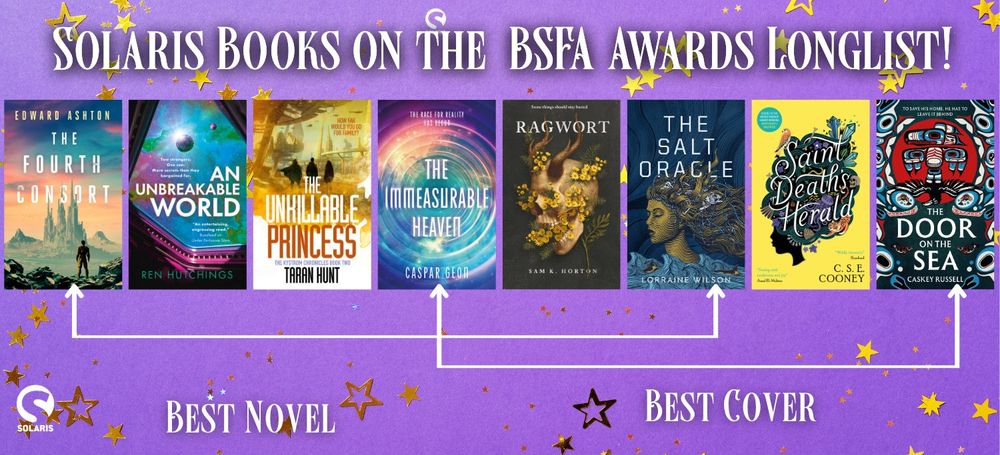
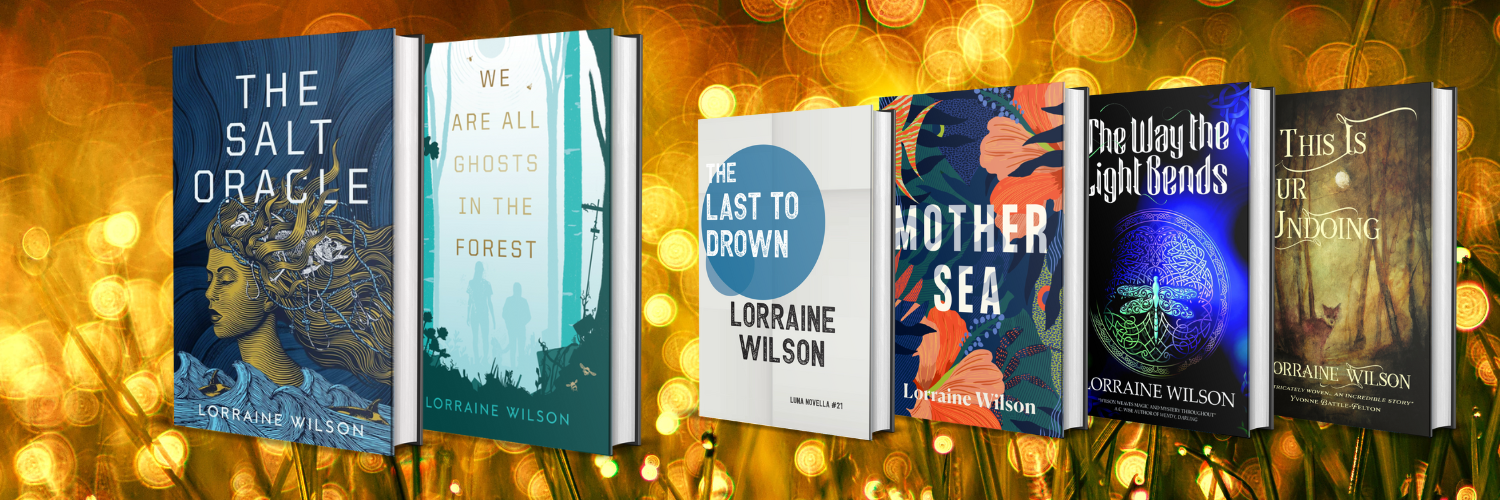
In other news, The Salt Oracle, was recently included on the Locus Recommended list, and longlisted for the British Science Fiction Association awards for both Best Novel, and Best Artist for Sam Gretton’s beautiful cover. I’m particularly delighted to see his work get this wee bit of recognition & will be crossing all the fingers we get some votes in the next round.
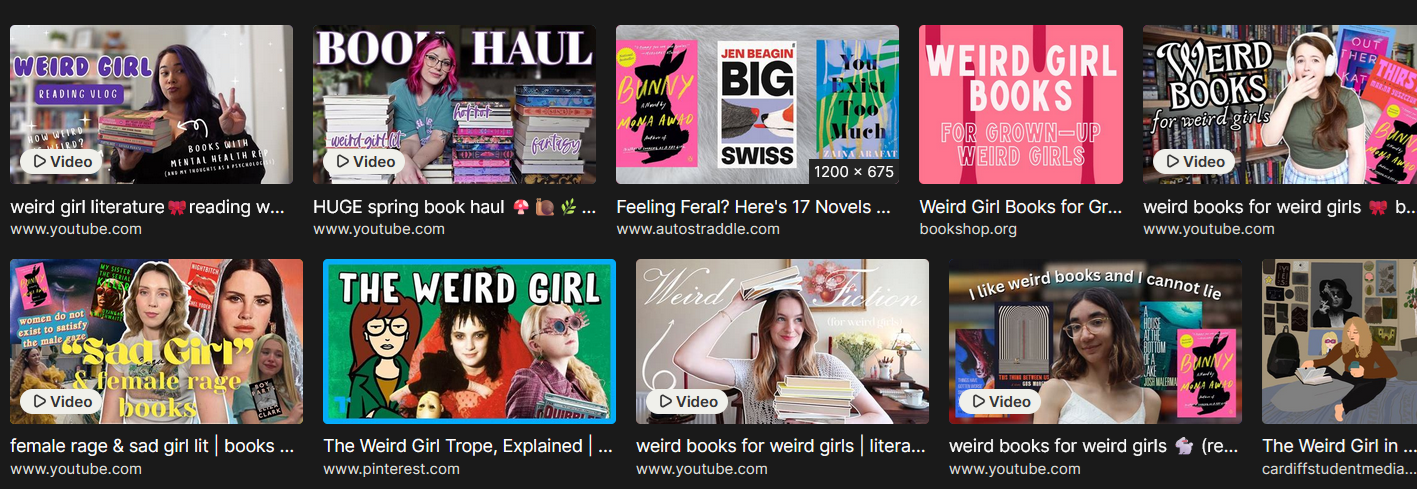
But back to today’s mini Raine rant. This comes from a conversation with friends the other day about the new genre label ‘weird girl lit’.
It’s a slightly odd label in that it doesn’t really tell you very much, and seems to be applied to a wide range of fiction from fairly horror-heavy to upmarket bookclub type fiction with a touch of darker fabulism. The overarching connection seems to be contemporary/real-world speculative fiction that involves morally grey, oddball women resorting to questionable behaviour (generally violence, often cannibalism) as an expression of ‘feminist anger’ or the like. The bloodier end of this spectrum is also being called ‘femgore’ for obvious reasons! I have tangential opinions about how deeply the ‘feminism’ is being thought through in some of these books, but that’s irrelevant right now. The point is these are genre-blending books being hailed as more or less feminist.
While I am not a big reader of gore or body horror, I’m all for a bit of bloody vengeance, so some of these books are very much my thing. Others aren’t, it doesn’t really matter. What has got a lil bit under my skin is the fact that we are once again using terminology that diminishes women. And this time, in supposedly feminist books.
Several years ago, we had a rash of ‘Girl on the Train’ copycat titles, all using ‘girl’ to label a 30-something year old woman. We also had, god, a bazillion ‘The [obscure profession]’s Daughter/Wife’ titles which rather than infantilise the female main character, reduced her to nothing but an extension of a man. The more recent formula of ‘The [unusual thing] Of Firstname Lastname‘ feels rather samey, but at least these women are granted a name. ‘Chicklit’ got replaced with the slightly less patronising ‘women’s fiction’ and then that in turn kind of fell out of fashion in favour of catchalls like ‘beachread’ or ‘bookclub’, or, y’know, the actual genre of the book – histfic, romance or mystery. Hurrah, I thought, we are moving past reducing women to children/possessions. Progress!
And now we have ‘weird girl lit’ and I want to poke people in the eye with my crochet hook.
This time around is particularly egregious because, as I mention above, this is a genrespace that purports to be exploring feminist themes. Examining and playing with feminist rage – with the accumulated weight of anger, fear, disempowerment and repression that women have been carrying for centuries, and letting these characters express those hurts in bloodily cathartic ways. But yes, let’s call them children. Let’s reduce them to someone who isn’t fully cognisant of her emotions or choices. Let’s disempower her, let’s make her small.
You cannot, to my mind, call a book feminist while at the same time infantilising the female character (or author, for that matter). You just can’t.
To be very serious for a moment, (please skip this paragraph if you like) aside from the obvious misogyny of infantilising adult women, I do think it’s worth remembering that blurring the boundary between women and girls is a two-way street. Framing women as girls allows society to conveniently forget that actual girls are not women. And at a point in time where child rapists lurk in the white house and the royal family, that matters. So does reducing women to possessions or beings without direct agency at a time when our rights are being stripped from us, and a second husband has just pled guilty to 13 years of drugging, raping and allowing other men to rape his wife.
At the level of normal, daily life though, I know we all draw our lines in different places. I don’t mind people addressing a mixed group as ‘guys’, I know some women do. In casual settings, I don’t really care if someone calls a bunch of women ‘girls’…. actually, scratch that, I would definitely mind if it was a man! But book genre labels are not casual language use, they are labels being applied by corporations in order to shape perceptions. Whether that corporation is a publishing houses, a bookstore, social media platform or a newspaper, a genre label is a formal language decision. It is word choice that carries weight; influencing people’s assumptions and reactions in ways that are both pervasive and hard to measure.
Do genre labels enable misogynistic violence? Not directly, of course they don’t. But it’s not hyperbole to say that tolerating language which infantilises women is reinforcing systemic power imbalances rather than deconstructing them.
So why are we doing this in the year of our holy weasels 2026? And where did this term even come from?
There is, I believe, a trend of women on booktok labelling themselves ‘weird girlies’ or ‘gothic girlies’ or whatever. Apparently ‘weird girl’ is a whole aesthetic for all those misunderstood misfits out there…. Okay, maybe I’m a couple of decades too old to do anything but roll my eyes at that. My inner Gen X voice is murmuring ‘if you need to tell people you’re weird, believe me, you’re not’. Hey, we live in an era of labels though so knock yourself out, I guess. BUT being ‘weird’ doesn’t get you a pass on infantilising yourself. Just because the housing market sucks, that does not make you yourself a permanent child. Your bra-burning grannies taught you better.
Umm. Where was I?
There is another genre term – ‘sad girl lit’ which seems to have arisen just before (and perhaps spawned) the ‘weird girl’ and is exemplarised by Sally Rooney’s Normal People – books that centre a (young) woman being depressed and struggling with Life. I guess because it’s generally contemporary fiction rather than speculative, this genre label didn’t cross my radar often enough to invoke a ranty blogpost. And in ‘sad’s defence, at least these books aren’t selling themselves on their feminist themes, so far as I can tell. A minor plus, but we’ll take it.
I imagine the ‘weird girl lit’ term then was a confluence of the ‘sad girl’ formula already existing, and the hashtags on tiktok. And given that booktok is an absolute steamroller of a force, whereas I am, well, me, I doubt anyone is going to suddenly reconsider the ‘girlifying’ of adults and adult fiction as a result of this post.
So I guess I want to know why.
Why do we keep discovering new ways to reduce women in women-centred fiction? Does doing so make the sheer existence of female-led books more palatable? Or is it that anger, flaws and moral ambiguity are only permissible in a woman if she can be reduced to child proportions?
Publishing is, at the medium and lower tiers, a female-dominated industry. Booktok is a female-dominated space. So it is women coming up with these labels, and women voluntarily adopting them. Are we then, even as we think we are celebrating feminism and female power, actually proactively shrinking ourselves in anticipation of pacifying the hegemony? Oh don’t mind me being angry, uwu face, I’m just a smol bean.
That’s my best guess. That we are so well-trained in the need to take up less space, to de-escalate, to pander, that much as we intend to break free, the corporate structures around publishing are so risk averse, traditional, and steeped in bias, we must still contort our ‘feminism’ into a palatable form at the point when story meets marketing (or social media algorithms).
It’s a kind of camouflage. We cannot attract the anger of the patriarchy if we paint our angry books as small and silly and harmless, right? You’ll still review my books in your publication if I erase the female lead, or box myself in this palatable way?
The covers of these books are often (gloriously) blatantly bloodthirsty, so it’s not the individual books hiding themselves in this way, it’s the label they all get put under. Yes, they’re weird, but they’re girly, so it’s okay. Practically kidlit, amirite? (oh, hello tangential Opinions about cartoon covers lol)
Given how hard it is to succeed as an author, given how hard marketing departments have to work to get books to break out, given all of that, I can understand sticking palatable labels onto books that push against gender assumptions in ways men might find uncomfortable. I mean, god forbid, right?
But.
But most readers are women. Further, the vast majority of readers of female-authored books are women. So why are we shrinking ourselves to cater to the insecurities of a male readership which is barely there? Is it because the newspapers, publishing houses and social media platforms are controlled by men, and even though they aren’t reading our books, they will still squash ones that don’t appease them? Or because as women existing on the internet, we are used to the creepy DMs, but those DMs (and the subliminal threat they create) get distinctly creepier if we raise our heads above the parapet in any way?
I’ve seen talk that 20-30yr olds are infantilising themselves because they can no longer access external markers of ‘adulthood’ – the mortgage, the financial stability to have children etc. Even if that’s true (though please see my comment above!), the earlier iterations of this – the Girl on the Train/Time Traveller’s Wife iterations – pre-date that. Women having to contort themselves to safely fit is not a new thing, and not remotely a publishing-only problem. Of course it isn’t. But publishing and booktok both have enough women in them that we could surely resist infantilising ourselves if we tried hard enough.
I am not a ‘weird girl’, or for that matter, a ‘sad’ one. I am a woman full of hunger and hope, ugliness and beauty, belonging, alienation, gratitude, rage. I am the memories of generations of women fighting to be fully themselves in a world that wouldn’t let them. Do not shrink me, I will not have it. And for the love of god, stop shrinking yourselves.
Okay rant over. Thank you for reading! Next time… oh man, it would be nice if I had updates on books, wouldn’t it? Fingers crossed…
Thank you as always for your support. Because accessibility in publishing is important to me, I keep all my craft and publishing posts free, so any shares or tips are greatly appreciated. Wishing you a fabulous weekend.
Discover more from Shadows on Water
Subscribe to get the latest posts sent to your email.
